In This Guide
Let's be honest, the first time you see a picture of a giant leopard gecko next to a regular one, it's hard not to be impressed. That extra inch or two in length, that noticeably chunkier build—it turns a cute pet into a statement piece. I remember visiting a breeder friend years ago and he handed me one of his giant females. The weight in my hand was completely different. It felt more substantial, more... present. But here's the thing they don't always tell you upfront: a giant leopard gecko isn't just a big version of the pet store special. It's a specific genetic project with its own quirks and care considerations.
If you're searching for info on these animals, you've probably hit a wall of confusing terms. Is it just a well-fed normal gecko? A separate species? A marketing trick? I spent a good chunk of my early herp-keeping years just as confused. This guide is what I wish I'd had back then. We're going to strip away the hype and look at what it really means to own, care for, and maybe even breed a giant leopard gecko.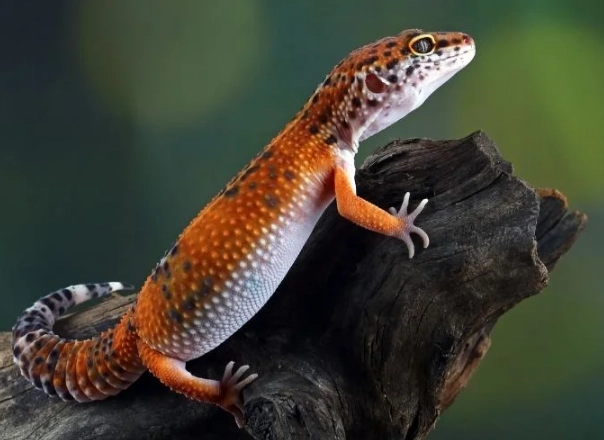
What Exactly Is a Giant Leopard Gecko? Busting the Myths
First, let's kill the biggest myth: a giant leopard gecko is not a different species. It's still Eublepharis macularius, the same leopard gecko we all know and love. The difference is in its DNA. Breeders selectively line-bred individuals that naturally grew larger, eventually isolating and stabilizing the "giant" and "super giant" genes. Think of it like the difference between a Great Dane and a Chihuahua—same species, wildly different size potential locked in their genes.
The terminology can be a minefield. Here’s the breakdown straight from the community standards that most serious breeders follow:
- Normal/Standard: Weighs under 60 grams as an adult, typically 8-10 inches long.
- Giant: Weighs between 60 and 90 grams as an adult. This is where you start to see that noticeable heft.
- Super Giant: The big leagues. Weighs over 90 grams, with some exceptional females pushing 110-130 grams. Length can exceed 11 inches.
You can't look at a hatchling and know for sure if it's a giant. That's crucial. The trait is recessive, and size only becomes apparent as they mature. A reputable breeder will sell you a gecko labeled "giant" or "super giant" because they know its genetic lineage—both parents carried the gene. Buying from someone who just says "it looks big" is a gamble.
My own first foray into giants was a bit naive. I bought a "possible giant" from a reptile show because it was the biggest in the clutch. She turned out to be a very well-fed, lovely... standard-sized gecko. Lesson learned: trust genetics, not promises.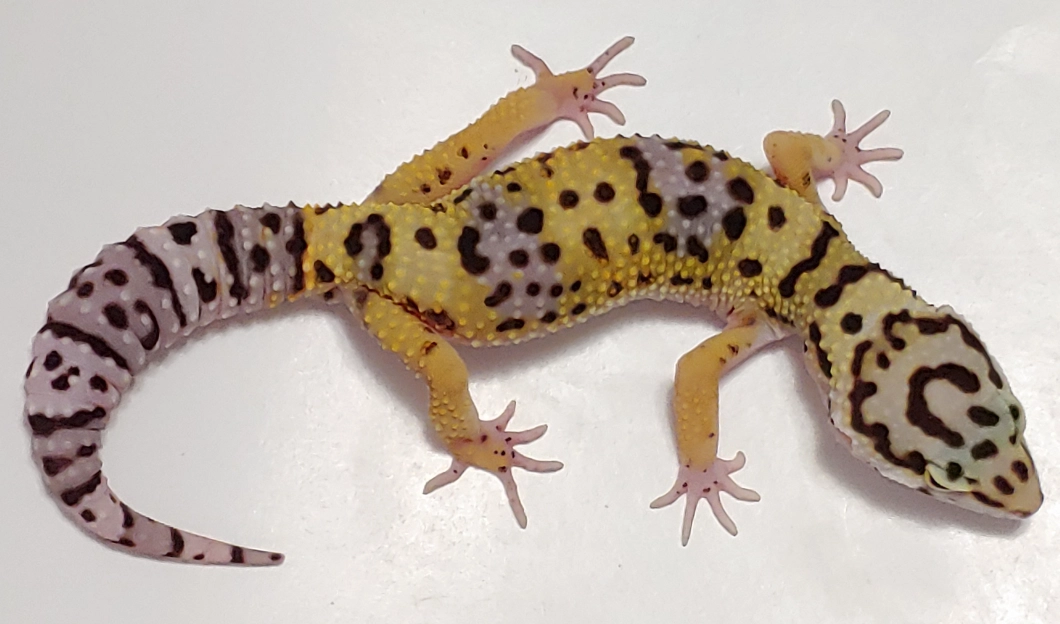
The Care Difference: It's Not Just a Bigger Tank
Okay, so you've got your genuine giant leopard gecko. Do you just do everything you'd do for a normal one, but more? Not quite. The principles are the same, but the scale and some specifics shift.
Housing Your Gentle Giant
A common mistake is thinking a 10-gallon tank is fine if it's long enough. For an adult super giant leopard gecko, that's like you living in a walk-in closet. It's functional, but miserable. They need floor space to patrol, hunt, and explore. The bare minimum for an adult giant is a 20-gallon long tank (30" x 12" x 12"). For a super giant? I'd honestly start at a 36" x 18" footprint (like a 40-gallon breeder). It feels like overkill until you see how much more naturally they move in that space.
Bigger bodies also manage heat a bit differently. You still need that essential thermal gradient—a warm side around 88-92°F and a cool side around 70-75°F. But with more mass, they can sometimes retain heat a little longer. Just don't get sloppy with your thermostat. An under-tank heater regulated by a thermostat is non-negotiable. Their increased weight also means you need to be pickier about substrate. Loose substrates like sand are a bigger risk for impaction if ingested. I'm a firm believer in the simple, safe options for giants: slate tile, paper towel, or a premium reptile carpet.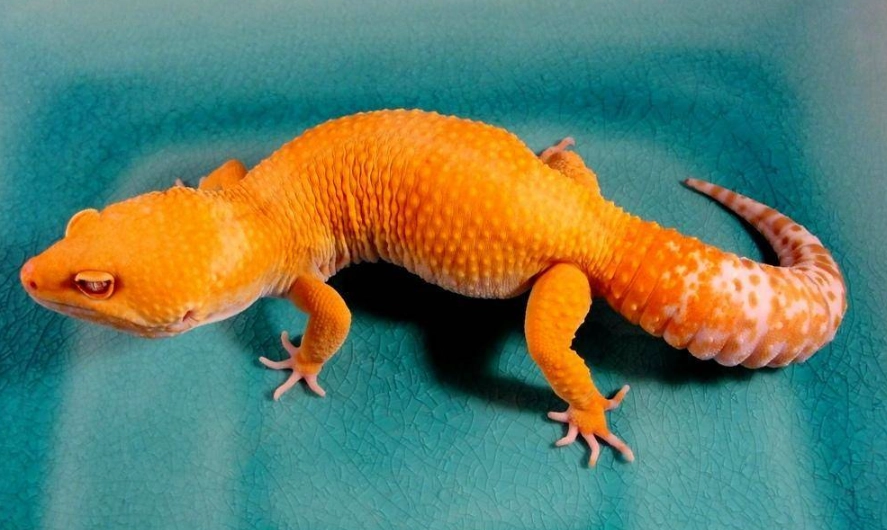
The Feeding Formula for Size
This is where you can really mess up. You don't just double the food because the gecko is double the weight. Overfeeding is a fast track to obesity, fatty liver disease, and a shortened lifespan. Giants have the potential to be large, not fat. There's a big difference.
Their metabolism is generally robust. A juvenile giant leopard gecko will eat daily, just like any other juvenile. The shift happens with adults. An adult giant might eat 2-3 appropriately sized insects every other day, while a super giant could handle 3-4. The key word is appropriately sized. Don't feed a gecko a prey item wider than the space between its eyes. For a super giant, that might mean an extra-large mealworm or a small dubia roach instead of a dozen tiny ones.
Gut-loading your feeder insects becomes even more critical. You're building a bigger body, so the nutritional quality of every cricket and worm matters more. I use a mix of fresh veggies and a commercial gut-load formula. And dusting? Stick to the schedule: calcium (without D3) available in a small dish in the enclosure, calcium with D3 dusted on feeders once a week, and a multivitamin once a week.
| Prey Item | Good For... | Feeding Tip for Giants |
|---|---|---|
| Dubia Roaches | Excellent staple. High protein, low chitin. | Perfect size range. Small/medium for giants are ideal. |
| Mealworms | Good staple, but higher fat. | Can offer larger "mega" mealworms. Variety is key. |
| Crickets | Classic staple, encourages hunting. | Can be noisy. Ensure they're gut-loaded well. |
| Waxworms / Butterworms | High-fat treats only. | Use extremely sparingly. Obesity risk is higher in giants. |
| Black Soldier Fly Larvae (Calciworms) | Great calcium source. | Excellent supplemental feeder. Low fat. |
I made the treat mistake early on. My first giant male loved waxworms. I mean, loved them. I gave them too often, and within a few months, he got chunky and lethargic. It took a strict diet and more exercise to get him back on track. Not fun for either of us.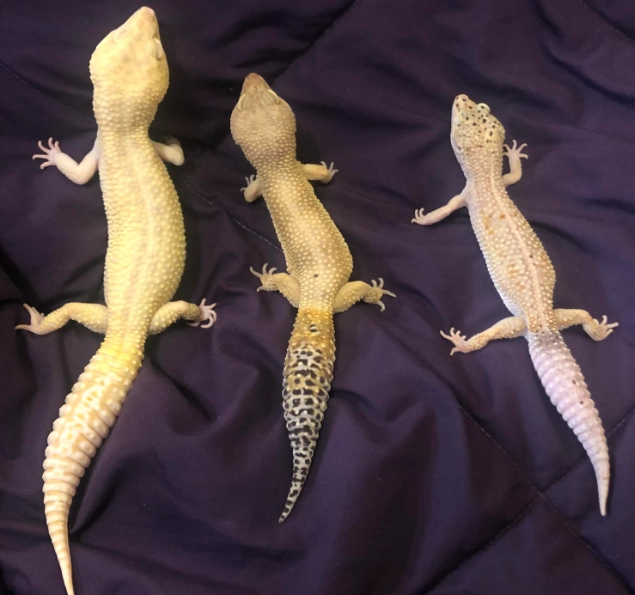
Health and Lifespan: What to Watch For
A well-cared-for giant leopard gecko can live just as long as its standard-sized cousins—15, even 20 years is possible. The genetics for size don't inherently shorten lifespan. But their size can make certain issues more pronounced or easier to miss.
Weight Monitoring is Your Best Friend: Get a digital kitchen scale that measures in grams. Weigh your gecko monthly. For a giant or super giant leopard gecko, a sudden weight drop is a huge red flag. Because they have more mass, a 10-gram loss might not look as dramatic on their frame, but it's significant.
Joint and Bone Health: This is a topic that doesn't get enough airtime. A heavier body puts more stress on limbs. Ensuring perfect calcium and vitamin D3 balance is paramount to prevent Metabolic Bone Disease (MBD). MBD in a giant is a heartbreaking sight—their own weight can cause deformities. That little dish of pure calcium in the tank? For a giant, it's not optional, it's critical insurance.
Egg-Binding in Females: Giant and super giant females often produce more eggs or larger eggs. This increases the risk of dystocia (egg-binding). Providing a proper, humid lay box when she's gravid is essential. If you're breeding, this is a risk you must be prepared for, potentially requiring a vet visit.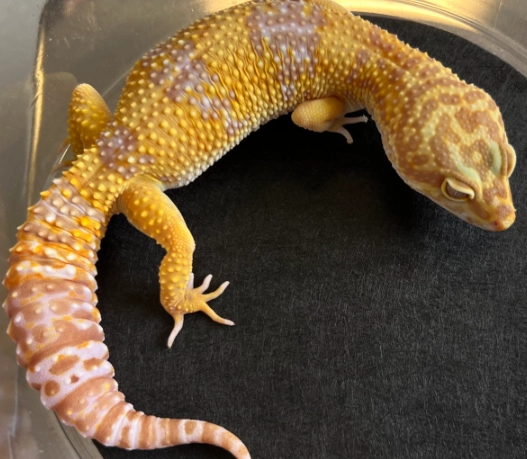
The World of Giant Leopard Gecko Morphs
This is the fun part. The giant gene can be combined with virtually any color and pattern morph. It's like a canvas—the giant gene determines the size of the canvas, and the other morph genes paint the picture. This has led to some stunning, and often expensive, combinations.
Some of the most sought-after combos you'll see include:
- Giant Albino (Tremper, Bell, or Rainwater): A large, patternless gecko with striking red or pink eyes. The lack of dark pigment really shows off their size.
- Super Giant Eclipse: The eclipse trait gives solid black or ruby-red eyes. On a massive, chunky gecko, it creates an incredibly bold, almost prehistoric look.
- Giant Mack Snow: Mack Snow reduces yellow pigmentation, leaving shades of black, white, and purple. A giant version looks like a living marble statue.
- Giant Blizzard: A completely patternless, often pure white or yellow animal. Their simplicity emphasizes their form and scale.
The price jumps significantly when you combine the giant gene with rare morphs. A normal giant might be $150-$250, while a super giant with a rare albino and eclipse combo can easily be $800-$1500. You're paying for years of selective breeding work.
I'm personally a sucker for a giant Murphy Patternless. They have this smooth, almost liquid appearance, and when they're big, they look like a living bar of soap—in the best way possible.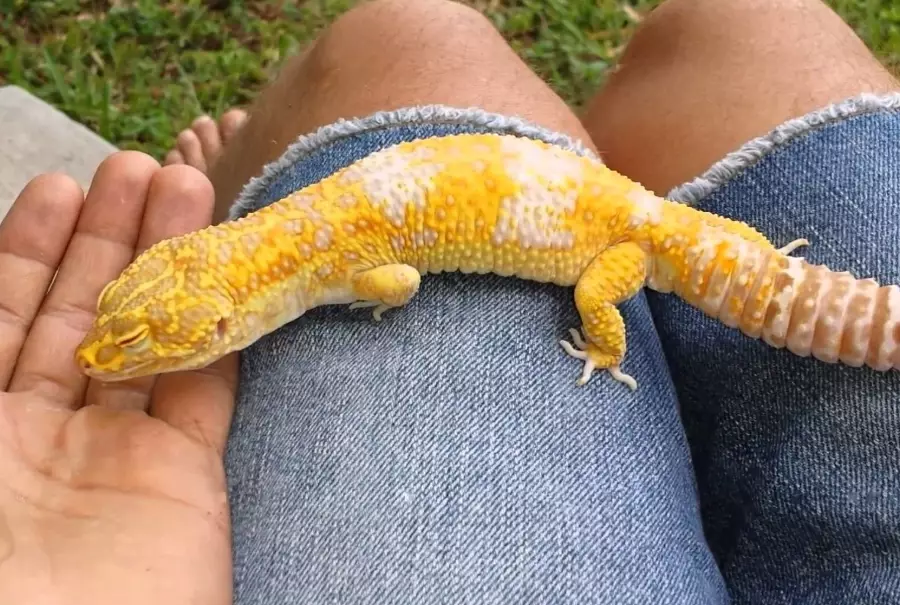
Breeding Giants: It's a Genetics Game
Thinking of breeding your giant leopard gecko? Hold on. This isn't for the casual keeper. It requires planning, space, and a solid understanding of recessive genetics.
Here’s the basic genetic rule: The giant trait is recessive. This means a gecko needs two copies of the gene (one from each parent) to visually express the "giant" or "super giant" size.
- Super Giant x Super Giant: All offspring will inherit two copies of the gene. They will all be super giants (assuming other growth factors are optimal).
- Giant x Giant: The results can be a mix of giants and super giants, depending on the exact genetics of the parents.
- Giant x Normal (non-giant): All offspring will appear normal, but they will all carry one copy of the hidden giant gene (they are "hets").
- Normal (het for giant) x Normal (het for giant): This is where the Punnett square kicks in. Statistically, 25% of the babies will be visual giants, 50% will be normal-looking hets, and 25% will be normal with no giant gene.
Breeding giants also means being prepared for larger clutches and having a plan for all the hatchlings. It's a serious commitment.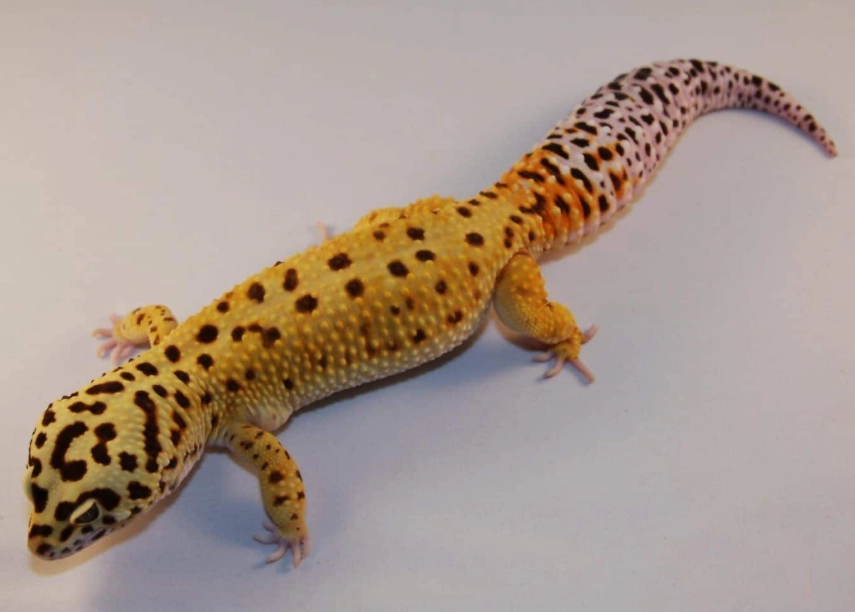
Your Giant Leopard Gecko Questions, Answered
Making the Decision: Is a Giant Right for You?
Let's wrap this up practically. Choosing to get a giant leopard gecko comes down to a few key questions.
Ask yourself: Are you ready for the long-term commitment (15-20 years) of a pet that may require slightly more specialized attention? Is your budget ready for the higher upfront cost of the animal itself, plus a larger enclosure and potentially higher food bills? Most importantly, are you sourcing from a reputable breeder who can provide genetic history, not just a big-looking gecko?
If your answer is yes, then welcome to a really rewarding corner of the reptile hobby. There's something uniquely satisfying about caring for an animal that represents decades of careful selective breeding. Watching a healthy giant leopard gecko explore its spacious tank, with that deliberate, heavy grace, is a testament to good genetics meeting great care.
Start by researching breeders with proven giant lines. Don't rush. Ask them questions about the parents' weights, their feeding regimen, and the genetics behind the clutch. A good breeder will happily talk your ear off about it.
And remember, whether it's a standard, a giant, or a super giant, the goal is the same: a healthy, thriving leopard gecko. The size is just the spectacular bonus.
Reader Comments