What’s Inside This Guide
You’re looking at your leopard gecko, noticing its lighter colors and maybe those unusual eyes, and the question pops into your head: is it albino? It’s not always obvious. I’ve seen countless forum posts where someone is sure they have an albino, only to find out it’s a different morph entirely. The confusion is real, and it matters—because if your gecko is albino, its care needs some specific tweaks that most general guides don’t cover well.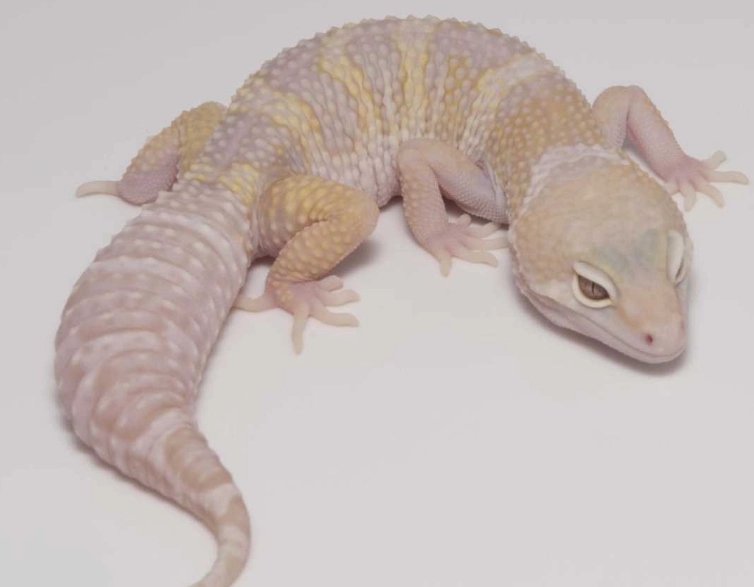
Let’s clear it up. An albino leopard gecko isn’t just a pale version of a normal one. It’s the result of a specific genetic mutation called amelanism, which means a complete lack of black pigment (melanin). This affects their color, pattern, and, crucially, their eyes. But here’s the kicker: there are three separate, distinct strains of albinism in leopard geckos, and they don’t all look the same. You can’t tell them apart just by looking, which is why knowing your gecko’s lineage from the breeder is the only foolproof method.
This guide will walk you through exactly what to look for, bust some common myths, and give you the practical care tips that come straight from years of talking to breeders and dealing with the unique quirks of these beautiful animals.
What "Albino" Really Means in Leopard Geckos (It's Not Just White)
First, forget the image of a pure white animal with red eyes. That’s the cartoon version. In reptiles, and leopard geckos specifically, albinism (amelanism) has a precise definition: the animal cannot produce melanin. Melanin is the pigment responsible for blacks, browns, grays, and some underlying dark tones.
Without it, the gecko’s coloration comes from other pigments like pteridines (yellows) and xanthophores (oranges/reds), which are now unmasked. That’s why albino leopard geckos are often shades of yellow, peach, pink, lavender, or orange—not white. Their spots or bands, if present, are a lighter, washed-out brown or gray instead of solid black.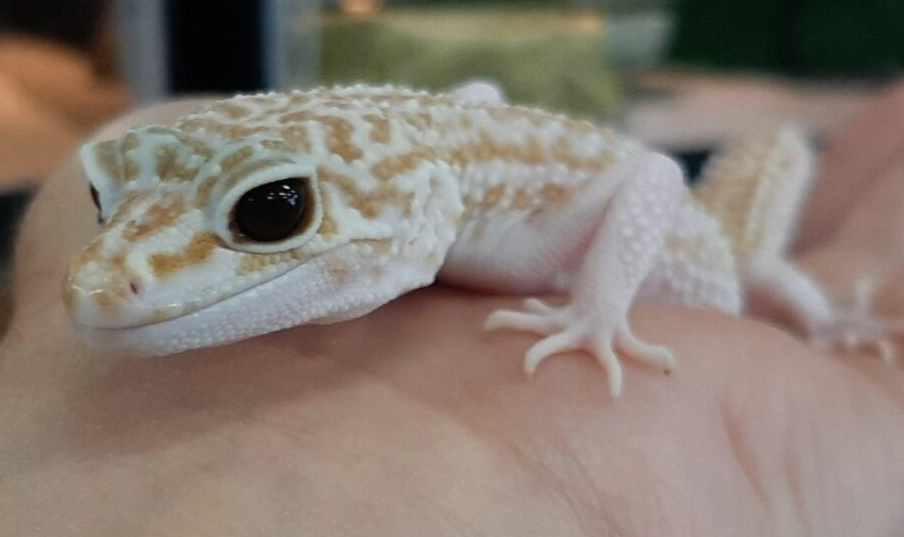
The most critical and consistent sign is in the eyes. Since there’s no melanin in the iris, it will never be black or a solid, deep color. This is the single most reliable visual indicator.
The 3 Key Physical Traits to Look For
So, you’re examining your gecko. Here’s your checklist. You need to see all three of these to confidently call it an albino.
1. Eye Color: The Ultimate Giveaway
This is non-negotiable. Look closely at the iris (the colored ring around the pupil).
- Albino Eyes: The iris will be a pale, solid color. Think pink, light gray, silver, lavender, or a very pale reddish hue. The pupil is usually obvious. In flash photography, you might see a bright red "eyeshine" from the retina—this is the blood vessels showing through, but don't rely on that alone. In normal room light, the eyes just look distinctly light-colored and lack any dark pigment.
- Normal Gecko Eyes: The iris has black, silver, or dark gray speckles or marbling, often on a gold, green, or brown base. The pupil may blend in more.
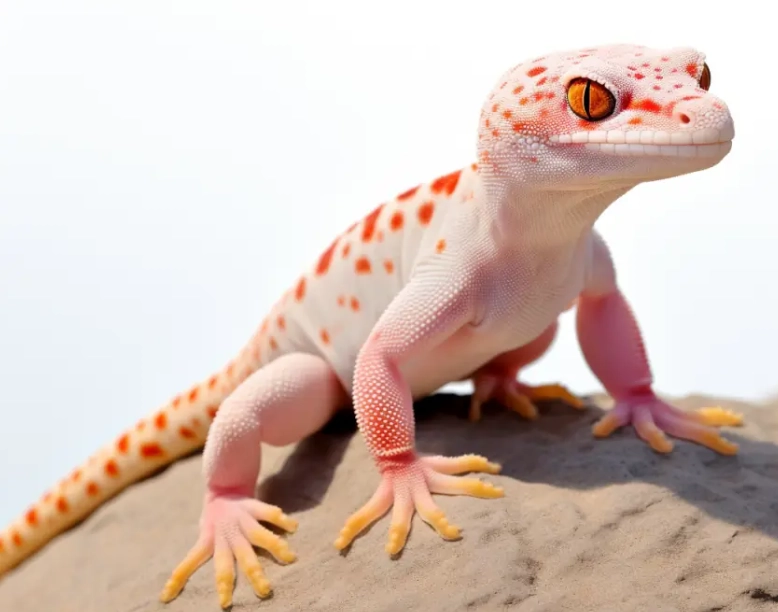
A common pitfall? Mistaking a gecko with eclipse or snake eyes (solid black eyes) for an albino. Those eyes are full of dark pigment—the exact opposite of albino.
2. Body Color & Pattern: Missing the Blacks
Examine the spots, bands, and overall base color.
- Albino Coloration: The typical black spots and bands of a wild-type ("normal") leopard gecko will be absent or appear as faded, light brown, tan, or gray. They lack crisp, jet-black edges. The base body color is often a clean yellow, peach, pink, or off-white. Even darker albinos won’t have true black markings.
- What to Rule Out: A gecko that is simply a light yellow or orange (like a "high yellow" morph) but still has clear black spots is NOT albino. It’s just a selectively bred color variant.
3. Toe Pads and Underside: The Final Check
Don’t forget the belly and the little pads on their toes. In many normal geckos, you’ll see dark speckling or spotting on a pale belly, and the toe pads can be dark. In an albino, the belly is typically a clean, spotless cream or white, and the toe pads are pale pink or flesh-colored.
If your gecko passes all three checks—light eyes, no black pigment in pattern, pale underside—you’re almost certainly looking at an albino.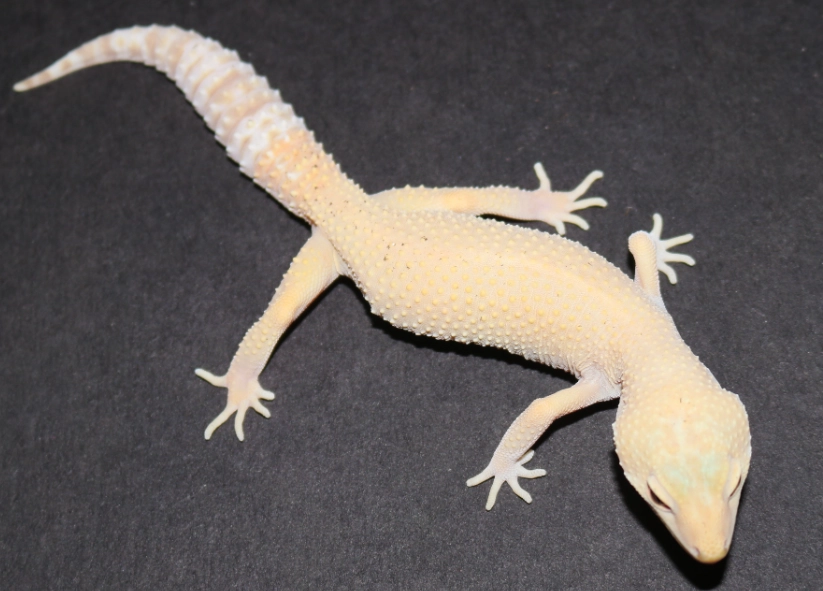
The Three Albino Strains: Tremper, Bell, and Rainwater
This is where it gets interesting, and where most general online info falls short. There isn’t just one "albino" gene. There are three, discovered and established by different breeders from separate wild-type ancestors. They are genetically distinct. You cannot create an albino by crossing a Tremper albino with a Bell albino; you’ll get normal-looking double hets.
| Strain (Line) | Common Names & Origin | Typical Coloration | Key Identifying Note |
|---|---|---|---|
| Tremper Albino | Named after Ron Tremper. The first and most common strain. | Often the lightest. Can range from pale pinkish-lavender ("lavender albino") to soft yellow and peach. Eyes often pale silver or pink. | Most widely available. Many "giant" albinos are from the Tremper line. |
| Bell Albino | Developed by Mark Bell. | Often shows more vibrant orange and yellow tones. Eyes can sometimes appear a slightly darker pink or gray compared to Trempers. | Known for having strong, bright colors even as adults. |
| Rainwater Albino | Also called Las Vegas Albino (from Tim Rainwater). | Tends toward peach, yellow, and caramel tones. Often described as having a "softer" look. | Generally considered to have slightly more sensitivity to light by some keepers. |
Here’s the crucial part: You cannot reliably visually distinguish between these three strains as a novice, and sometimes even experts get it wrong. The color ranges overlap significantly. A pale peach gecko could be any of the three. The only way to know for sure is if you have the lineage paperwork from a reputable breeder. If you bought your gecko from a pet store without a genetic history, you’ll likely never know its strain, and that’s okay for pet purposes. Just label it "albino."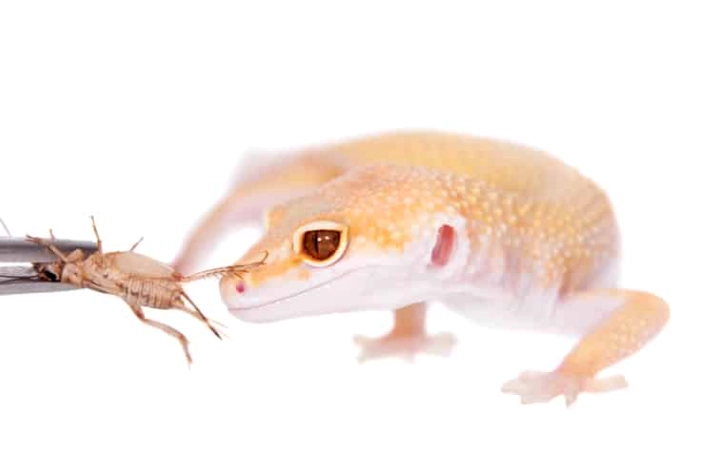
Common Lookalikes: What's Not an Albino
Let’s prevent some common misidentifications.
Blizzard Morph: This is a patternless morph that can be white, yellow, or gray. The key difference? Their eyes are normal—dark and pigmented. A white Blizzard has black eyes, which immediately rules out albinism.
Patternless Stripe or Murphy Patternless: These geckos lack the typical spots but retain their dark eye pigment and often have a faint yellowish or brownish base color with no black markings. Again, check the eyes.
Hypomelanistic (Hypo) or Super Hypo: These morphs have reduced black pigment, not a complete absence. A Super Hypo has no black spots on its body (but may have some on the head and tail), and its eyes are fully pigmented. The line between a very light Super Hypo and an albino can be blurry, but the eyes are the definitive divider.
Ghost/Hybino: This is a combo morph (Hypo + Albino). It will have the albino eyes but an even more reduced pattern, often appearing very pale and washed out. It’s still an albino, just combined with another gene.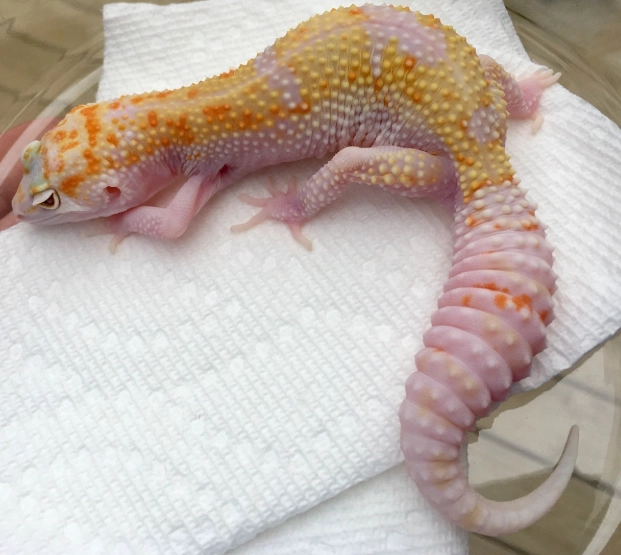
Health & Care Differences for Albino Geckos
If you’ve confirmed your gecko is albino, its care sheet needs one major adjustment: light sensitivity. This isn’t a minor detail; it’s a welfare issue.
Melanin in the eyes acts as a natural sunscreen, protecting the retina from bright light. Without it, albino geckos (and many other albino animals) are more sensitive. A bright white halogen basking lamp or a high-output UVB tube in a small tank can be uncomfortable or even stressful for them. You might notice them squinting, hiding all day, or being less active.
My lighting recommendation for albinos:
- Heat Source: Use a deep heat projector (DHP) or a ceramic heat emitter (CHE). These provide essential warmth without producing bright visible light. They’re perfect for creating a day/night cycle without glare.
- If using UVB: It can be beneficial for their overall health (like aiding Vitamin D3 synthesis), but you must be cautious. Use a very low-output UVB bulb (like a shadedweller 2% or 3% T5 kit) and ensure plenty of shaded hides so the gecko can self-regulate. Some experienced keepers, like those cited in resources from the Reptile Lighting Facebook group, recommend shorter photoperiods or greater distances for albinos.
- Ambient Room Light: Often, the ambient light from a window or room lamp is sufficient for their day/night cycle. Don’t feel you must add a bright cage light.
Beyond lighting, their care is identical to other leopard geckos: proper temperatures (88-92°F warm end), a humid hide for shedding, and a varied diet of gut-loaded insects. They are not inherently less healthy, but stress from improper lighting can make any animal more susceptible to illness.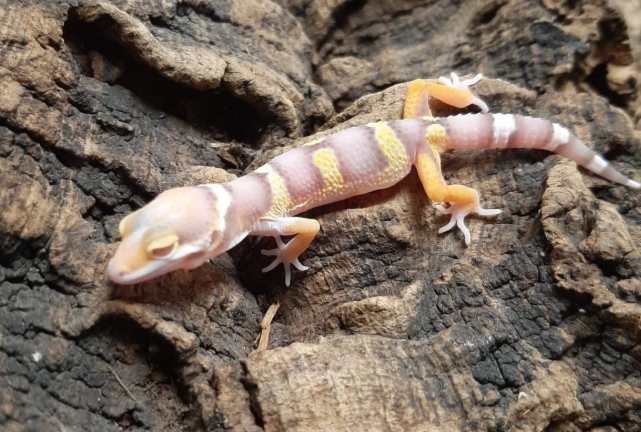
Your Questions Answered
Figuring out if your leopard gecko is albino comes down to a careful look at its eyes and pigment. No black in the eyes or the spots? You’ve likely got an albino. Remember the three strains, understand that pet store geckos are often a mystery mix, and most importantly, adjust your lighting setup to keep those sensitive eyes comfortable. They make fantastic, beautiful pets when their specific needs are met. If you’re still unsure, posting clear, well-lit pictures (without flash!) on a reputable reptile forum can get you helpful opinions from experienced keepers.
Reader Comments