Quick Navigation: What's Inside
Yes, jumping spiders do jump—and it's not just a casual hop. These tiny arachnids execute leaps with precision that would make an Olympic athlete jealous. I've spent years watching them in my garden, and their movements still surprise me. Let's cut to the chase: their jumps are powered by a unique hydraulic system, not just muscles, and they use this ability for everything from hunting to escaping danger. But there's more to the story than most people realize.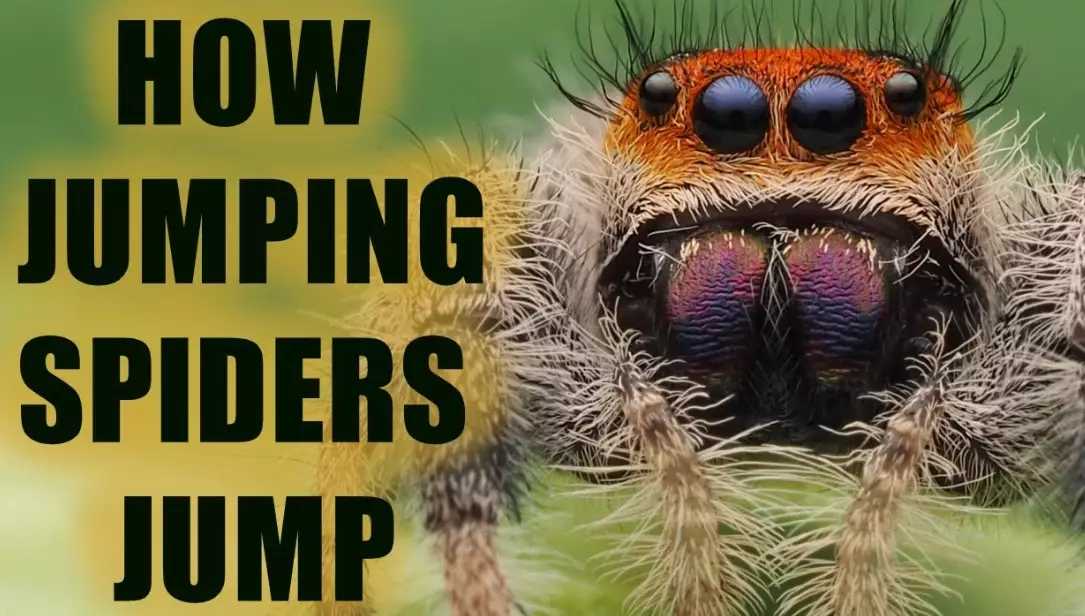
Here's something you won't hear often: jumping spiders sometimes miss their jumps. I've seen it happen. They overshoot or undershoot, especially in windy conditions. That's a nuance most articles gloss over, painting them as infallible acrobats.
How Jumping Spiders Actually Jump: The Mechanics Behind the Leap
Most spiders rely on webs, but jumpers take a different approach. Their jumps aren't about brute force; they're about controlled bursts. The key lies in their legs.
Hydraulic Pressure: The Secret Sauce
Jumping spiders use hydraulic pressure to extend their legs rapidly. They have muscles to flex their legs, but to extend them for a jump, they pump body fluid into the legs. This creates a sudden push-off. According to research from the Journal of Experimental Biology, this system allows for faster acceleration than muscle alone could achieve.
Think of it like a water balloon—squeeze it, and it shoots out. That's roughly how it works. The spider contracts its body, forces fluid into the legs, and boom, it's airborne.
Vision and Coordination: They Aim Before They Leap
Their large front eyes give them exceptional vision. They don't just jump randomly; they calculate distance and trajectory. I've observed them stalking prey, moving slowly, then pouncing with pinpoint accuracy. It's a blend of biology and physics.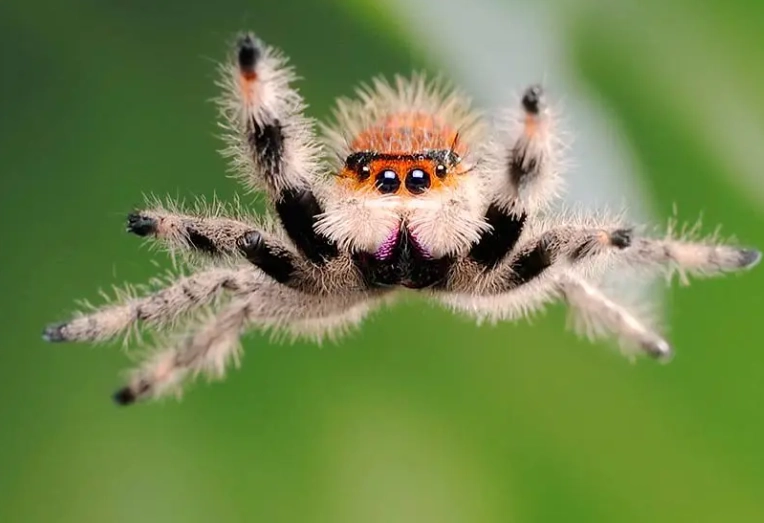
Why Jumping Is a Survival Superpower: Evolution in Action
Jumping isn't a party trick; it's a critical adaptation. Here's why it matters.
Hunting Efficiency: Silent and Swift
Jumping allows them to ambush prey like flies and mosquitoes. They can cover distances up to 50 times their body length in a single leap. That's like a human jumping over a bus. No web needed—just pure speed.
Escaping Predators: A Quick Getaway
When threatened, a jump can mean the difference between life and death. Birds or larger spiders often can't react fast enough. It's their version of a emergency eject button.
Top Jumping Spider Species and Their Leaps: A Comparison Table
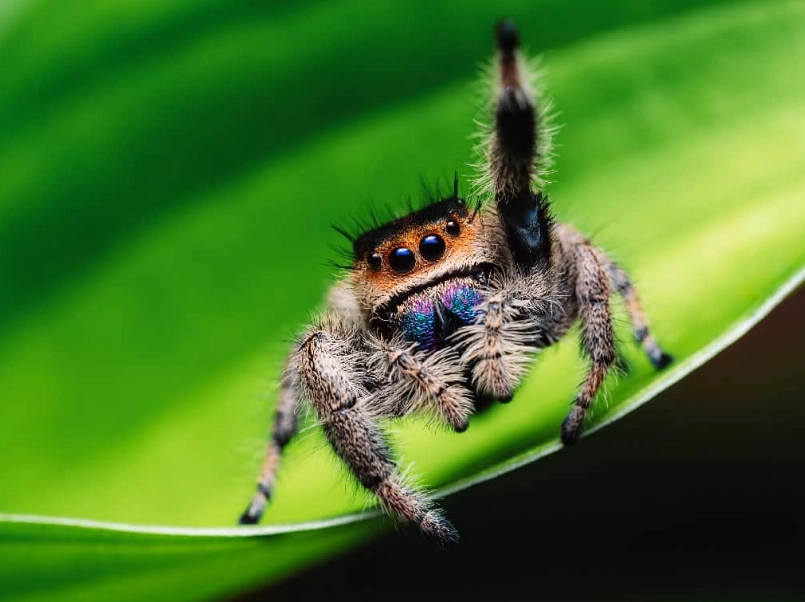
Not all jumping spiders are equal. Some are better jumpers than others. Based on studies and my own observations, here's a breakdown of notable species.
| Species Name | Average Jump Distance (Relative to Body Length) | Key Hunting Style | Where They're Commonly Found |
|---|---|---|---|
| Phidippus audax (Bold Jumper) | 40-50 times body length | Active stalker, jumps directly onto prey | Gardens, forests in North America |
| Salticus scenicus (Zebra Jumper) | 30-40 times body length | Uses jumps for short bursts on vertical surfaces | Urban areas, walls, and fences worldwide |
| Habronattus pyrrithrix | 20-30 times body length | Combines jumps with silk draglines for safety | Deserts and grasslands in the Southwestern US |
| Myrmarachne (Ant-mimic Jumper) | 10-20 times body length | Less frequent jumps, relies on mimicry for stealth | Tropical regions, often near ant colonies |
This table shows diversity. The Bold Jumper is the marathon champion, while others prioritize different strategies. It's not just about distance—accuracy matters too.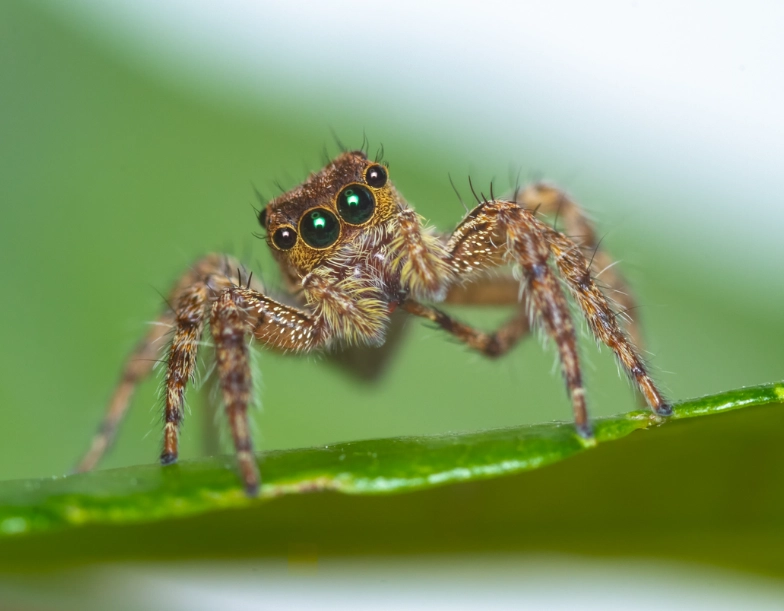
Common Myths Debunked: What People Get Wrong About Jumping Spiders
There's a lot of misinformation out there. Let's set the record straight.
Do They Jump on Humans? The Truth
Rarely. Jumping spiders are curious but not aggressive toward humans. They might jump onto you if you're mistaken for a perch, but it's not an attack. I've had them land on my hand while gardening—they usually just explore and jump off. Fear of spiders often exaggerates this behavior.
Jumping Distance Exaggerations
Some sources claim jumps of 100 times body length. That's overblown. Based on arachnological studies, most jumps max out around 50 times. Anything beyond is likely a misobservation or rare exception.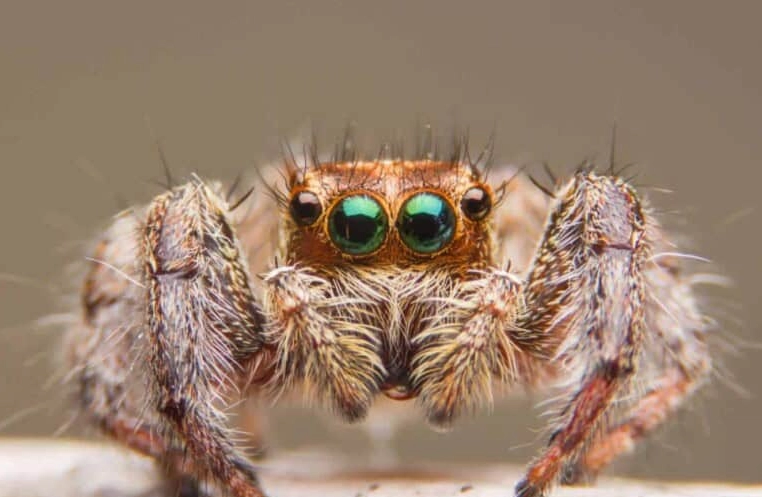
How to Observe Jumping Spiders in Action: A Personal Guide
If you want to see these jumps firsthand, here's how I do it. It's easier than you think.
Find the right location: Look in sunny spots on plants, fences, or windowsills. Jumping spiders love light. Early morning is best—they're active but not too fast.
Move slowly: Sudden movements scare them off. Crouch down and stay patient. I use a magnifying glass for closer looks.
Watch for hunting behavior: They often stalk prey in a zigzag pattern. When they crouch low, a jump is imminent. It's over in a blink, so keep your eyes peeled.
Safety note: Don't handle them roughly. They're fragile. If you want to encourage activity, place a small insect like a fruit fly nearby and observe from a distance.
I've spent countless hours doing this. It's meditative. You start noticing details—like how they use silk as a safety line during big jumps, something beginners often miss.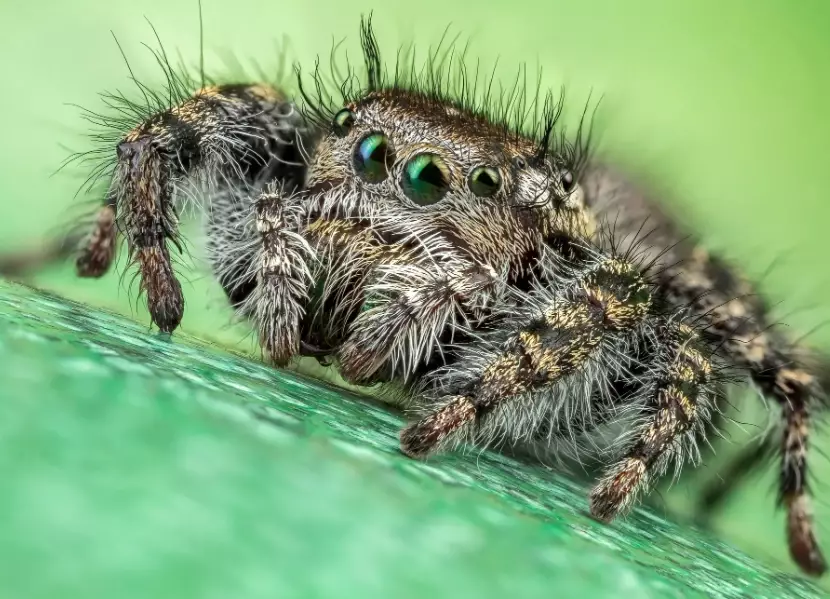
Your Burning Questions Answered: Jumping Spider FAQs
Jumping spiders are more than just jumpers—they're masterful survivors with a skill set that continues to intrigue scientists and enthusiasts alike. Next time you see one, take a moment to appreciate the complexity behind that tiny leap.
Reader Comments