Your Jumping Spider Journey
- What Makes a Jumping Spider So Different?
- Personality in a Tiny Package: Behavior and Intelligence
- Thinking About a Jumping Spider as a Pet? A Realistic Guide.
- Answering Your Burning Questions (FAQ)
- Their Role in the Ecosystem (Why We Should Appreciate Them)
- A Quick Guide to Some Common Jumping Spiders You Might See
I have to admit, I used to be that person. You know, the one who'd see a spider and immediately reach for a shoe or a rolled-up magazine. It wasn't until a few summers ago, when a tiny, fuzzy black-and-white jumping spider decided to set up camp on my windowsill, that my perspective completely shifted. This wasn't some creepy-crawly lurking in a corner. This was a curious, almost dog-like creature that would tilt its head (yes, they can do that!) to watch me work. It would stalk flies with the precision of a tiger and execute jumps that would make an Olympic athlete jealous. I was hooked.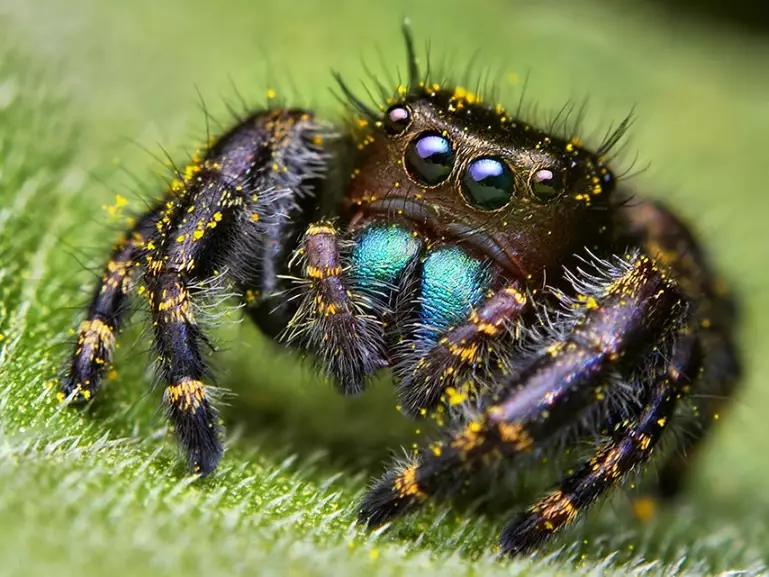
That little spider started an obsession. I began reading everything I could find about them, and let me tell you, the world of jumping spiders is far more fascinating than you'd ever imagine. They're not just spiders; they're tiny, eight-legged marvels of evolution with superpowers we're only beginning to understand. This guide is everything I wish I had found back then—a deep dive into why these creatures are so special, how they live, and even how you might responsibly keep one as a pet (though, fair warning, it's not for everyone).
Quick Reality Check: Before we go any further, let's clear something up. Jumping spiders are absolutely spiders. They belong to the family Salticidae, which is the largest family of spiders on the planet, with over 6,000 described species. But they break every negative stereotype you might have.
What Makes a Jumping Spider So Different?
If you stripped away all the legs and just looked at the head, you'd see the biggest difference right away. Most spiders rely on vibrations and feel to navigate their world. Jumping spiders? They are visual masters. Their front-facing, enormous principal eyes give them an almost mammalian gaze.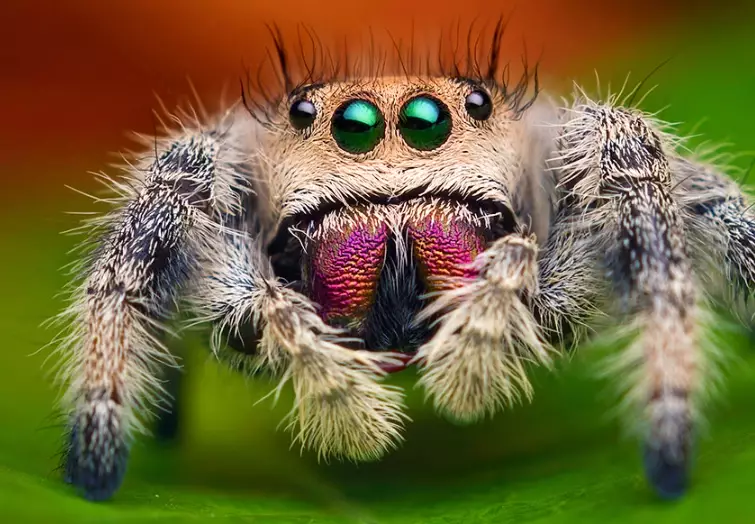
Think about it. Most spiders have eyes that are basically light sensors. A jumping spider's eyes are complex cameras. This fundamental shift from a tactile to a visual hunter changes everything about their behavior, intelligence, and personality.
It's like comparing a security camera to a movie director's lens.
The Marvel of Jumping Spider Vision
Their vision is their superpower. They have four pairs of eyes, but two are in the front and are huge. These large, forward-facing principal eyes provide high-resolution, color vision. Research from sources like the American Museum of Natural History explains that they have a unique, movable retina. Instead of moving their whole eye to track something (they can't, the lens is fixed), they physically move the retina inside their head! This allows for an incredibly wide field of sharp vision.
How Good is Their Eyesight? Scientists believe some jumping spiders can see in UV light, and their spatial resolution is among the best in the arthropod world. They can recognize shapes and patterns, which is crucial for their complex hunting strategies and courtship dances. It's this vision that allows them to plan intricate routes and judge distances with pinpoint accuracy before a jump.
More Than Just a Leap: The Art of the Jump
The name "jumping spider" isn't just for show. This is their primary mode of hunting and moving. But it's not a blind, reckless hop. It's a calculated, hydraulic-powered pounce.
Here’s the cool (and slightly weird) part: They don't have extensor muscles in their legs strong enough to launch them. So, they use a sudden change in blood pressure (hemolymph pressure) to catapult their bodies forward. They attach a silk safety line to the surface they're jumping from—a literal bungee cord—in case they miss. They calculate the distance, trajectory, and force needed all in a split second. I've watched my windowsill friend do this to a fruit fly, and it never gets old. The precision is unnerving.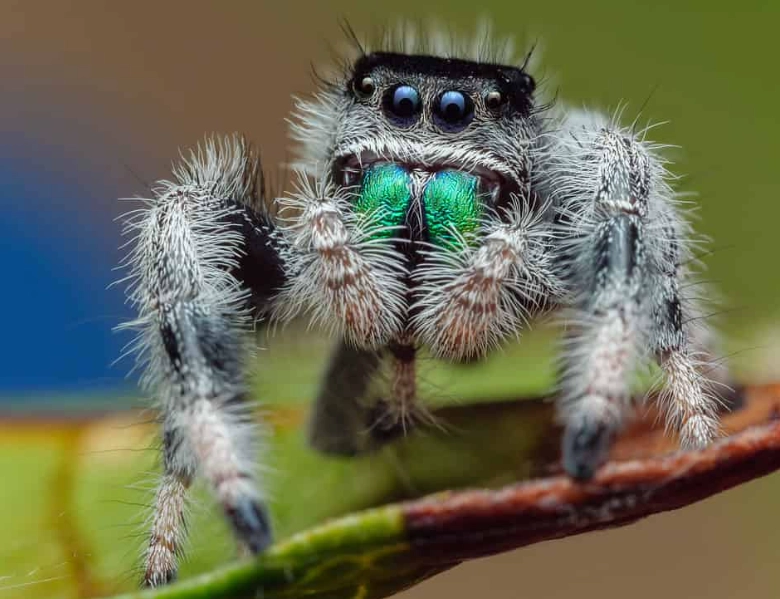
Personality in a Tiny Package: Behavior and Intelligence
This is where people, including myself, really fall for them. Because of their advanced vision and hunting style, jumping spiders display behaviors that feel strangely intelligent. They are inquisitive. They will often turn to look at you if you move. They plan hunting routes, sometimes going the long way around to ambush prey from a better angle.
Studies, like those referenced by the University of California system's research publications, have shown they are capable of problem-solving and learning. They can remember detours and apply past experiences to new situations. This is a level of cognitive ability rarely seen in invertebrates.
Their famous courtship dances are a masterpiece of this intelligence. Males of many species perform elaborate, species-specific dances involving leg waving, body bobbing, and colorful flag displays to convince a female he's a suitable mate and not a snack. If you've never seen one, search for "peacock spider dance" online. It's breathtaking.
Thinking About a Jumping Spider as a Pet? A Realistic Guide.
After my experience, I totally get the appeal. The idea of having a small, observant, low-maintenance pet is strong. But before you run out to catch one, you need a heavy dose of reality. Keeping a jumping spider is more about observation and providing a good life than handling and play.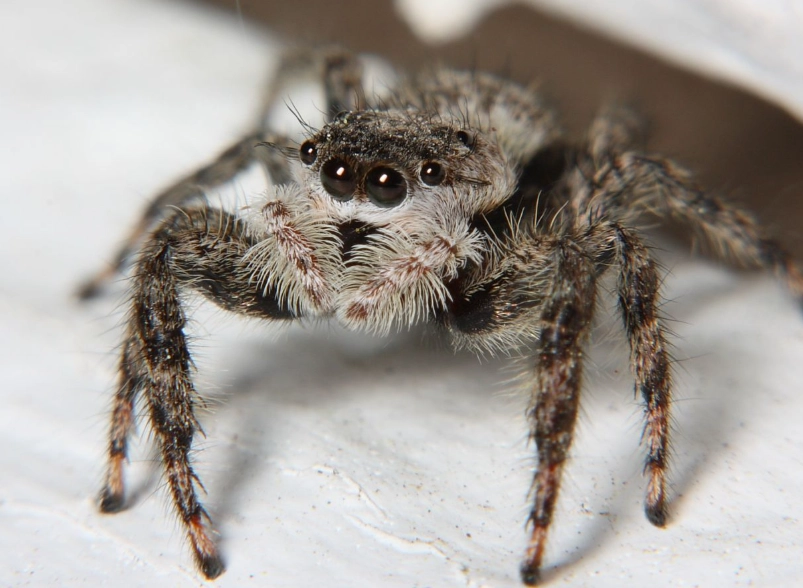
Important First Step: Always check your local and national laws regarding keeping native wildlife. It is often illegal and always ecologically harmful to take a spider from the wild to keep as a pet. The responsible route is to purchase a captive-bred spider from a reputable breeder. This ensures the animal is healthy, acclimated to captivity, and your hobby isn't impacting wild populations.
The Basic Setup (It's Not Just a Jar)
A proper enclosure is crucial. They need vertical space for climbing and jumping. A tall, well-ventilated acrylic or glass terrarium is ideal. Size isn't about giving them a mansion; a 4x4x6 inch enclosure is plenty for most common species. The goal is to create a secure, enriching micro-habitat.
Key elements you must include:
- Substrate: Coconut fiber or peat moss to hold a bit of humidity.
- Climbing Structures: Twigs, cork bark, fake plants. They need anchor points for their silk and platforms to jump from.
- Hiding Spot: A little piece of curved bark or a small, clean plastic lid turned on its side. They need a secure retreat to feel safe and to molt in peace.
- Water: NOT a water dish (they can drown in a droplet). Lightly mist one side of the enclosure every other day with a fine spray bottle. They will drink the tiny beads of water.
- Food: Live prey only. Flightless fruit flies (for spiderlings), small crickets, mealworms, or houseflies. Feed 1-2 appropriately sized prey items every 3-5 days for an adult.
Temperature and humidity are important but not overly fussy. Room temperature (70-78°F or 21-25°C) is fine. A light misting maintains humidity. Avoid direct sunlight or heat lamps, which can cook your spider.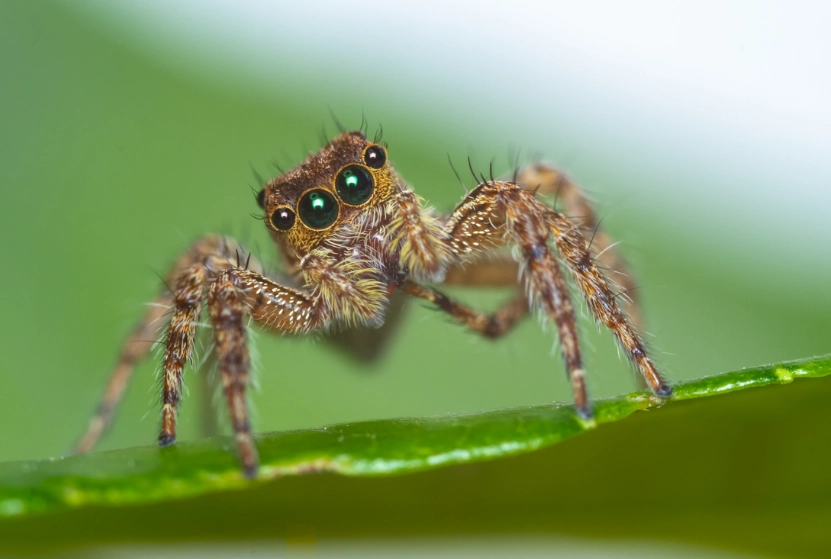
Common Species for Beginners
If you're going the captive-bred route, here are a few species often recommended for first-time keepers:
| Common Name | Scientific Name | Key Features | Adult Size | Notes |
|---|---|---|---|---|
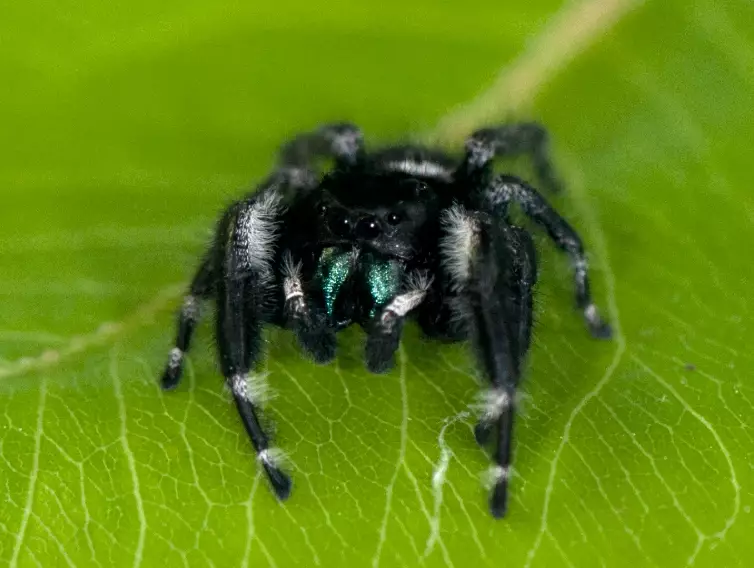
| Bold Jumper | Phidippus audax | Black with white spots/markings, iconic green-blue chelicerae (fangs). | ~15 mm | Very common in North America, hardy, bold personality. |
| Regal Jumper | Phidippus regius | Larger, color varies (gray, black, orange). Males have striking black/white. | ~18-22 mm | One of the largest, popular in the hobby, generally calm. |
| Zebra Jumper | Salticus scenicus | Black and white striped pattern, very common in Europe/N. America. | ~7 mm | Tiny, commonly seen on fences and walls, agile. |
My first captive-bred spider was a Phidippus audax. You couldn't ask for a better beginner spider.
Answering Your Burning Questions (FAQ)
Their Role in the Ecosystem (Why We Should Appreciate Them)
Beyond being fascinating, jumping spiders are vital. As abundant predators of insects, they help control populations of potential pests, including flies, mosquitoes, and agricultural pests. They are a key part of the food web, serving as prey for birds, lizards, and larger spiders.
By appreciating them, we move away from the "kill on sight" mentality for all arachnids. Conservation starts with understanding, and these spiders are perfect ambassadors for the much-maligned world of invertebrates. Organizations like the Xerces Society for Invertebrate Conservation work to protect all pollinators and beneficial insects and arachnids, reminding us of the critical roles these small creatures play.
A Quick Guide to Some Common Jumping Spiders You Might See
You don't need to go to the tropics to find them. Here’s a non-exhaustive list of some you might encounter in temperate regions:
- The Zebra Jumper (Salticus scenicus): The classic black-and-white striped spider on sunny walls and fences. Tiny and hyperactive.
- The Bold Jumper (Phidippus audax): The one that started it all for me. Black, often with white or orange spots, and those incredible iridescent green mouthparts.
- The Tan Jumping Spider (Platycryptus undatus): Flatter, browner, and excellently camouflaged on tree bark. It has a distinctive wavy pattern on its abdomen.
- The Emerald Jumping Spider (Paraphidippus aurantius): Not always emerald, but often has beautiful golden or greenish iridescent scales. A real jewel.
If you want to dive deeper into identification, I'd recommend starting with resources from your local university's entomology department or a field guide specific to your region. It's a deep rabbit hole, but a fun one.
So, there you have it. The world of jumping spiders is one of precision, intelligence, and unexpected charm. They challenge our prejudices and reward a closer look with glimpses of a truly extraordinary animal. Whether you just smile at the next one you see on your porch, or you decide to learn more about their care, you're joining a growing number of people who see these little hunters not as monsters, but as marvels.
Just don't blame me if you find yourself spending hours watching YouTube videos of their dances. I warned you.
Reader Comments