So you've got a leopard gecko, and the big question hits you: how much should a leopard gecko eat a day? The answer isn't a single number. It depends completely on your gecko's age, size, and metabolism. Get it wrong, and you risk an underweight, stunted pet or, more commonly, an obese one with serious health problems.
I've kept and bred these fantastic lizards for over a decade, and the feeding mistakes I see most often come from well-meaning but misinformed owners. Let's cut through the noise and get to a clear, actionable plan.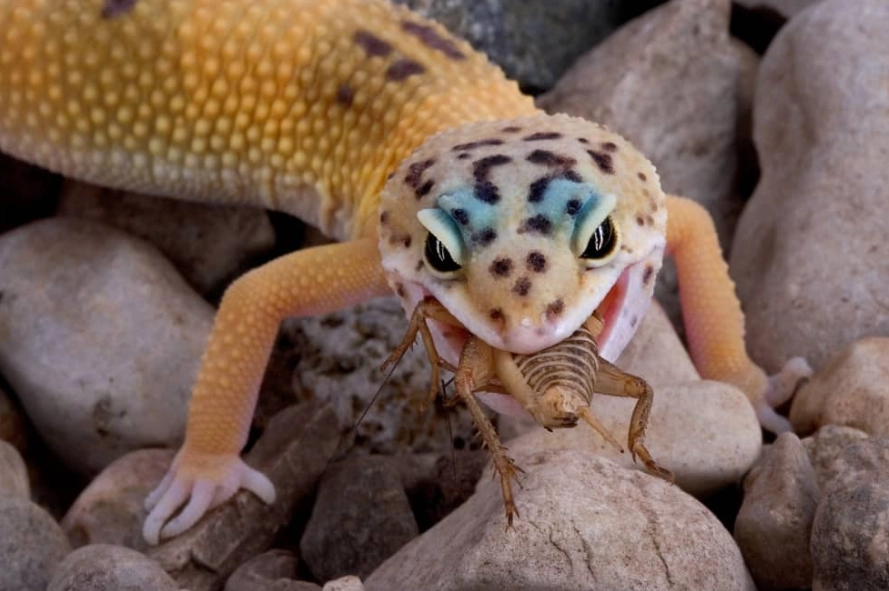
What You'll Find in This Guide
The Simple Age-Based Feeding Guide
Forget complicated formulas. This table is your quick-reference cheat sheet. Remember, the size of the insect matters just as much as the quantity. A good rule: no insect should be wider than the space between your gecko's eyes.
| Life Stage | Age | How Often to Feed | Quantity per Feeding | Key Notes |
|---|---|---|---|---|
| Hatchling/Baby | 0-2 months | Every day | 3-5 small insects | They are growing rapidly. Never skip a day. |
| Juvenile | 2-6 months | Every day | 5-8 medium insects | This is their teenage growth spurt. Appetite is huge. |
| Sub-Adult | 6-12 months | Every other day | 6-10 medium insects | Growth starts to slow. Transition to adult schedule. |
| Healthy Adult | 12+ months | 2-3 times per week | 7-10 large insects | Maintenance mode. Monitor tail thickness. |
| Gravid (Pregnant) Female | N/A | Every day or every other day | As much as she'll eat | She needs extra resources for egg development. |
Here's the nuance most care sheets miss: that "adult" schedule is for a healthy, active gecko. I have a male who's a bit of a couch potato. If I fed him 10 crickets twice a week, he'd get fat. He gets 6-7. You have to look at your individual animal.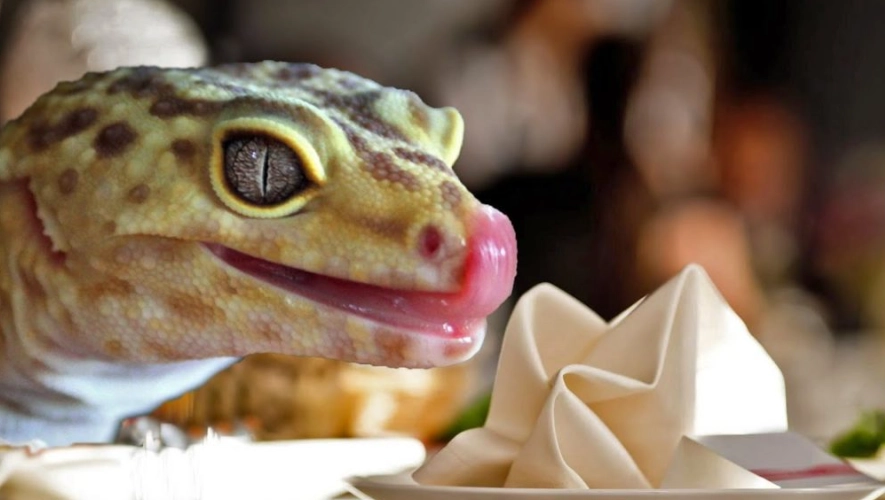
The Tail Test: The tail is your best health indicator. A healthy leopard gecko stores fat in its tail. It should be plump and wide, but not wider than the gecko's head. A skinny tail means underfeeding; a tail that's wider than the head or has visible rolls at the base means it's time to cut back.
Choosing the Right Feeder Insects
Leopard geckos are insectivores. No fruits, veggies, or mammal meat. It's all about bugs. But not all bugs are created equal.
The Staple Diet: Your Go-To Feeders
These should make up 80-90% of the diet. They are nutritious, readily accepted, and easy to find.
- Dubia Roaches: My top recommendation. They are meatier, less jumpy than crickets, have a great protein-to-fat ratio, and don't smell. They're also less likely to carry parasites if you buy from a reputable breeder.
- Crickets (Bandeds/Browns): The classic choice. They provide good exercise due to their movement. The downside? They smell, can be noisy, and if uneaten, might nibble on your sleeping gecko. Always remove uneaten crickets after 15-20 minutes.
- Discoid Roaches: A great alternative to Dubias, especially in areas where Dubias are restricted.
Treat Feeders: Use Sparingly (Once a Week or Less)
These are like candy or fast food—high in fat or chitin, low in overall nutritional balance.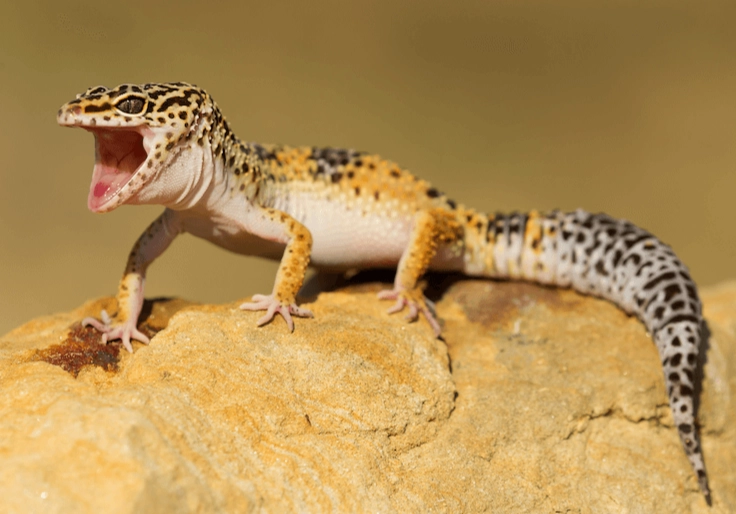
- Mealworms & Superworms: High in fat and chitin (hard shell). Overfeeding leads to obesity and impaction risk. I use them as a weekly treat, maybe 2-3 worms max.
- Waxworms & Butterworms: Extremely high in fat. These are "gecko crack"—they love them but they're terrible as a staple. Use only for putting weight on a sick gecko or as a rare reward. I've seen geckos become addicted and refuse all other food.
How to Feed Your Leopard Gecko: The Right Way
You can have the perfect schedule and the best insects, and still mess up the execution. Here's how to do it right.
1. Gut-Loading (Non-Negotiable): This is feeding your feeder insects nutritious food 24-48 hours before offering them to your gecko. You are what you eat, and so is your gecko. Feed your crickets or roaches high-quality gut load (commercial mixes are fine) and fresh veggies like carrots, sweet potato, and leafy greens. A cricket fed cardboard is a nutritionally empty shell.
2. Supplement Dusting (The MBD Preventer): Metabolic Bone Disease is a horrible, crippling condition caused by calcium deficiency. It's 100% preventable.
- Pure Calcium (without D3): Lightly dust insects at almost every feeding. I keep a small dish of this powder in the enclosure too, so my geckos can self-regulate.
- Calcium with D3 & Multivitamin: Use this combo once a week. The multivitamin must contain preformed Vitamin A (retinol or retinyl), not just beta-carotene. Leopard geckos can't convert beta-carotene efficiently, and Vitamin A deficiency causes eye and skin issues.
A Common Mistake I See: People dust every insect with the calcium+D3/vitamin mix. This can lead to a dangerous overdose of Vitamin D3 over time. Stick to the schedule: plain calcium most days, the fortified mix just once a week.
3. The Feeding Ritual: I feed in the evening when they're naturally active. I use a shallow feeding dish for worms and roaches to prevent substrate ingestion. For crickets, I often feed by hand or with tongs to monitor intake and prevent escapes. Offer food for about 15 minutes, then remove any uneaten live prey.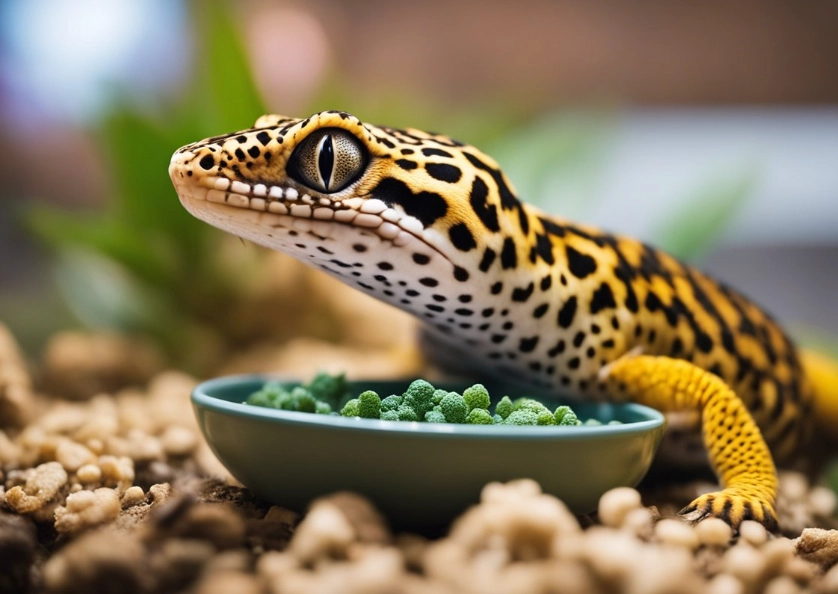
A Realistic Weekly Feeding Schedule
Let's make this concrete. Here's what a typical week looks like for my adult leopard geckos.
Monday Evening: Feeding night. Offer 7-8 gut-loaded dubia roaches, lightly dusted with plain calcium. Watch them hunt. Remove any uneaten roaches after 20 minutes.
Tuesday: No food. They're digesting. Fresh water is available.
Wednesday Evening: Feeding night. Maybe 5-6 dubias and 2 superworms as a small treat. Dust all with plain calcium.
Thursday: No food.
Friday Evening: This is the "power dust" night. Offer a variety—a few dubias, a couple crickets. Dust these insects thoroughly with the calcium + D3 and multivitamin mix.
Saturday & Sunday: No food. A weekend fast is perfectly healthy for an adult and mimics natural feast/famine cycles.
See the pattern? Two or three meals, spaced out, with supplements rotated. It's simple once you get the rhythm.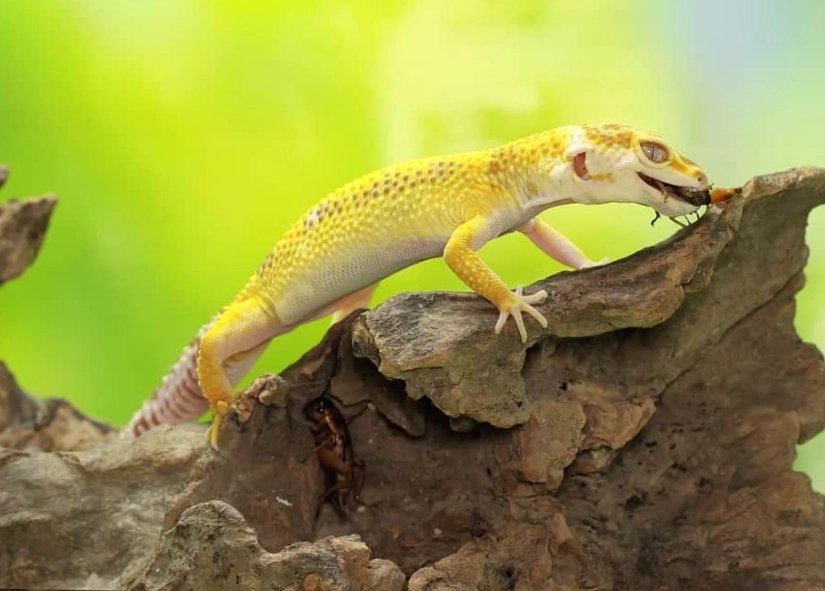
Troubleshooting Common Feeding Problems
What if your gecko isn't following the script?
Problem: Refusal to Eat. First, check the temperature. The warm hide must be 88-92°F (31-33°C). A cold gecko can't digest and won't eat. If temps are good, consider stress (recent move?), illness, or breeding season (males and females often fast in spring). A short fast (up to a week) for an adult with a fat tail is usually fine. Longer than 10 days or any weight loss? Vet time.
Problem: Only Eats One Type of Insect. This is usually caused by overfeeding treats like mealworms or waxworms. You have to be the parent. Stop offering the treat entirely. Offer the staple insect (dubia, cricket) consistently. They will not starve themselves to death. When hungry enough, they'll eat. It might take a week or two.
Problem: Rapid Weight Loss. This is a red flag. Possible causes include internal parasites (common in wild-caught or pet store geckos), crypto (a nasty protozoan), or other illness. This requires a fecal test and visit to a reptile-experienced veterinarian.
Your Feeding Questions Answered
 Feeding your leopard gecko properly is one of the most direct ways you impact its health and longevity. It's not about following a rigid rule, but about observing, adapting, and providing quality nutrition. Start with the guidelines here, watch your gecko's body condition closely, and you'll have a happy, healthy companion for many years.
Reader Comments