Quick Navigation
- More Than Just a Pretty Face: Anatomy of a Rainforest Icon
- Home Sweet Humid Home: Where Red Eyed Tree Frogs Live
- A Day (and Night) in the Life: Red Eyed Tree Frog Behavior
- Thinking of Keeping a Red Eyed Tree Frog? The Unvarnished Truth
- Common Questions (And Some Real Answers)
- The Bigger Picture: Conservation and Ethical Keeping
Let's be honest, you're probably here because you've seen a picture. You know the one. A brilliant green frog, clinging to a leaf, with those insane, fire-truck-red eyes staring right at the camera. It's the poster child for rainforest weirdness and beauty, the kind of creature that doesn't look like it should be real. I remember the first time I saw one in a documentary, I actually thought it was CGI. It wasn't. The red eyed tree frog is very real, and its story is even more fascinating than its looks.
This isn't just a pretty face. Behind those iconic eyes is a master of adaptation, a creature perfectly tuned to the chaotic, humid world of the Central American rainforest. And for a lot of people, that initial fascination turns into a deeper curiosity. What are they really like? Where do they live? Could I... keep one?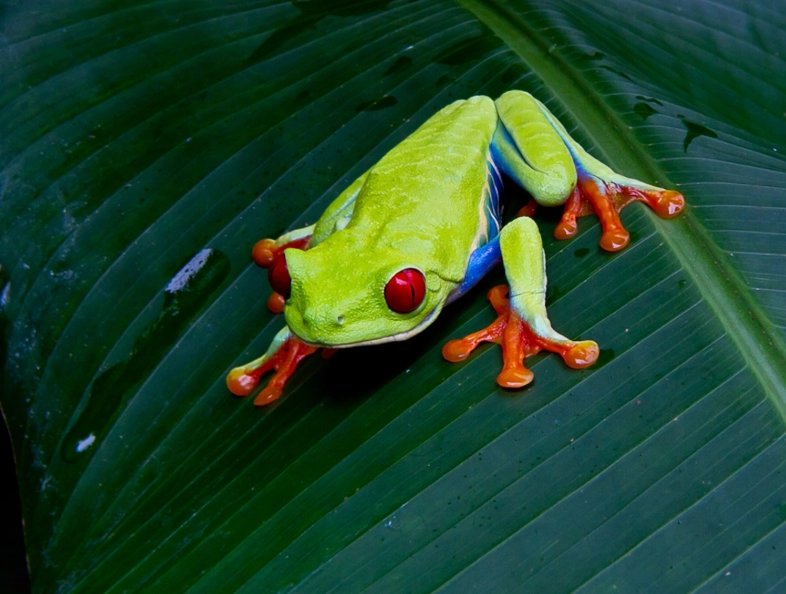
More Than Just a Pretty Face: Anatomy of a Rainforest Icon
Okay, let's start with the obvious. Why on earth is it so colorful? Every part of the red eyed tree frog's look has a job.
Those eyes are the big talking point. They're a classic example of "startle coloration." Imagine you're a sleepy snake, looking for a midnight snack. You see a green blob on a leaf. You move in, and BAM – the frog opens its eyes, flashing a huge pair of bright red circles. For a split second, you're confused, startled. That's all the time the frog needs to leap away into the darkness. It's a brilliant defensive bluff. They're not venomous, they're not aggressive. They're just really good at playing a surprise card.
The vibrant green skin is perfect camouflage against the broad leaves of the rainforest canopy. But look at its sides and the insides of its legs – you'll find dazzling shades of blue and yellow, often arranged in bold stripes. These are hidden when the frog is at rest, tucked neatly away. But during a jump, the sudden flash of contrasting color can further disorient a predator. It's like a living, leaping disco ball designed for survival.
Their feet are another masterpiece. Huge, round toe pads act like suction cups, thanks to special mucous glands and a microscopic hexagonal pattern that creates surface tension. This lets them cling to virtually any surface – leaves, branches, even the glass walls of a terrarium. Watching a red eyed tree frog calmly walk straight up a vertical pane is a humbling experience. My first thought was always, "Well, I definitely can't do that."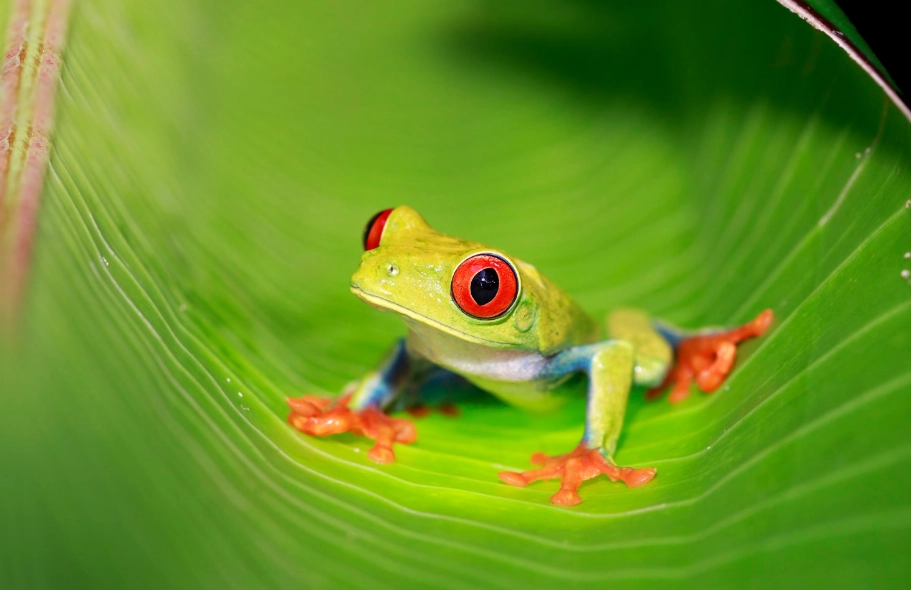
Home Sweet Humid Home: Where Red Eyed Tree Frogs Live
You won't find these guys in your backyard pond (unless you live in a very specific backyard). The red eyed tree frog's world is the lowland tropical rainforests. We're talking about a narrow strip of land from southern Mexico, through Central America (like Belize, Costa Rica, Nicaragua, and Panama), and into the very northern tip of Colombia.
Think heat and humidity. Constantly. Temperatures hover between 75-85°F (24-29°C) year-round, and humidity is almost always above 80%, often hitting 100%. Rainfall is measured in feet, not inches. This environment dictates everything about their biology and behavior. They are arboreal, meaning they spend their entire lives off the ground, in the trees and shrubs near rivers, ponds, and other water bodies.
This specific habitat is crucial. It's not just "a forest." It's a complex, layered ecosystem that provides everything they need: broad leaves for sleeping and hiding, a constant supply of insects drawn to the moisture, and pools of water for breeding. The destruction of these rainforests is the single biggest threat to wild populations. Organizations like the International Union for Conservation of Nature (IUCN) list them as a species of "Least Concern" for now, largely due to their wide range, but habitat loss is a relentless pressure. Places like the Smithsonian's National Zoo & Conservation Biology Institute are involved in studying and protecting amphibian habitats globally, which indirectly helps species like this.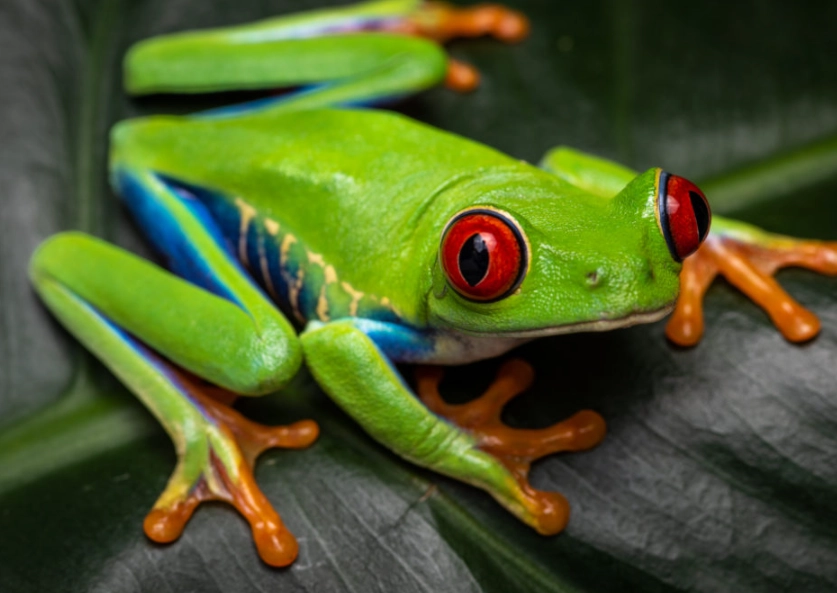
A Day (and Night) in the Life: Red Eyed Tree Frog Behavior
These frogs are strictly nocturnal. Your typical red eyed tree frog's day goes like this:
- Daytime: Asleep. Totally, completely asleep. They adopt a characteristic "rainforest pancake" pose, tucking their bright limbs under their body, closing those famous eyes, and pressing themselves flat against the underside of a large leaf. In this position, they are a simple, shadowy green lump – virtually invisible to birds and snakes passing above.
- Nighttime: Party time. Well, hunting time. As dusk falls, they become active. This is when you'd hear their calls if you were in the rainforest – a short, sharp, chack-chack-chack sound, often made by males to establish territory or attract females. They hunt by sitting still and waiting for unsuspecting insects to wander by, then snagging them with a lightning-fast flick of their long, sticky tongue. Moths, crickets, flies – anything that fits in their mouth is on the menu.
The social life of a red eyed tree frog is mostly about being alone, except for one very important, very wet event: breeding.
The Incredible Journey from Egg to Froglet
When the rainy season hits, it's go time. Males gather around breeding ponds and call. After mating, the female carries the male on her back to a suitable leaf hanging over the water. She lays a clutch of about 30-50 eggs in a gelatinous mass, which the male fertilizes. Then she uses her legs to fold the leaf around the eggs, creating a little protective packet. And then the parents leave. That's it for parental care.
But the design is genius. The eggs develop safely in their leafy envelope, away from many aquatic predators. After about a week, the tadpoles inside are ready. They sense vibrations – perhaps from a passing rainstorm or an animal brushing the leaf. This triggers them to wriggle free. The gelatinous mass liquefies, and the tadpoles wash down the leaf and plop right into the pond below.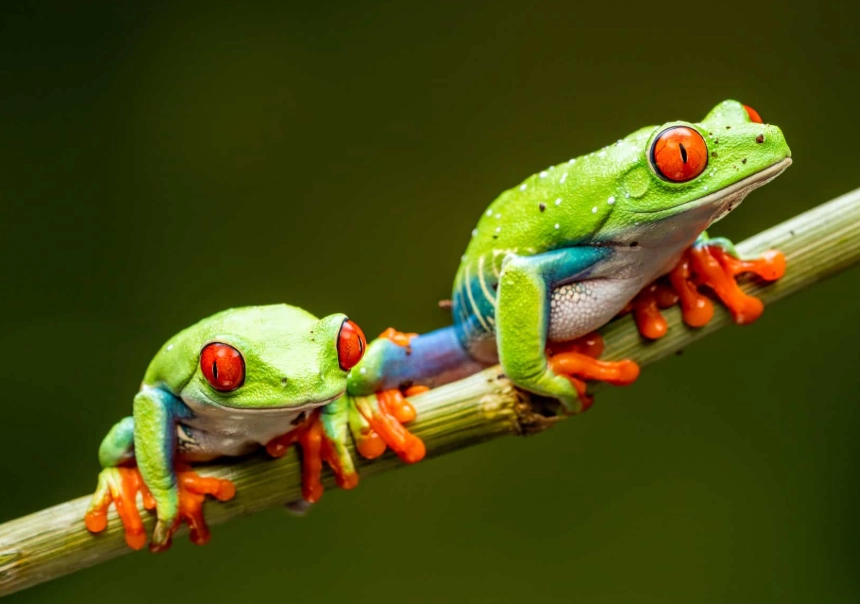
It's a numbers game, and it's brutal. But it's worked for millennia, as long as the ponds and the leaves above them remain.
Thinking of Keeping a Red Eyed Tree Frog? The Unvarnished Truth
This is the section that separates casual admirers from committed keepers. The idea of having this living jewel in your home is incredibly appealing. I get it. But let's clear something up right away: they are not "beginner" pets. They are intermediate-level pets with very specific, non-negotiable needs. Calling them "easy" is a fast track to a sick frog and a frustrated owner.
If you're serious about it, here's what you're signing up for.
The Non-Negotiable Shopping List (The Setup)
You can't just put a red eyed tree frog in a fish tank. You need to build a vertical, humid slice of the rainforest.
- Enclosure: A tall glass terrarium is a must. For 1-2 frogs, think 18"x18"x24" tall as an absolute minimum. Bigger is always, always better. Screen tops are good for ventilation but terrible for holding humidity – you'll likely need to cover part of it with glass or plastic.
- Heating & Lighting: They don't need blazing hot basking spots like a reptile. A low-wattage heat pad on the side of the tank or a gentle overhead heat lamp on a thermostat can maintain that 75-80°F range. Crucially, they do not require special UVB lighting like many reptiles, but a low-level UVB light can still be beneficial for plant growth and their overall biological rhythm. Research is ongoing, but many successful keepers don't use UVB. A simple, low-heat plant light for a 12-hour day/night cycle works.
- Humidity: This is the big one. 70-80% humidity, 24/7. This requires a high-quality misting system (automatic is best) and a substrate that holds moisture, like coconut fiber or sphagnum moss. You'll need digital hygrometers to monitor it. Dry air = a dead frog, quickly.
- Interior Design: This is the fun part. You need plenty of sturdy, broad-leafed plants (live or safe artificial). Pothos and philodendron are great live options. You need branches and vines arranged vertically and horizontally for climbing. You need hiding places. The goal is to create a lush, cluttered environment where the frog can feel secure and choose from multiple perching spots.
See what I mean? This is a project. And it's going to cost several hundred dollars to do right before you even buy the frog.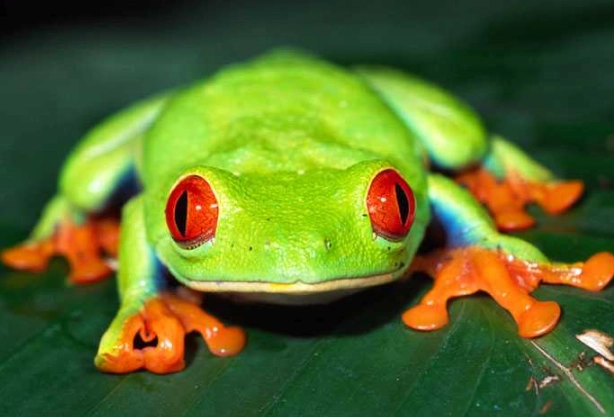
Daily and Weekly Chores (The Commitment)
Once the tank is set up, the work isn't over.
| Task | Frequency | Details & Notes |
|---|---|---|
| Misting | At least 2-3 times daily | To maintain humidity and provide droplets for drinking. Automatic misters are a lifesaver. |
| Feeding | Every other day for adults | Diet of gut-loaded crickets, roaches, occasional flightless fruit flies. Food must be dusted with calcium/vitamin powder. |
| Water Bowl Change | Daily | Use dechlorinated water (never tap water). Frogs absorb chemicals through their skin. |
| Spot Cleaning | Daily | Remove waste, dead insects, and moldy food. |
| Full Terrarium Cleaning | Every 4-6 weeks | Partial substrate change, plant trimming, glass cleaning. Stressful for the frog. |
It's a rhythm. You have to get into it.
And about handling? Forget it. Red eyed tree frogs are for watching, not playing with. Their skin is extremely delicate and porous. Oils, salts, and lotions on your hands can harm them. Handling causes immense stress. The only times you should touch them is during essential tank maintenance or health checks. If you want a pet you can cuddle, get a hamster.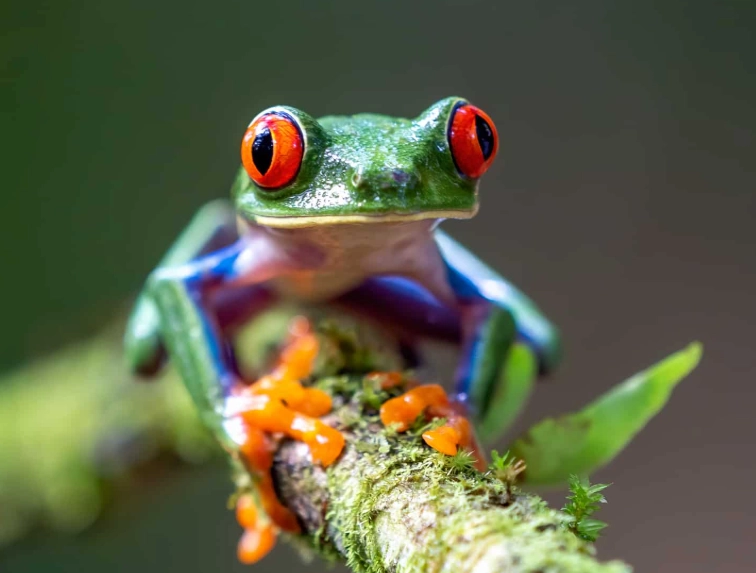
Common Questions (And Some Real Answers)
Are red eyed tree frogs poisonous?
No. This is a huge and persistent myth. They are not poisonous to humans or other animals. Their defense is all about bluffing with color and jumping away. Some of their less colorful rainforest cousins are extremely toxic, leading to the general assumption. But the red-eyed one? Harmless.
How long do they live?
In the wild, it's tough with all those predators, maybe 5 years. In a well-maintained captive environment, a red eyed tree frog can live 5-8 years, sometimes even up to 10. That's a decade-long commitment. Think about where you'll be in 10 years.
What do you feed them?
Live insects. Period. Crickets are the staple. You should "gut-load" them (feed the crickets nutritious food 24 hours before feeding) and then "dust" them with a calcium + vitamin D3 powder supplement right before offering them to the frog. Variety is good: dubia roaches, black soldier fly larvae, occasional waxworms as a treat. The insect size should be no wider than the space between the frog's eyes.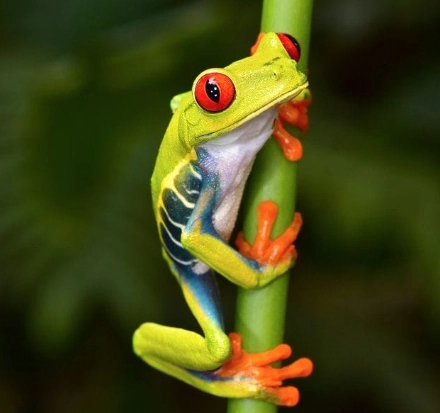
Can they live with other frogs?
Generally, no. They can be housed with other red eyed tree frogs of similar size, provided the tank is large enough. But mixing species is a bad idea. Different species have different needs, can transmit diseases, and may stress or even eat each other.
Why is my red eyed tree frog always hiding?
Because that's what they do. A hiding frog is a happy, normal frog. If it's out in the open all day, that's often a sign of stress or an inadequate environment (not enough hides, wrong temperature). Don't worry if you barely see it during daylight hours. That's perfect.
The Bigger Picture: Conservation and Ethical Keeping
This is the part that really matters. The pet trade has an impact. While many red eyed tree frogs in the pet trade are now captive-bred (which is excellent and should be your ONLY source – never buy a wild-caught frog), the demand for exotic pets can put pressure on wild populations if not managed ethically.
The real threat, though, is habitat loss. Deforestation for agriculture, logging, and urban development is shrinking their world. When you look at a red eyed tree frog, you're not just looking at a pet. You're looking at an ambassador for an entire ecosystem that's under siege.
Maybe after reading all this, you've decided a red eyed tree frog isn't for you. That's a totally responsible conclusion. You can still admire them. Watch documentaries. Visit them at a reputable zoo that provides expert care. Sometimes, loving something means appreciating it from a distance, and working to protect the wild, messy, incredible place it comes from.
And if you're still determined to create a miniature rainforest in your living room? Do your homework. Set up the tank completely and let it stabilize for a month before you even think about getting a frog. Find a local breeder. Talk to experienced keepers. Be prepared for the cost, the routine, and the responsibility.
Because that stunning little frog with the red eyes isn't just decoration. It's a living, breathing piece of the wild, and it's counting on you to get it right.
Reader Comments