
Travel Tips
Lorem ipsum dolor sit amet, consectetur adipiscing elit.
Let's be honest. You probably saw a picture somewhere – maybe on Instagram, maybe in a pet store – of this little green guy with the crazy eyelashes and the sticky toes, clinging to a leaf and looking like a tiny, grumpy dinosaur. And you thought, "I need that in my life." I get it. I was there too, about five years ago, staring into a terrarium and falling head over heels for what's properly known as the crested tree frog.
But here's the thing they don't always tell you in those cute photos. These aren't just decorations. They're living creatures with specific needs, and getting it wrong can lead to a very short, sad life for the frog and a lot of guilt for you. This guide isn't about selling you on the idea. It's about giving you the real, unvarnished truth about crested tree frog care. The good, the bad, the messy, and the absolutely magical.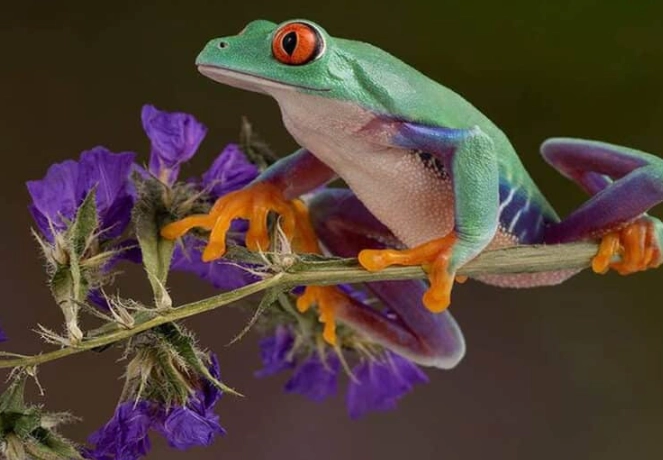
First off, let's clear up some confusion. The term "crested tree frog" can refer to a few different species, but in the pet trade, it most commonly points to the White-lipped Tree Frog (Litoria infrafrenata), the giant of the group, and sometimes the Australian Green Tree Frog (Litoria caerulea), which has a less pronounced ridge but similar care. For this guide, we're focusing on the needs that cover these popular Litoria species.
What makes them "crested" is that distinctive ridge of skin that runs from over their eye, along the side of their body. It kinda looks like a permanent raised eyebrow, which adds to their perpetually unimpressed expression. They're primarily bright green, but can change to a more brownish color depending on mood, temperature, or humidity.
I remember the first time I heard mine call. It was late at night, and this loud, barking "crawwk-crawwk" sound came from the tank. I nearly jumped out of my skin! It's a sound you'll either find endearing or incredibly annoying if your tank is in your bedroom.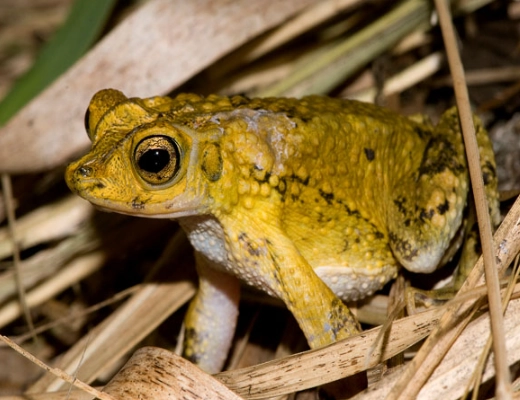
This is where most beginners slip up. You can't just put a crested tree frog in a fish tank with a bowl of water. Their home is a vertical rainforest, and you're the architect.
Think up, not out. A single adult frog needs a minimum of a 20-gallon tall tank. I started with a 15-gallon and upgraded within six months – it was just too cramped. For a pair, you're looking at 30 gallons tall or more. Front-opening terrariums are a godsend for maintenance and reducing escape attempts during feeding. Screen tops are essential for ventilation but need to secure tightly. These guys are surprisingly strong for their size.
This is the trifecta of amphibian keeping. Get one wrong, and your frog will stop eating, become stressed, and get sick.
| Parameter | Target Range | How to Achieve It | My Personal Tip / Pitfall |
|---|---|---|---|
| Temperature | 75-85°F (24-29°C) during the day, with a slight drop at night. | Use a low-wattage ceramic heat emitter or under-tank heat pad on one side ONLY to create a gradient. Always use a thermostat to prevent cooking your frog. | I burned out two cheap heat mats before investing in a quality one with a thermostat. The frog cost $40; the proper heating setup cost $60. Worth every penny. |
| Humidity | 60-80%. Crucial for skin health and breathing. | Daily misting with dechlorinated water (a pump sprayer is best). A quality substrate like coconut fiber holds moisture. An automatic misting system is a luxury that saves time. | Buy a digital hygrometer. The analog dial ones are often inaccurate. I learned this after my frog's skin looked dry for a week despite the dial reading "70%". |
| Lighting | Not for heat, but for a day/night cycle. | A simple low-output UVB light (5.0) on a 12-hour timer is beneficial for their metabolism and well-being, though debated. At minimum, use an LED plant light or room ambient light. | They don't need blazing UVB like a bearded dragon. A low-level bulb is plenty. No special "heat lamps" needed if your ceramic emitter is handling warmth. |
See what I mean? It's a system. You can't just set it and forget it. You'll be checking gauges, refilling misters, and adjusting things. It becomes a quiet little ritual.
The floor and walls of the tank are just as important as the air. You want it to feel secure and cluttered.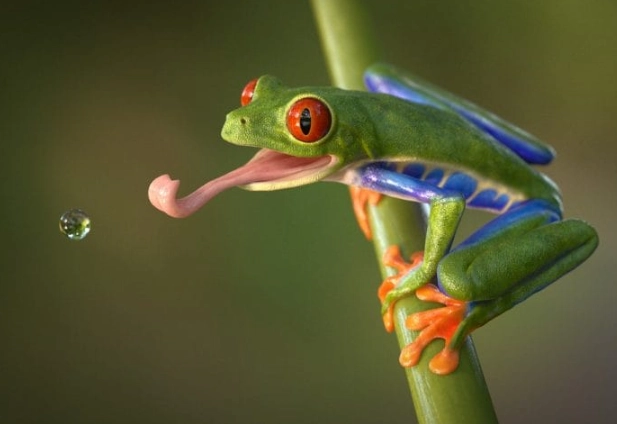
Substrate Choices:
Climbing and Hiding: This is the fun part. You need lots of vertical space. Branches (manzanita or ghostwood, properly sanitized), cork bark rounds and flats, and live or artificial plants. Live plants like pothos, philodendron, or ferns are fantastic—they help with humidity and air quality. But be prepared for frogs to crush them. I use a mix; hardy live plants at the bottom and sturdy artificial vines up high.
A water dish is needed, but it doesn't have to be huge. They absorb most water through their skin. The dish should be shallow enough for easy exit and changed daily.
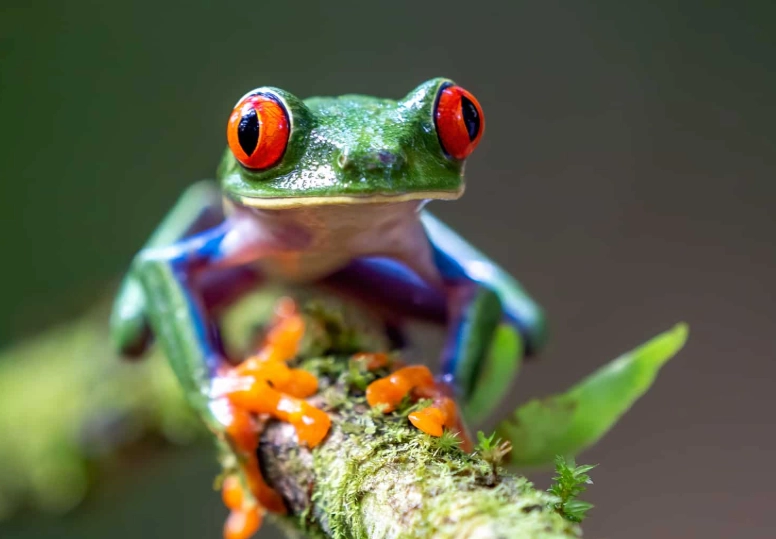
Crested tree frogs are insectivores. Their diet in captivity is simple but specific.
Staple Feeders: Crickets and dubia roaches are the best staples. They're nutritious and move in a way that triggers the frog's feeding response. The food must be gut-loaded (fed nutritious foods 24-48 hours before feeding) and dusted with supplements.
Supplement Schedule (This is Critical):
Without proper supplementation, they will develop Metabolic Bone Disease (MBD), a horrific and fatal condition where their bones become soft and rubbery. I've seen pictures, and it's enough to make you religious about your dusting routine.
How Much to Feed? For an adult, 3-4 appropriately sized crickets every other day is fine. A cricket should be no wider than the space between the frog's eyes. Juveniles need daily feeding. Watch their body condition; they should be plump but not obese. A visible "ridge" or fatty deposit behind the head is normal in healthy adults.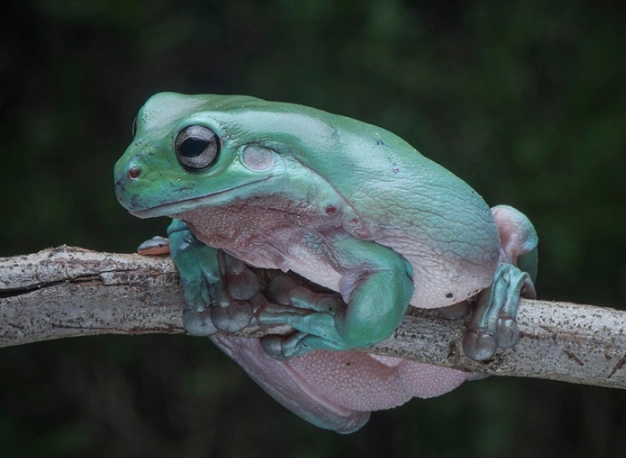
Here's my blunt opinion: don't. Not really. They are look-don't-touch pets.
Their skin is extremely sensitive. Oils, salts, lotions, and even soap residue on your hands can be harmful if absorbed. Handling is also incredibly stressful for them. The only times you should need to handle them are during tank deep-cleaning (every 4-6 weeks) or for a health check. When you must, make sure your hands are thoroughly washed and rinsed with dechlorinated water, and be gentle. They're fragile.
Their primary defense mechanism is to pee on you when startled. It's effective. You'll only need to experience it once to learn to move slowly.
A healthy crested tree frog is alert (at night), has clear, bright eyes, smooth skin, and a good appetite. Here are the red flags:
Most illnesses stem from poor husbandry: incorrect temperature, dirty water, inadequate humidity, or poor diet. Fix the environment first, but don't hesitate to get professional help. For reputable information on amphibian health, organizations like AmphibiaWeb are invaluable resources for understanding their biology, though they are not a substitute for a vet.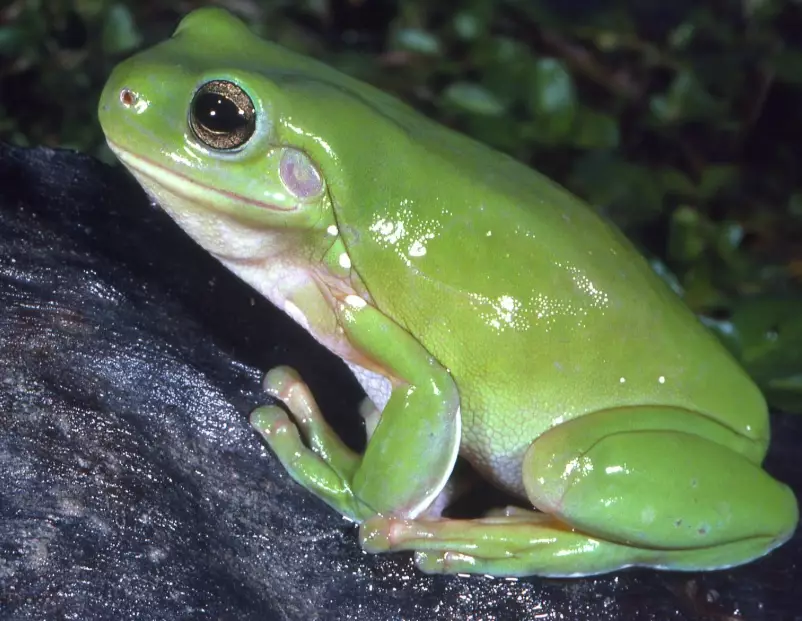
Let's tackle those Google searches head-on.
Q: Are crested tree frogs good for beginners?
A: Yes and no. Their care requirements are straightforward but non-negotiable. If you're a beginner who is detail-oriented, does research (like you're doing now!), and is willing to invest in proper equipment upfront, they can be a great first amphibian. If you're looking for a low-maintenance pet, this isn't it.
Q: How long do crested tree frogs live?
A> In a well-maintained captive environment, 10-15 years is common. Some have lived over 20. This is a long-term commitment, not a short-term novelty.
Q: Can I keep multiple crested tree frogs together?
A> You can, but with major caveats. Only house frogs of similar size to avoid cannibalism. The tank must be large enough (add 10-15 gallons per additional frog). Provide multiple feeding stations and hiding spots to reduce competition. Be prepared to separate them if you see aggression (biting, constant chasing). Males may call competitively, which can be loud.
Q: Where can I find a crested tree frog for sale?
A> This is important. Avoid big chain pet stores. Their animals are often wild-caught (stressed, parasite-ridden) or come from poor breeding mills. Seek out:
1. Reputable Reptile/Amphibian Expos: You can meet breeders face-to-face.
2. Specialty Online Breeders: Look for breeders with strong reputations on forums, who are happy to answer questions and provide photos of their setups and parents.
3. Local Exotic Pet Stores: The good ones will know their breeders.
A captive-bred (CB) frog is almost always healthier, hardier, and less stressed than a wild-caught (WC) one. Ask explicitly. The IUCN Red List can provide conservation status for various species, reminding us of the importance of ethical sourcing.
Q: Why is my crested tree frog not eating?
A> The top reasons: 1) Stress (new home, improper handling), 2) Incorrect temperature (too cold, and their metabolism shuts down), 3) Illness, or 4) They're simply not hungry. Ensure conditions are perfect, offer food at night, and if refusal continues beyond 10 days, consult a vet.
Look, I love my frog. There's something deeply calming about watching him methodically climb his branch at dusk, or seeing his throat pulse as he sleeps pressed against the glass during the day. He's a living piece of art and a fascinating window into a different kind of life.
But he's also work.
You're signing up for years of buying crickets, mixing powder supplements, monitoring gadgets, and cleaning a tank. You're committing to being a meteorologist for a tiny, fragile ecosystem. If that sounds like a fun, quiet hobby to you, then you might have found your perfect pet.
If it sounds like a chore, or if your lifestyle is unpredictable, maybe admire them from afar. There's no shame in that. Responsible pet ownership starts with honest self-assessment.
The goal isn't just to have a crested tree frog. The goal is to have a thriving crested tree frog, one that lives out its full, natural lifespan in a habitat you crafted with care. That's the real reward. It's not always easy, but when you get it right, it's incredibly satisfying. Good luck with your decision.