
Travel Tips
Lorem ipsum dolor sit amet, consectetur adipiscing elit.
If you've ever spent a warm, humid evening in Missouri with your windows open, you've heard them. That chorus of peeps, trills, and rattles coming from the woods or the pond down the road. It's the sound of summer here, a nightly symphony performed by some of the state's most fascinating but often overlooked residents: tree frogs.
I remember as a kid trying to find the source of that sound with a flashlight, only to be met with sudden silence. It took years of patient watching (and a bit of luck) to finally connect those incredible noises to the tiny, camouflaged amphibians making them. Missouri tree frogs are masters of disguise and sound. They're not just one thing, either. We've got a handful of different species, each with its own personality, preferred hangout, and signature call.
This guide is for anyone who's been curious about those nighttime noises, or who has spotted a bright green frog clinging to their window screen after a rain. We're going to break down exactly who's who in the world of Missouri tree frogs, where to find them, what they're saying, and why they matter so much to our local ecosystems. Forget dry, textbook descriptions. Let's talk about these frogs like the fascinating neighbors they are.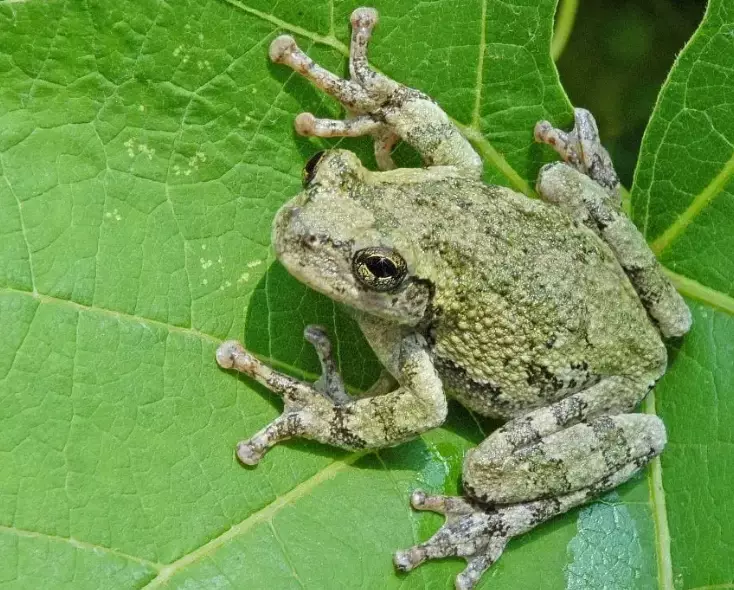
First things first. When we say "tree frog" in Missouri, we're usually talking about frogs in the family Hylidae. These are the frogs with those iconic sticky toe pads that let them climb just about anything. But not all of them live high in trees. Some are more "shrub frogs" or "reed frogs," to be perfectly honest. Missouri is home to several species, and telling them apart is half the fun.
Here’s a quick rundown of the main players you’re likely to encounter. I've put this in a table because, honestly, it's the easiest way to compare them without flipping back and forth.
| Common Name | Scientific Name | Size | Key Identifying Features | Signature Sound | Preferred Hangout |
|---|---|---|---|---|---|
| Gray Treefrog | Hyla versicolor & H. chrysoscelis | 1.25 - 2 inches | Mottled gray, green, or brown skin; bright yellow-orange patch on inner thighs. | A short, flutey trill (slower in versicolor, faster in chrysoscelis). | Wooded areas, shrubs, side of your house. |
| Cope's Gray Treefrog | Hyla chrysoscelis | 1.25 - 2 inches | Identical in looks to Gray Treefrog; distinguished mainly by call and genetics. | A faster, harsher, more metallic trill. | Similar to Gray Treefrog, often in slightly drier woods. |
| Green Treefrog | Hyla cinerea | 1.25 - 2.5 inches | Bright green (sometimes yellowish) with a clean white or pale yellow stripe along its jaw and side. | A loud, nasal "queenk-queenk-queenk" repeated. | Swamps, flooded fields, dense vegetation near permanent water. |
| Bird-voiced Treefrog | Hyla avivoca | 1 - 1.75 inches | Gray or green with irregular dark markings; similar to Gray but smaller and with a different call. | A series of quick, bird-like whistles: "wit-wit-wit-wit." | Swampy forests, cypress-tupelo swamps (mostly in the Bootheel). |
| Spring Peeper | Pseudacris crucifer | 0.75 - 1.25 inches | Tiny! Tan or brown with a dark "X" on its back. | A loud, high-pitched single "peep" repeated. | Woods near temporary ponds, the classic spring chorus maker. |
See? Already it makes more sense. The Gray and Cope's Gray are a classic case of "sibling species"—they look identical but are genetically different. You need to hear them call to tell them apart for sure, which is a fun challenge. The Green Treefrog is the show-off, that brilliant emerald frog everyone hopes to find. And the Spring Peeper, while tiny, has a voice that can dominate an entire wetland.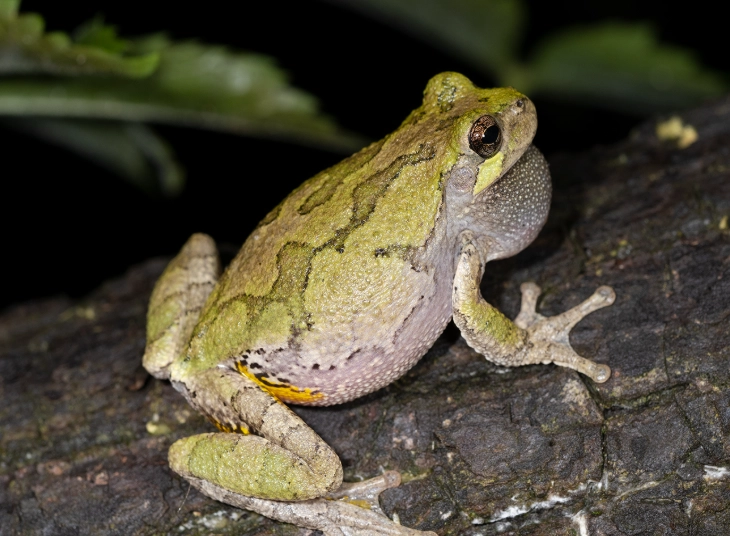
A Quick Note on "Chorus Frogs": You might hear about Upland or Boreal Chorus Frogs (Pseudacris species). These are close cousins and sound similar to peepers, but they're not typically considered "tree frogs" in the same way. They have less developed toe pads and spend more time on the ground. Still, their spring songs are a huge part of Missouri's amphibian soundtrack.
This is where people get tripped up. The name "tree frog" suggests an animal that's always 20 feet up an oak tree. For some Missouri tree frogs, that's true in the summer. But their lives are split between two very different worlds.
From late winter through summer, depending on the species, these frogs are focused on one thing: reproduction. And for that, they need water. But not just any water.
During this time, the males are the ones you hear. They gather at the water's edge, climb into a bush or onto a reed, and sing their hearts out to attract a mate. It's a vulnerable time, but also the absolute best time for us to find and observe them.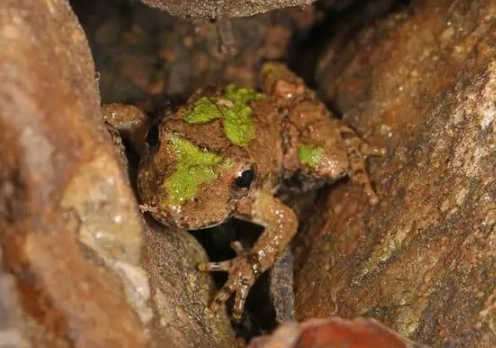
Once breeding wraps up, many Missouri tree frogs do something amazing: they largely leave the water. They use those sticky toe pads to climb into the forest canopy, shrubs, or even human structures.
Gray Treefrogs are famous for this. On summer days, they tuck themselves into tree hollows, behind loose bark, or between shutters and window frames. Their mottled color makes them look exactly like lichen-covered bark. You could be staring right at one and not see it until it moves. I once found one inside my porch light fixture!
They come down at night to hunt insects on lower vegetation, but their world expands vertically. This is why you might hear their trills on a hot, dry August night coming from a cluster of trees far from any obvious pond. They're still up there, just living a different part of their cycle.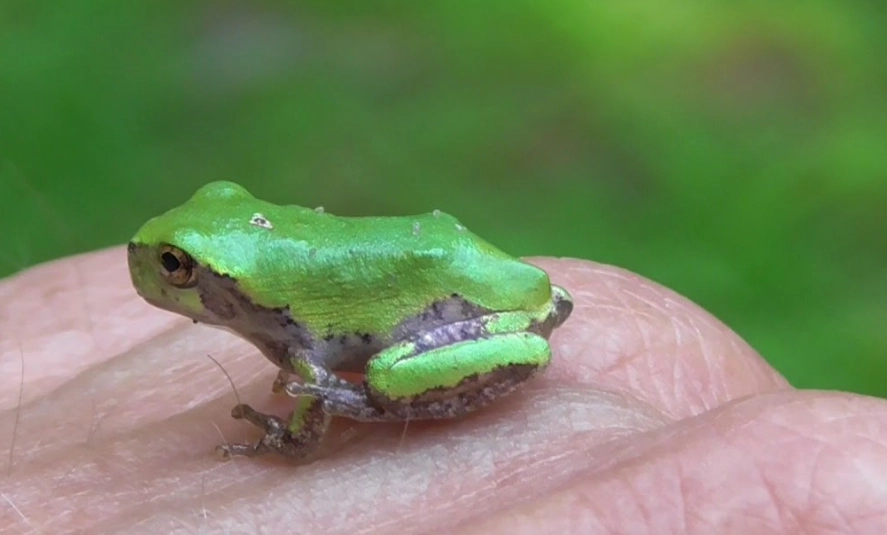
Backyard Tip: The easiest way to find tree frogs in summer isn't to search the woods. Check around your outside lights at night. They gather there to feast on the attracted insects. A Green Treefrog on a window near a light is a common and delightful sight in much of Missouri.
This is my favorite part. The calls of Missouri tree frogs aren't just random noise. They're a complex form of communication. If you learn a few, you can "see" the night with your ears.
The best resource for learning these sounds is the Cornell Lab of Ornithology's Macaulay Library or the AmphibiaWeb site. Seriously, pull up their sound recordings while reading this. It'll click instantly.
Let's be honest, some calls are just weird. The first time I heard a Bird-voiced Treefrog, I refused to believe it was a frog. It sounded like a distant, frantic bird or an insect. But that's the fun—discovering that each little sound has an author.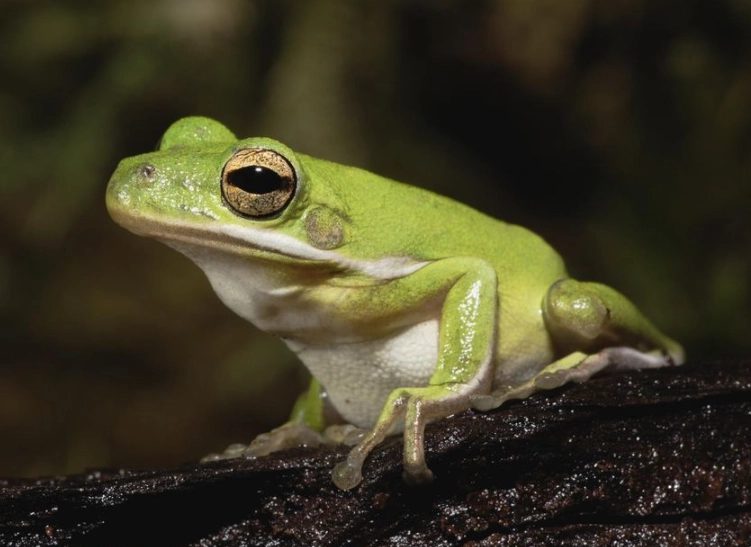
Watching a tree frog life cycle is like watching a magic trick. It's a radical transformation.
I once raised some Gray Treefrog tadpoles in a tank (from eggs I found in a doomed, drying puddle—it was a rescue mission). Watching a tadpole sprout its front legs while its tail was still fully formed was one of the strangest and coolest things I've ever seen. It looks biologically impossible, but they do it all the time.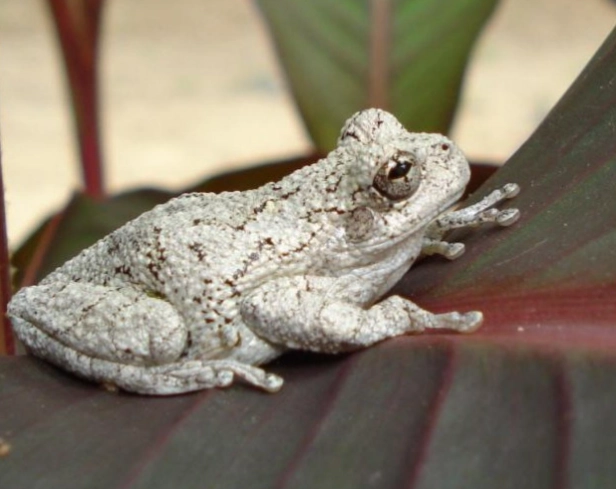
They're not just cute noisemakers. Missouri tree frogs are vital cogs in the ecosystem.
And that's the problem. Their populations are facing real threats.
The Big Threats:
1. Habitat Loss: This is number one. Filling in wetlands for development, clearing forests, and draining ponds destroys both their breeding and upland habitats. A housing development where a vernal pool once was means an entire local population of Spring Peepers is just gone.
2. Pesticides & Pollution: Chemicals running off lawns and farms into waterways can kill tadpoles outright or cause deformities in adults. Their skin absorbs these toxins directly.
3. Climate Change: Altered rainfall patterns can dry up temporary breeding pools before tadpoles mature. Warmer winters can disrupt breeding cycles.
4. Disease: The chytrid fungus has devastated amphibian populations worldwide. While some Missouri species seem resilient so far, it's a constant threat.
The Missouri Department of Conservation (MDC) lists several of our amphibians as species of conservation concern. While most Missouri tree frogs are still relatively common, taking them for granted is a mistake. I've noticed the chorus in my own rural area seems a bit thinner than it was when I was a kid. It's not silent, but it's quieter. That's a personal observation, not hard data, but it worries me.
The good news? You don't need to be a biologist to make a difference. Simple actions can have a big impact.
It really can be that simple. A small pond in my neighbor's yard now hosts a reliable chorus of Gray Treefrogs every year. It's proof that even small-scale habitat creation works.
Here are the questions I get asked the most, the things people are really searching for.
No. This is a huge point of confusion. Missouri tree frogs are NOT poisonous to humans. You might be thinking of tropical Poison Dart Frogs. Our native tree frogs are completely harmless. Their skin secretions might be mildly irritating if you rub your eyes after handling one, but just wash your hands. They are safe to gently observe and release. Please don't handle them unnecessarily, though—their skin is delicate.
Great question! Toads (like our common American Toad) have dry, warty skin, shorter legs for hopping, and are primarily ground-dwellers. They lay eggs in long strings, not clumps. Tree frogs have smooth, moist skin, long legs and sticky toe pads for climbing, and a much more musical call. Toads also tend to walk or take small hops, while tree frogs can make impressive leaps.
We covered the pond idea. Beyond that:
- Provide cover: Plant native shrubs and let some areas grow a little wild.
- Add climbing surfaces: A rough-textured garden wall or a pile of branches can be a great daytime hiding spot.
- Go easy on outdoor lights: Bright security lights can disorient them. Use motion-sensor lights or shielded fixtures.
- Never, ever relocate frogs. Moving them to your yard usually dooms them. They don't know where food or shelter is, and you might introduce disease. Create habitat and let them find it naturally.
Almost exclusively insects and other small invertebrates. Crickets, flies, moths, spiders, ants—anything they can fit in their mouths. They are sit-and-wait predators, using their camouflage to ambush prey that wanders too close.
Spring and early summer are peak season, especially on warm, humid evenings after dusk. But you can hear Gray Treefrogs on and off throughout a hot, sticky Missouri summer. Temperature is key—if it's below about 60°F (15°C), they usually stay quiet.
So there you have it.
Missouri's tree frogs are more than just a sound in the night. They're a diverse group of amphibians, each with its own story, playing a critical role in the health of our state's woods, wetlands, and even our backyards. The next time you hear that chorus, you'll know you're listening to Gray Treefrogs trilling for mates, or Spring Peepers announcing that winter is finally over. You might even be inspired to leave a part of your yard a little wilder, or just stand outside a bit longer and appreciate the complex, buzzing, peeping, trilling world that's thriving just beyond the porch light.
It's a world worth listening to, and definitely a world worth protecting.