
Travel Tips
Lorem ipsum dolor sit amet, consectetur adipiscing elit.
Let's get one thing straight right off the bat. When you hear "Horned Frog," your mind might go in two completely different directions. You might picture this incredibly cool, grumpy-looking amphibian that looks like it walked out of a prehistoric swamp, all bumps and a mouth that seems way too big for its body. Or, if you're a sports fan, you might instantly think of Texas Christian University and their purple-clad athletes. It's a weird overlap, isn't it? A small, ground-dwelling frog sharing a name with a major football team.
I've kept a few of these living suction cups myself, and I've spent more time than I'd like to admit reading up on the TCU connection. The animal side of things is what really fascinates me. They're not actually frogs in the true scientific sense, which is the first of many surprises. They're a type of horned lizard, but the name "Horned Frog" has stuck so hard it's practically official. This guide is for anyone who's curious about either side of the story, but especially for those who see one of these spiky guys and think, "Could I keep one of those?"
We're going to dig into everything. What they really are, how to care for them if you're brave enough to try, the different types you might find, and of course, the story behind that famous college mascot. I'll also tell you the things nobody really talks about—like the fact that they can be kind of boring pets (sorry, but it's true) and that their famous "blood-squirting" trick is more of a last-resort thing than a party trick.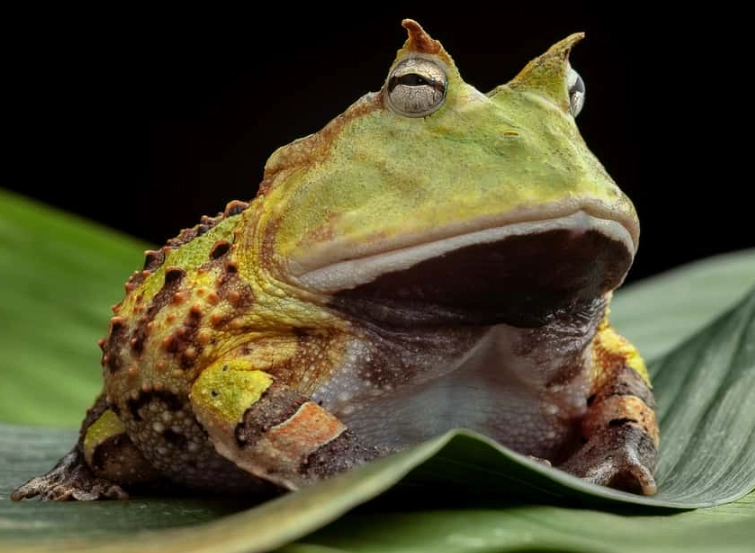
Quick Take: The term "Horned Frog" most accurately refers to the Texas Horned Lizard (Phrynosoma cornutum), the state reptile of Texas. However, in the pet trade, the name is often mistakenly applied to the wide-mouthed, round South American amphibians from the Ceratophrys genus, commonly called Pacman frogs. This guide focuses primarily on the true Texas Horned Frog (the lizard), with clarifications on the common mix-up.
This is where confusion starts, and it's important to clear it up. Scientifically speaking, the true Horned Frog is the Texas Horned Lizard. It's not a frog or a toad at all. It's a reptile. It has scales, lays eggs on land, and loves to bask in the sun. The "horns" are actually modified scales on its head that look like tiny, pointed crowns. They're for defense, making it look less tasty to predators.
Then you have the other guys. In pet stores and online forums, you'll often see fat, round, brightly colored amphibians labeled as Horned Frogs. These are usually Pacman frogs (Ceratophrys species). They're from South America, they're actual amphibians, and they have little horn-like bumps above their eyes—hence the shared nickname. They're like the vacuum cleaners of the frog world.
The mix-up is totally understandable. Both are stocky, both have "horns," and both have a certain grumpy charm. But their care, biology, and origins are worlds apart. For the rest of this article, when I say Horned Frog, I'm talking about the Texas native, the lizard. When I mention the amphibian, I'll call it a Pacman frog or Ceratophrys to keep things clear.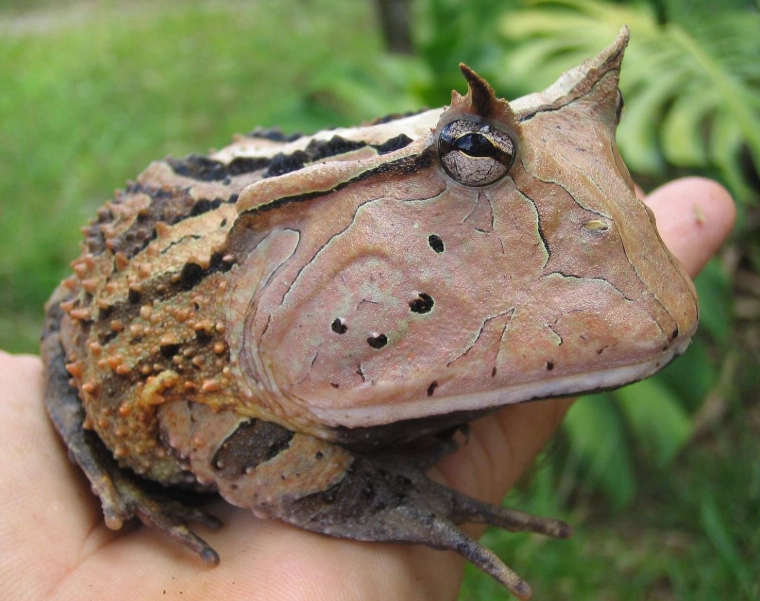
The Texas Horned Frog (lizard) is built like a tiny, spiky tank. Its body is flat and wide, perfect for soaking up heat and blending into the dirt. Those iconic horns? They're not just for show. Studies suggest they help protect the lizard's eyes and head from being swallowed by predators like snakes. Their coloring is a masterpiece of camouflage—tans, browns, and grays that mimic the dry soils of their home.
But here's the coolest (and grossest) part: their famous defense mechanism. When truly threatened, they can increase pressure in sinuses behind their eyes and rupture tiny blood vessels, shooting a stream of blood up to several feet. The blood tastes foul to canines like coyotes and foxes. It's a last-ditch effort, not something they do for fun. I've never seen it happen in person, and most owners never will, which is probably for the best.
Their diet in the wild is shockingly specialized. They are ant specialists. Not just any ants, but harvester ants. This is a massive, often overlooked, point for anyone wanting to keep one. You can't just feed them crickets from the pet shop. This specialized diet is one of the biggest reasons they are difficult to keep in captivity and why their wild populations are struggling. The IUCN Red List notes habitat loss and the decline of harvester ants as key threats to the Texas Horned Lizard.
Okay, let's talk about captivity. I'll be honest: the true Texas Horned Frog is not a beginner pet. It's not even an intermediate pet. It's often considered an expert-level, "look but don't touch" animal because of its strict requirements. Many states, including Texas, protect them, making it illegal to capture or own them without special permits. Always, always check your local and state laws first.
If you have the permits and the dedication, here’s what you’re in for. First, the enclosure. Think hot and dry. A wide, shallow tank is better than a tall one. They need deep, sandy soil (a mix of play sand and topsoil works) for burrowing, rocks for basking, and very low humidity. You'll need a high-quality heat lamp to create a basking spot of about 100-110°F (38-43°C), with the cool end in the 80s°F (high 20s°C). UVB lighting is non-negotiable for their bone health.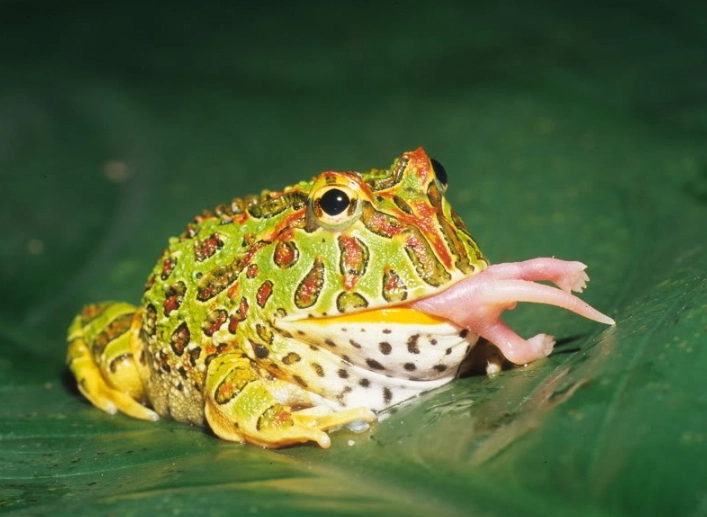
The Diet Problem: This is the deal-breaker. They need harvester ants. Some successful keepers manage colonies of harvester ants, which is a project in itself. Others use gut-loaded crickets dusted with specific supplements as a partial substitute, but it's not ideal. This single factor is why most people should admire these lizards in photos or at conservation centers, not in a home tank.
Now, let's contrast this with the Pacman frog, the amphibian often mislabeled as a Horned Frog. Their care is completely different and much more accessible for a dedicated beginner.
These guys are the couch potatoes of the amphibian world. They don't need much space—a 10-gallon tank is fine for one adult. They don't need special UVB light (though some argue low levels are beneficial). They need heat, but not desert-level heat. A low-watt heat pad on one side of the tank or a lamp keeping the ambient temperature around 75-85°F (24-29°C) is perfect.
The key for Pacman frogs is moisture and substrate. They are burrowers. You need several inches of damp (but not waterlogged) coconut fiber or topsoil. They'll dig down and sit there for days, with just their eyes poking out, waiting for food. And speaking of food, here's where they're easier: they'll eat just about anything that moves and fits in their mouth. Crickets, nightcrawlers, roaches, and even the occasional pinky mouse for large adults. You just dust the food with calcium and vitamin powder.
Their famous bite? Yeah, it's a thing. They have a powerful jaw and little teeth. If they mistake your finger for food, they will latch on. It's more shocking than painful, like a strong pinch from a binder clip. The trick is to not pull away, which can hurt them. Instead, gently run them under lukewarm water and they'll usually let go. It's a rite of passage for Pacman frog owners.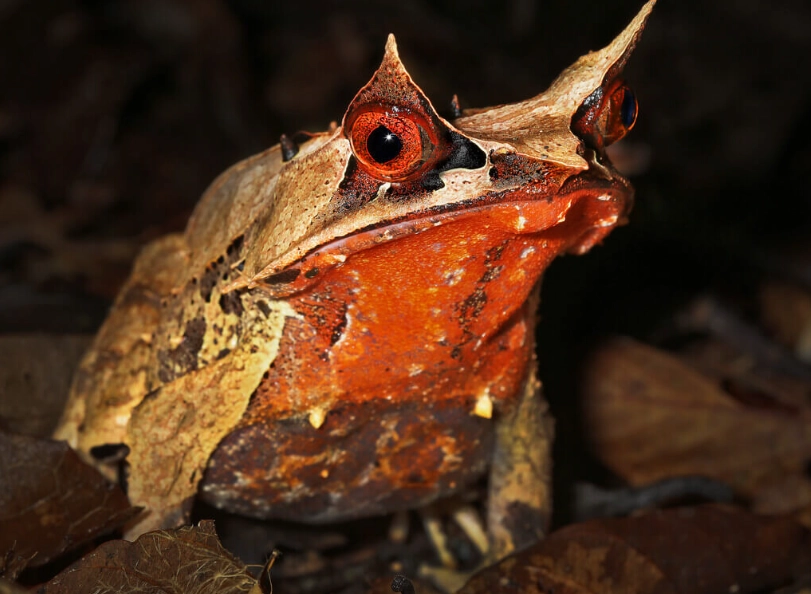
While the Texas Horned Lizard is the star, North America is home to over a dozen Phrynosoma species. They all share that flattened, spiky body plan, but have their own quirks. It's worth knowing about a few others, as you might come across them.
| Common Name | Scientific Name | Key Identifying Feature | Native Range | Conservation Note |
|---|---|---|---|---|
| Texas Horned Lizard | Phrynosoma cornutum | Two large central head horns, prominent dark stripes radiating from eyes. | South-central US (Texas, Oklahoma, Kansas) into northern Mexico. | Protected in Texas; population declines due to habitat loss. |
| Coast Horned Lizard | Phrynosoma coronatum | Extremely long, crown-like head horns; a "bladed" appearance. | California and Baja California. | Considered a Species of Special Concern in California. |
| Desert Horned Lizard | Phrynosoma platyrhinos | Shorter, stubby horns; a single row of fringe scales on the sides. | Great Basin and Mojave Deserts (US). | Widespread but sensitive to off-road vehicle use and development. |
| Short-Horned Lizard | Phrynosoma hernandesi | Very short, almost nub-like horns; gives live birth (viviparous). | Wide range across western US and Canada. | One of the most widespread and adaptable species. |
| Round-tailed Horned Lizard | Phrynosoma modestum | Small, compact body with a distinctive round tail; horns are small. | Chihuahuan Desert (SW US, N Mexico). | Relies on camouflage; will often freeze rather than run. |
Looking at that table, you see the variety. The Coast Horned Lizard looks like it's wearing a spiky crown, while the Short-Horned Lizard looks almost soft in comparison. The AmphibiaWeb database, while focused on amphibians, is part of a network of resources that highlight the importance of herpetofauna conservation, which includes these unique lizards. Their survival hinges on preserving the specific, often fragile, ecosystems they call home.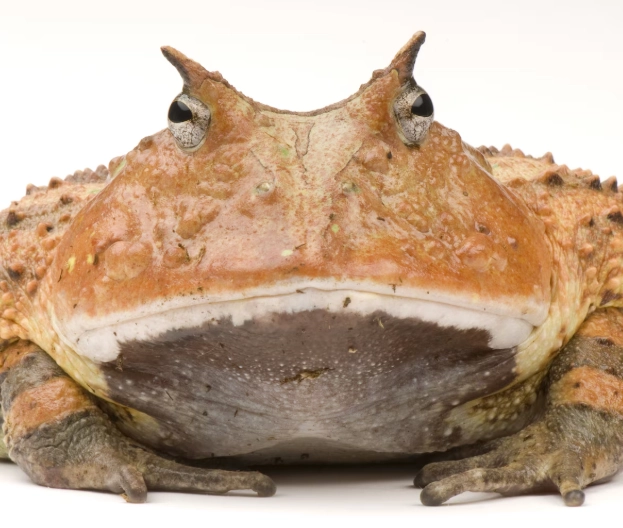
My Personal Favorite: I've always had a soft spot for the Round-tailed Horned Lizard. There's something so perfectly minimalist about its design. It doesn't have the dramatic horns of its cousins; it just looks like a little, sandy-colored pebble with legs. It proves you don't need big spikes to be an effective survivor.
This is the other half of the Horned Frog story. Texas Christian University (TCU) in Fort Worth, Texas, has used the Horned Frog as its mascot since 1897. The story goes that a group of athletes found the hardy, tough little lizard on campus and thought it embodied the fighting spirit of their team. The name stuck.
But why a frog if it's a lizard? Well, in the local Texas vernacular of the time, many people called the creature a "horned frog." The name was catchy, unique, and distinctly Texan. Over time, the image was stylized. The modern TCU Horned Frog mascot, "SuperFrog," is a muscular, smiling, cartoonish version—far from the stoic, sun-basking real animal. But the connection to local wildlife is a point of pride. The university even has a TCU.edu domain full of history about the mascot's evolution.
It's a powerful branding story, really.
The mascot's popularity has, ironically, helped raise awareness for the actual animal's conservation plight. TCU has partnered with conservation groups. When the football team is doing well, people search for "Horned Frog," and some of those searches lead them to learn about the real reptile that started it all. It's a weird, positive feedback loop between sports culture and wildlife education.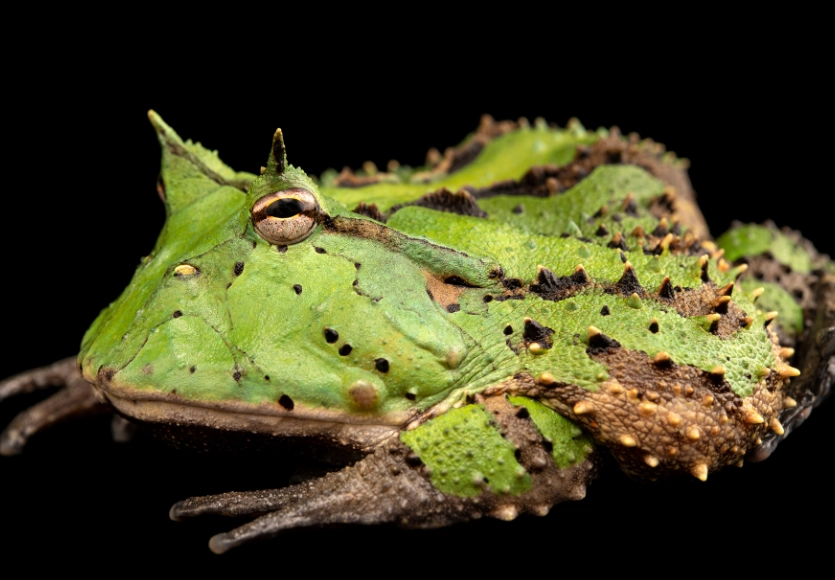
Let's tackle the stuff you're probably typing into Google. I've heard these questions a million times in online groups.
No. Neither the Texas Horned Lizard nor the Pacman frog is poisonous. They have no venom glands. The Texas Horned Lizard's blood-squirting is a chemical deterrent, not a poison. The Pacman frog has no toxins. Their defense is hiding, camouflage, and a strong bite (for the Pacman).
In captivity, with excellent care, a Texas Horned Lizard might live 5-8 years, though getting them to thrive is the challenge. A Pacman frog, with its simpler care, can easily live 7-10 years, sometimes longer. I knew someone whose Albino Pacman frog made it to 15. It's a long commitment.
The Texas Horned Lizard? Minimally, and only when necessary. They are stress-prone. Handling can cause them to drop their tail (which doesn't grow back well) or trigger other health issues. They are display animals. The Pacman frog? You can handle them briefly for tank maintenance, but they are not "cuddly." Their skin absorbs oils and chemicals from your hands, so it's best to keep handling to a minimum, use damp hands, and always support their whole body.
For the Texas Horned Frog (lizard): You likely can't and shouldn't. Focus on reputable breeders who work with captive-bred lines if they exist in your area legally, or support conservation programs. Never buy one caught from the wild. For the Pacman frog: They are widely bred in captivity. Look for reputable reptile expos, specialty reptile shops, or well-known online breeders. Avoid big-chain pet stores if you can; the animals are often stressed and poorly sourced.
For a Texas Horned Lizard, it's almost always a diet or stress issue. Are you offering the right food (harvester ants)? Is the temperature gradient correct? For a Pacman frog, they can go off food for weeks, especially if they're preparing to shed their skin or if temperatures are slightly off. First, check your temperatures and humidity. If everything is perfect and the fast lasts more than a month, a vet visit is wise.
Pro Tip for Pacman Owners: If your frog buries itself and disappears, don't panic. They do this. Just make sure the substrate is moist and offer food every few days by gently placing it near their head at night. They'll eat when they're ready.
We have to talk about this. The true Texas Horned Frog, the lizard, is in trouble. It's disappeared from nearly half of its historic range in Texas. The reasons are a perfect storm of human activity: urban sprawl, agriculture, the use of pesticides that wipe out harvester ant colonies, and the spread of invasive fire ants (which both outcompete harvester ants and can kill young lizards).
What can you do? If you live in their range, you can create lizard-friendly habitats in your yard by leaving some areas wild, avoiding pesticides, and learning to identify and protect harvester ant mounds. Support organizations like the Texas Parks and Wildlife Department, which runs Horned Lizard conservation and monitoring programs. Spread the word. The fact that you're reading this is a start.
It's a humbling thought.
This incredible little animal, tough enough to shoot blood from its eyes, is vulnerable to the slow changes we've made to the land. Its story is a reminder that the most fascinating creatures are often the ones right under our feet, in the patches of wilderness we have left. Whether you're a potential pet keeper, a TCU fan, or just someone who likes cool animals, understanding the real Horned Frog is the first step toward appreciating it.
And maybe, just maybe, that appreciation will help ensure there are still horned frogs—the real, spiky, ant-eating kind—out there on the Texas plains for a long time to come.