
Travel Tips
Lorem ipsum dolor sit amet, consectetur adipiscing elit.
If you've ever found yourself staring at a stunning Giant Day Gecko clinging to the glass, its colors impossibly bright, and thought "I just want to hold it," you're not alone. That desire is almost universal among new reptile enthusiasts. And then you try, or you read the countless warnings online, and you hit that wall of frustration. Why can't you handle day geckos like you might a bearded dragon or a leopard gecko? It feels like a personal failure, doesn't it? Like you're missing out on the core experience of pet ownership.
Let me stop you right there. It's not you. Well, mostly it's not you. The problem is a fundamental mismatch between what we, as humans, want from a pet interaction and what a day gecko is. Asking "why can't you handle day geckos?" is like asking why you can't cuddle a hummingbird. The answer lies in their very design, their evolutionary history, and their hardwired instincts. This isn't about taming; it's about understanding a completely different kind of animal consciousness.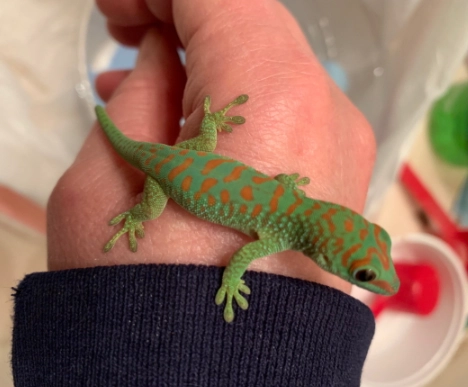
Spoiler: It's not about making them tolerate you. It's about you learning to appreciate them on their terms.
Let's break down the concrete, biological and behavioral reasons first. This isn't just hearsay; it's observed, documented reality.
Think about a dog or a cat. They are predators. Their instinct is to investigate, sometimes confront. A day gecko's entire world is built around avoiding being eaten by birds, larger reptiles, and mammals (yes, like us, big scary mammals). Your hand descending from above isn't a friendly gesture; it's the shadow of a hawk. Their first, second, and third instinct is to flee. Immediately. Erratically. This ingrained panic response is the number one reason why casual handling is a disaster. You might think you're being gentle, but their nervous system is screaming "LIFE OR DEATH."
Ah, the skin. It's what makes them so dazzling. But that skin is also supremely delicate. Unlike many other lizards, day geckos (genus Phelsuma) have skin that tears incredibly easily. This is a documented defense mechanism called "dermal tearing" or "skin slipping." If a predator grabs them, they can leave a piece of skin behind and escape. Pretty cool, right? Until you realize your slightly dry hand or a careless grip can cause the same traumatic injury. You're not just stressing them; you can physically harm them in a way that's painful, prone to infection, and a huge setback to their health. The National Institutes of Health (NIH) databases contain studies on reptile integumentary systems that detail these unique adaptations. Handling them risks activating this extreme defense system.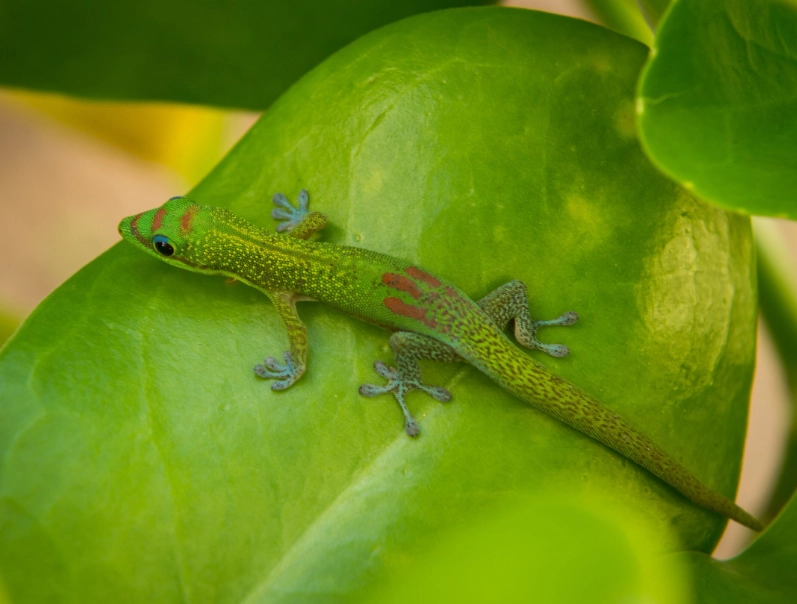
Leopard geckos are ponderous. Bearded dragons are statuesque. A day gecko is a bolt of lightning with sticky feet. They don't "think" about where to go; they just go. One moment on your hand, the next they've launched themselves five feet onto a curtain, a bookshelf, or worse, into a hard wall. They are not calculating escape routes; they are pure reaction. In a split second, your living room becomes a dangerous obstacle course. Broken bones, internal injuries from a bad landing, or simply getting lost behind furniture are very real risks. Their speed isn't a fun party trick; it's a liability in an open, uncontrolled space.
So, when you ask yourself, "Why can't I handle my day gecko?" remember this trifecta: a brain wired for panic, skin designed to rip away, and the acceleration of a sports car. It's a recipe for stress and potential injury.
Okay, so they're fragile and fast. But can't they learn? Can't they get used to me? This is where we project our mammalian social expectations onto a reptile that simply doesn't operate that way.
Dogs have been selectively bred for thousands of years to read our cues and seek our companionship. Reptiles, and day geckos specifically, have had zero selective pressure for human social bonding. They can learn to recognize you as the non-threatening giant that brings food. They may even become less likely to flee when you approach the enclosure. Some individuals might even walk onto your hand voluntarily for a food reward. But let's be brutally honest: this is almost always food-motivated tolerance, not affection, not a desire for companionship, and certainly not a guarantee of calm behavior.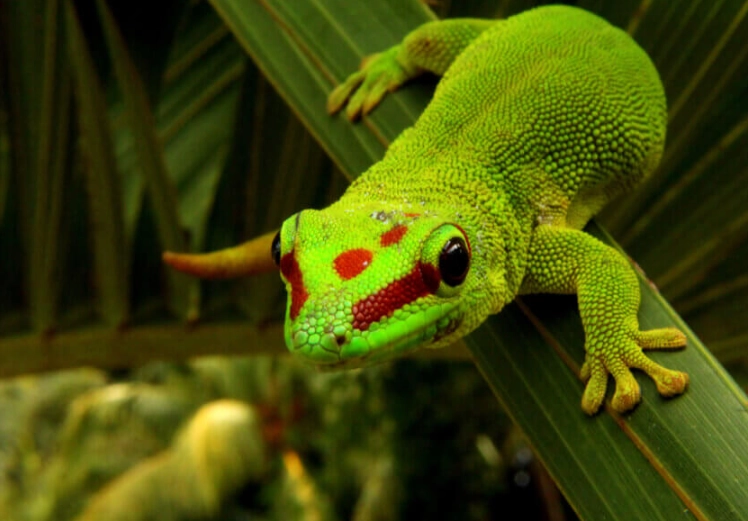
This is the part most care guides gloss over. Even if you manage to get your day gecko onto your hand without a chase and it sits there, what is happening inside the animal? Elevated heart rate, stress hormone (corticosterone) flooding its system, suppressed immune function. You might see a "calm" gecko; internally, it might be in a state of acute stress. Chronic stress from repeated handling attempts can lead to a weakened immune system, poorer appetite, and a shorter lifespan. Is that brief moment of contact worth compromising the animal's long-term health? For me, the answer is a clear no. Your goal should be a thriving, brightly colored, active animal in its enclosure, not a lethargic, dull one that "tolerates" you.
Why can't you handle day geckos without consequences? Because the consequences are often internal and cumulative, damaging their wellbeing for the sake of our momentary experience.
If handling is off the table (and it should be for the average keeper), does that mean you just have a living painting? Not at all. The joy of keeping day geckos comes from a different place. You shift from a hands-on pet owner to a curator, an observer, a creator of a tiny world.
This is the single most rewarding alternative to handling. You use a small, distinct target (like a red plastic straw tip on a stick) to guide your gecko. You present the target, and when the gecko touches it with its nose, you immediately reward it with a drop of fruit puree or a small insect from tweezers. This does several amazing things:
It takes patience, but the first time your gecko actively seeks out the target stick, you'll feel a genuine connection—one built on the animal's choice, not your coercion.
Your interaction is building and maintaining a masterpiece. A well-planted bioactive terrarium is a dynamic ecosystem. You watch plants grow, clean-up crews (isopods, springtails) do their work, and your gecko utilize every branch, leaf, and hiding spot. The "handling" becomes misting the plants, pruning leaves, spot-cleaning, and observing natural behaviors. You see them hunt, lap nectar, bask, and communicate (through colors and postures). This is infinitely more fascinating than holding a terrified animal in your fist.
Consult resources like the IUCN Red List to understand the native habitats of your specific Phelsuma species, which informs your enclosure design. For plant choices that are safe and suitable for a humid terrarium, the USDA Plants Database can be a useful starting point for research.
If you must have a physical interaction, there is one scenario that sometimes works with exceptionally calm, long-term captive-bred individuals. It's not handling; it's offering a bridge. Place your hand, flat and steady, inside the enclosure during a calm time of day (not at night when they sleep). Let the gecko see it. Do not move toward it. Ever. If curiosity wins and it walks onto your hand voluntarily, you can slowly lift your hand just above the enclosure substrate. Be ready for it to bolt back onto a familiar branch at any second. This lasts seconds, not minutes. The goal is the animal's choice to explore, not your restraint.
Even this "hand walk" is risky and not recommended for new keepers or flighty geckos. For 95% of day gecko owners, it shouldn't even be a goal.
Often, the desire to handle stems from or is exacerbated by other husbandry mistakes. Fix these, and the urge might lessen because you'll see a happier animal.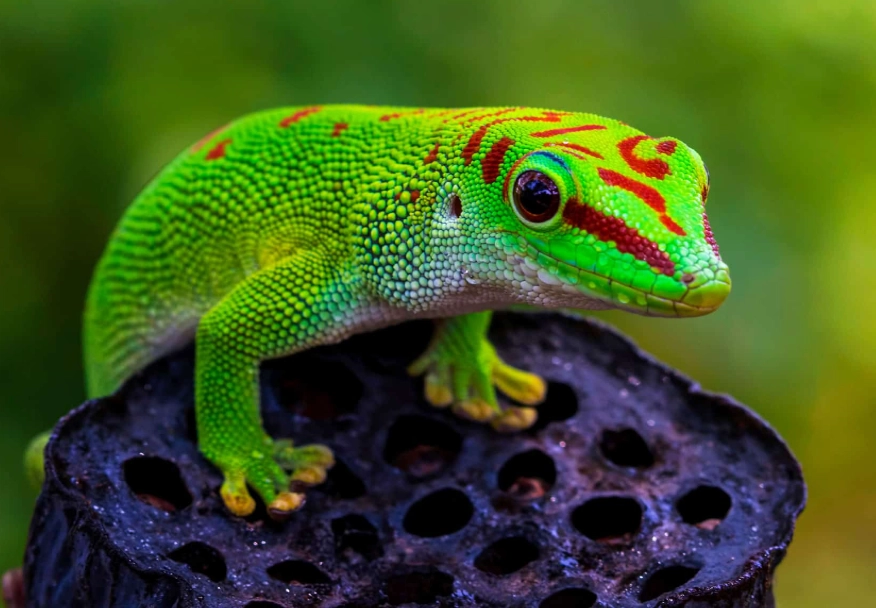
| The Mistake | Why It Causes Problems | The Better Approach |
|---|---|---|
| An enclosure that's too small or barren. | A bored, under-stimulated gecko is often more skittish. It has nowhere to feel secure, so every disturbance is a major event. | Go big, go bioactive. Height is more important than floor space. Dense planting provides security and reduces overall stress levels. |
| Feeding by just dumping insects. | This removes a key opportunity for positive interaction. It also makes the gecko see your hand only as a giant invader, never a source of good things. | Feed with long tweezers. This associates your presence with food and allows you to control nutrition and monitor appetite closely. |
| Constantly trying to "tame" it. | Persistence is not a virtue here. Each failed handling attempt reinforces the gecko's fear and erodes any fragile trust. | Stop trying to handle. Focus on consistent, calm, non-threatening care routines. Let the gecko set the pace (which may be "never come near me"). |
| Comparing to other reptiles. | "My friend's bearded dragon loves to snuggle!" This is like comparing a fish to a dog. It sets you and the gecko up for failure. | Appreciate day geckos for what they are: stunning, active, display animals that showcase natural behaviors in a beautiful enclosure. |
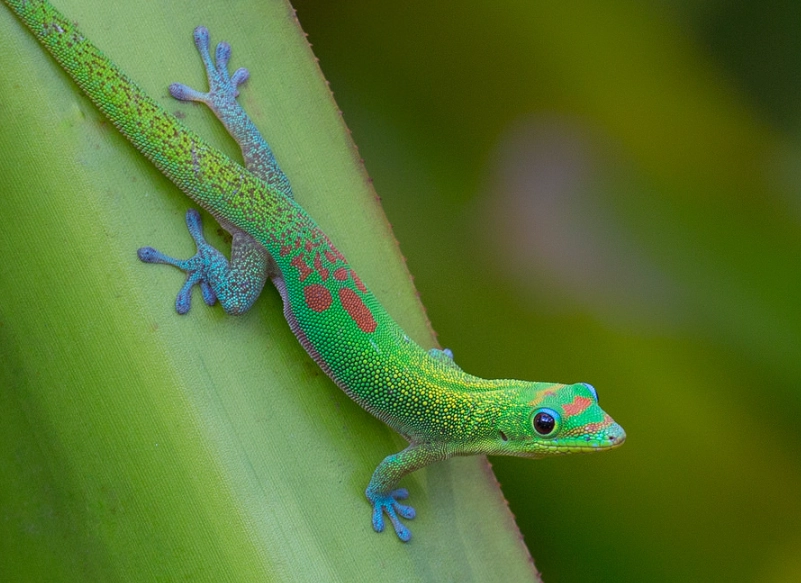
The question "why can't you handle day geckos?" comes from a place of love and a desire to connect. That's admirable. But true animal keeping requires us to adapt our desires to the needs of the creature in our care.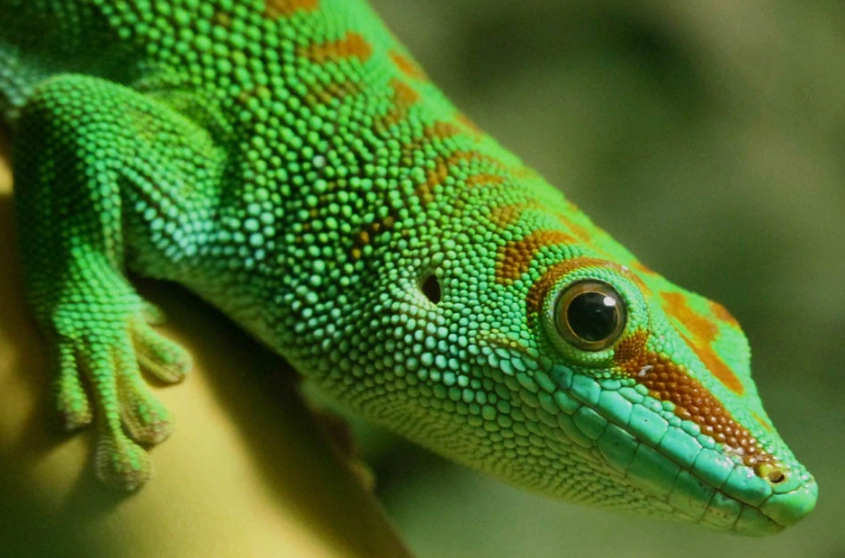
Success with day geckos isn't measured in minutes held. It's measured in the vividness of their green, the alertness in their eyes, the healthy sheen of their un-torn skin, and the sight of them hunting or lapping nectar confidently in their own territory. It's the pride of building a slice of rainforest that sustains life. When you stop seeing handling as the goal, a whole new world of reptile keeping opens up—one of observation, craftsmanship, and humility.
Let them be the dazzling, untouchable jewels they are. Your job is to be the guardian of their world, not the center of it. Once you make that shift, you'll stop asking why you can't handle them, and start marveling at why you're lucky enough to just watch them be.
For continued learning on advanced reptile husbandry and welfare concepts beyond handling, reputable hobbyist communities and publications like Reptiles Magazine often feature articles on species-specific care that emphasize ethical and evidence-based practices.