
Travel Tips
Lorem ipsum dolor sit amet, consectetur adipiscing elit.
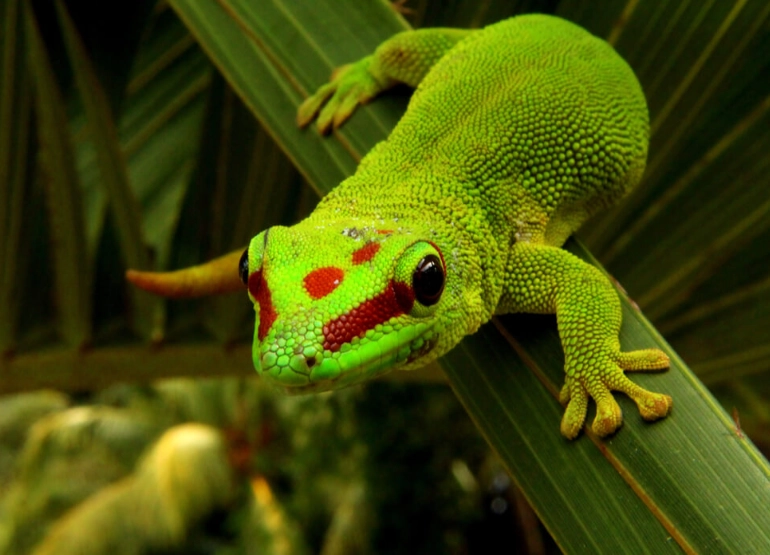
So you're thinking about getting a day gecko. Maybe you saw a picture of that insane, electric green lizard with the red spots – the Madagascar giant day gecko – and it got stuck in your head. I get it. Happened to me years ago in a pet store. But here's the thing people don't tell you right away: not all day gecko species are created equal. Some are great for beginners, some are a constant source of anxiety, and some are just plain illegal to own depending on where you live.
This isn't going to be a dry scientific paper. We're going to talk about these lizards like we're chatting over coffee. I'll tell you which ones I've had good (and bad) experiences with, what you actually need to know before buying, and how to avoid the common pitfalls that make people give up on keeping these amazing creatures.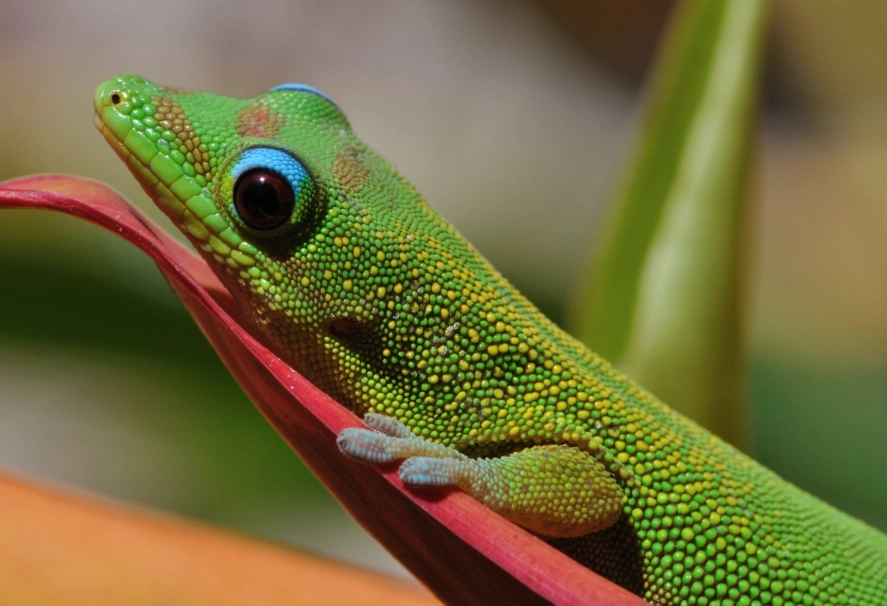
Let's just get the basics out of the way. Day geckos are a group of lizards belonging to the genus Phelsuma. They're called "day" geckos because, shocker, they're active during the day. Unlike most geckos you might know, they don't have the classic sticky toe pads; they have tiny claws and pads that work like suction cups. And they can't blink – they lick their eyes clean. See? Interesting already.
There are over 70 described species and subspecies, but you'll only see a handful regularly in the trade. These are the ones you should know about, ranked not just by popularity, but by what it's really like to live with them.
This is the poster child. The Godzilla of the day gecko world. It's big (up to 12 inches), breathtakingly colorful (emerald green with red blotches), and has a ton of personality. They're curious and will often watch you back.
But here's my honest take: they are not beginner geckos. I made this mistake. I was so enamored I got one as my first. They need a huge enclosure – think tall, not wide. A 18x18x24 inch tank is the bare minimum for an adult, and even that feels cramped. They're prolific breeders, which sounds fun until you have to figure out what to do with the eggs. They can also be surprisingly territorial with their own kind.
That said, if you have the space and the commitment, there's nothing like a Phelsuma grandis. Watching one hunt a cricket is like watching a tiny, green velociraptor. For accurate species information and classification details, resources like the Reptile Database are invaluable.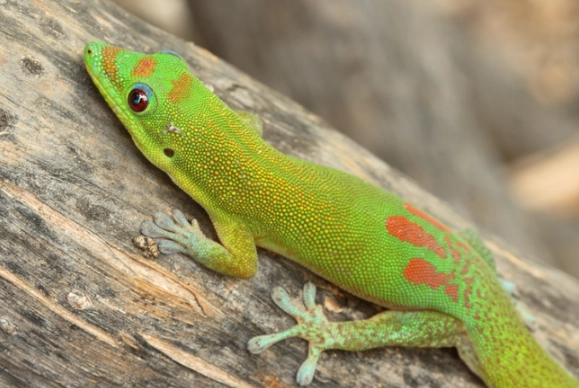
This is the one I recommend to almost everyone starting out. Smaller (5-6 inches), slightly hardier, and just as pretty in a more subtle way. They're a softer green with those iconic gold speckles on the neck and three blue bars on the back.
Why are they better for beginners? They do well in slightly smaller enclosures, are less prone to stress if you need to do maintenance, and their dietary needs are a bit more forgiving. You'll still see all the classic day gecko behaviors – licking fruit, basking under the lamp, doing their little push-ups. They're a fantastic introduction to the Phelsuma genus. The conservation status of wild populations is something to be aware of; checking the IUCN Red List can provide context on why captive breeding is important.
If you want color that makes people do a double-take, this is your gecko. Adults develop an incredible turquoise or powder blue hue, especially the males. They're a medium-sized species, a bit bigger than the gold dust.
Now, the downside. In my experience, they can be a bit more skittish and sensitive to husbandry errors. They need perfect humidity and temperature gradients. They're also one of the more expensive day gecko species commonly available. I'd put them at an "intermediate" level. Gorgeous, but maybe not your first rodeo.
Don't let the small size (4-5 inches) fool you. These little guys are packed with personality and beauty. They're a bright green with those famous "peacock" eye spots (ocelli) on their backs. They're active, curious, and fascinating to watch.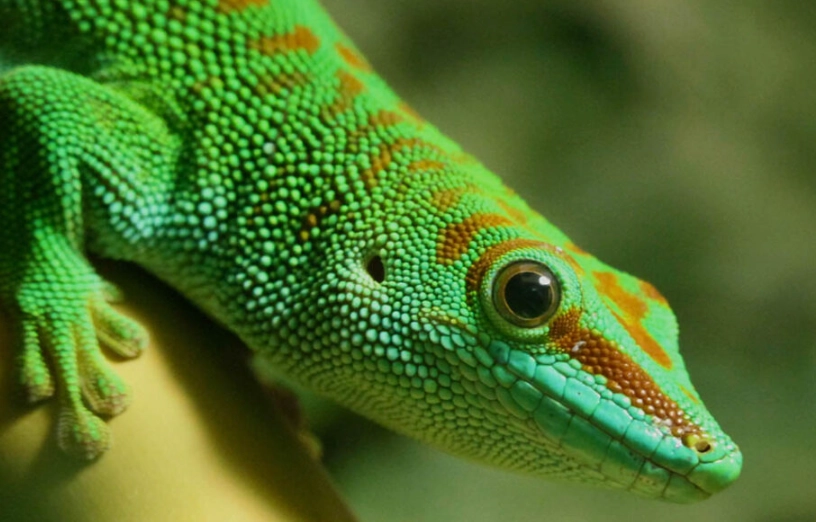
Because they're small, you can create a stunning, intricate bioactive terrarium for them without needing a room-sized enclosure. They can be a bit more delicate to handle (not that you should be handling much anyway), and finding them can be trickier than the gold dust or giant. But for a dedicated enthusiast with an eye for detail, they're a perfect choice.
Often confused with the true Madagascar giant, this subspecies is a bit smaller and has a different pattern – more of a uniform green with red speckling rather than large blotches. They're still sizable and impressive.
Their care is very similar to P. grandis, so all the cautions about space and experience apply. They tend to be a bit less common in the pet trade, which sometimes means you're getting an animal from a more dedicated breeder, which is always a plus.
| Species | Max Size | Temperament | Care Level | Best For |
|---|---|---|---|---|
| Gold Dust Day Gecko (P. laticauda) | 5-6 inches | Generally calm, can be shy | Beginner | First-time owners, smaller spaces |
| Peacock Day Gecko (P. quadriocellata) | 4-5 inches | Active, curious | Beginner/Intermediate | Bioactive terrarium enthusiasts |
| Standing's Day Gecko (P. standingi) | 8-10 inches | Can be skittish | Intermediate | Experienced keepers wanting stunning color |
| Koch's Giant Day Gecko (P. m. kochi) | 10-11 inches | Bold, observant | Intermediate | Those wanting a large gecko slightly hardier than P. grandis |
| Madagascar Giant Day Gecko (P. grandis) | 10-12 inches | Bold, can be territorial | Advanced | Keepers with large enclosure space and experience |
See that? The flashiest one isn't always the best choice. Picking the right day gecko species is about matching the lizard's needs to your skills and space.
Forget the tiny, barren cages you sometimes see. A proper day gecko home is a living ecosystem. Here's the breakdown, without the fluff.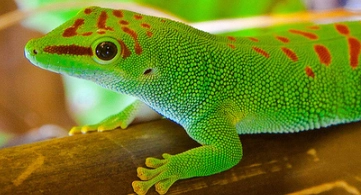
These are arboreal lizards. They live in trees. Your tank needs to be tall. For a pair of gold dust day geckos, an 18x18x24 inch front-opening terrarium is a great start. For a single Madagascar giant, you're looking at 24x18x36 inch minimum. Front-opening is crucial – trying to catch a panicked gecko from the top is a nightmare for you and terrifying for them.
Screen tops are okay, but they let out all the humidity. I prefer glass or acrylic tops with a section for ventilation. You'll be spraying water inside anyway.
This is where most setups fail. It's not just one thing; it's the balance.
Bare glass is stressful. They need clutter.
In the wild, their diet is wildly varied. We need to mimic that.
Staple Insects: Gut-loaded crickets, dubia roaches, and black soldier fly larvae are excellent. "Gut-loading" means feeding the insects nutritious food 24-48 hours before offering them to your gecko. You are what you eat, and so is your gecko.
Treat Insects: Waxworms (very fatty, use sparingly), small hornworms (great for hydration), and the occasional mealworm.
The Sweet Stuff: This is what sets them apart! Most day gecko species go crazy for fruit-based diets. You can offer mashed ripe banana, mango, papaya, or apricot baby food. Commercial crested gecko diets (like Repashy or Pangea) are fantastic for day geckos. I offer a small dish of this fruit mix twice a week, and it's always licked clean. It's a complete nutritional supplement.
Supplements: This is critical. Dust insects with a quality calcium supplement (with D3 if your UVB is low-output or the gecko doesn't bask directly under it) at most feedings. Once or twice a week, use a multivitamin powder. The fruit mix often has vitamins already in it, so you can alternate.
How often? Juveniles daily. Adults every other day. Offer as many appropriately-sized insects as they'll eat in a 10-15 minute period. An insect should never be wider than the space between the gecko's eyes.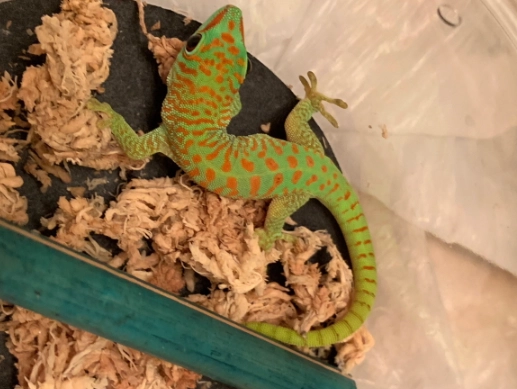
Let's talk about the ugly stuff so you can prevent it.
Stuck Shed: Usually on the toes and tail tip. Caused by low humidity. If you see retained shed, increase your misting frequency and provide a rough surface (like cork bark) for them to rub against. A serious stuck shed can constrict blood flow and lead to toe loss.
Metabolic Bone Disease (MBD): The big one. Symptoms include a wobbly walk, soft or rubbery jaw, tremors, and eventually deformed limbs. It's caused by lack of calcium, lack of UVB, or both. It's preventable 100% of the time with proper lighting and supplementation. If you see signs, a vet visit is urgent.
Stress & Anorexia: A hiding gecko that never comes out or stops eating is a stressed gecko. Causes: wrong temperatures, no hiding spots, too much handling, an enclosure that's too open/barren, or even another pet (like a cat) constantly watching the tank. Review your setup from the gecko's perspective.
Injuries from Falls: They jump and sometimes miss. Ensure there's plenty of foliage and branches to break a fall. Avoid excessively hard decorations at the bottom of the tank. Organizations like the Association of Reptilian and Amphibian Veterinarians (ARAV) can help you find a qualified vet if an injury occurs.
A little observation goes a long way.
Look, I love day geckos. They're the reason I got into reptile keeping. But they're not low-maintenance. They need specific, consistent conditions. You can't just throw them in a tank with a light bulb and a bowl of water.
If you're willing to invest in a proper tall enclosure, set up the right lighting and heating, commit to daily misting and feeding, and enjoy observing rather than handling, then you will be rewarded with one of the most captivating pets on the planet.
Start with a gold dust. Learn the ropes. See if you enjoy the routine. Then, maybe, consider a more advanced day gecko species.
The key is to respect them for what they are: delicate, breathtaking pieces of a far-away ecosystem, now thriving in a little glass world you created. Get it right, and it's one of the most satisfying experiences in the hobby.
Just remember to check those lid locks.