
Travel Tips
Lorem ipsum dolor sit amet, consectetur adipiscing elit.
You're hiking in the American Southwest, maybe around the Grand Canyon or in Utah's canyon country. The air is dry, the rocks are warm, and it seems like only the hardiest lizards could live here. Then you hear it—a series of loud, duck-like quacks coming from a crack in the stone near a tiny seep of water. That's your first introduction to one of nature's great adapters: the canyon tree frog (Hyla arenicolor).
I remember my first encounter vividly. I was convinced a bird was stuck somewhere. The sound was so out of place. Peering into a shadowy crevice, I finally saw the source—a small, mottled frog, perfectly colored like the sandstone, puffing out its throat. It was a moment that completely changed how I thought about frogs and deserts.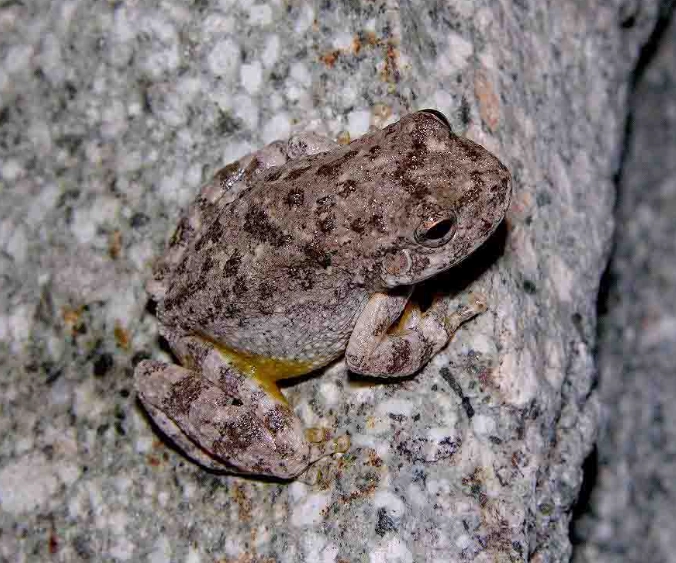
They're not supposed to be here... but they are, and they're thriving.
This isn't your typical pond frog. The canyon tree frog is a master of a niche that seems downright hostile to amphibians. While most people think of tree frogs in rainforests, this one has carved out a life in rocky deserts and canyons. Its story is one of incredible adaptation, a unique lifestyle, and a call that's become the soundtrack to many southwestern springs and summers.
So, what does a canyon tree frog look like? If you're picturing a bright green frog, think again. Evolution has painted this species for camouflage, not for show.
An adult canyon tree frog is usually between 1.5 to 2.5 inches long. Its skin color is incredibly variable, which is part of what makes them so fascinating. The base color can range from grayish-brown and tan to a greenish-gray or even a rusty red. This isn't random—it often closely matches the dominant rock color in their specific home canyon. I've seen some that were nearly pink, matching the Navajo sandstone perfectly, and others that were a dull gray like basalt.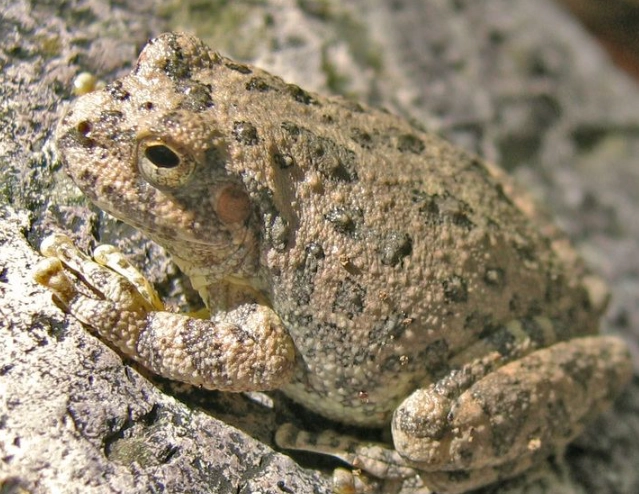
The most consistent marking is a dark, irregular blotch or mask behind each eye, which sometimes connects over the head. Their skin isn't slimy like a toad's; it's slightly granular or bumpy, which helps with moisture retention—a critical adaptation in arid climates. The undersides are a creamy white or pale yellow, and the backs of their thighs are often a bright yellow or orange, a flash of color you only see when they jump.
Their toes are a dead giveaway that they're a tree frog. They have the classic enlarged, rounded adhesive toe pads that let them climb vertical rock faces and cling to surfaces that seem impossibly smooth. Watching one scale a sheer cliff is a lesson in bio-engineering.
How do you tell it apart from other frogs in its range? The most common confusion is with the Arizona tree frog (Hyla wrightorum), which can look similar. The key differences are habitat and subtle markings. The Arizona tree frog prefers higher elevation forests (think pine and oak), while our canyon specialist sticks to the rocks. Also, the canyon tree frog usually has more spotting and mottling on its back, and that dark mask is more pronounced.
Forget ponds and marshes. The canyon tree frog's world is one of rock, scarcity, and hidden water. Their habitat is so specific it's a wonder they survive at all, but they've turned these challenges into advantages.
You'll find them in rocky canyons, arroyos (dry creek beds that flash flood), cliffs, and boulder fields across the Colorado Plateau and the southwestern United States and northern Mexico. Think states like Utah, Arizona, Colorado, New Mexico, and Nevada. Their range map looks like it's drawn along fault lines and river cuts.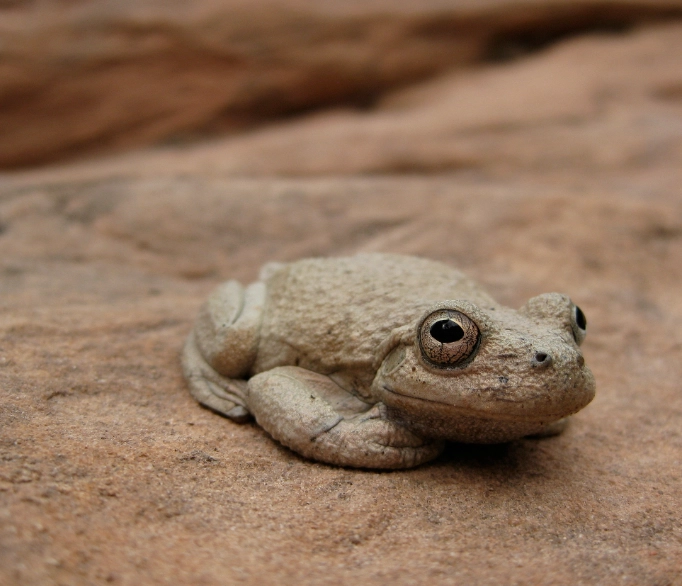
Water is the limiting factor. They absolutely need it for breeding, but they don't need much, and they don't need it all the time. Their ideal spot is near perennial water sources that won't dry up completely, like:
The rest of the time, they're terrestrial. They spend their days hiding in cool, moist microhabitats: deep rock crevices, under large flat stones, in caves, or in abandoned rodent burrows. These spots can be significantly cooler and more humid than the outside desert air, sometimes by 20-30 degrees Fahrenheit. It's a life lived in the shadows of the rocks.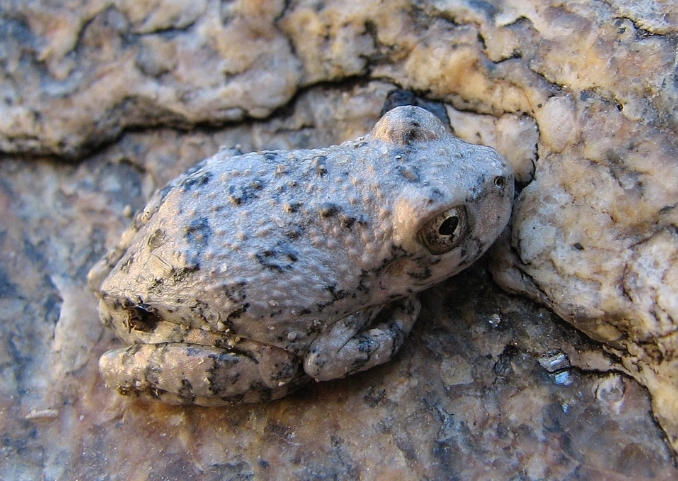
They don't dominate the landscape; they hide within it, perfectly.
If you only learn one thing about the canyon tree frog, let it be the sound. The canyon tree frog sound is unforgettable. It's the main way people know they're around, as seeing them is a challenge.
The call is a loud, nasal, duck-like quacking or barking. It's not a melodic chirp or a deep croak. It's abrupt, percussive, and carries surprisingly well in rocky terrain. A chorus of them sounds like a flock of disgruntled ducks arguing. You can listen to a clear recording on the USGS Frog Call database to get the exact idea—it's spot-on.
Males call to attract females, usually while sitting in or very near water. The call peaks after sunset and can go on for hours on warm, humid nights following rain. Spring and summer are the main seasons, but in areas with perennial water, you might hear them almost any warm night.
Why does it sound like that? The rocky environment acts as an amplifier and distorter. That sharp, loud call cuts through the background noise of trickling water and wind in the canyons. It's an acoustic adaptation as important as their camouflage.
Quick ID by Ear: In the Southwest, if you're near rocks and water and hear what sounds like a duck that's lost its pond, you're almost certainly listening to a canyon tree frog. The similar Arizona tree frog has a faster, more metallic-sounding call.
These frogs are primarily nocturnal, which makes perfect sense in the desert. They emerge from their cool, damp hiding places at dusk to hunt and, in season, to breed.
Their diet is what you'd expect from a small, sit-and-wait predator. They'll eat almost any small invertebrate they can fit in their mouth:
Their hunting strategy is patience. They'll find a good spot with some insect traffic, often near a light source or on a rock overhang, and just wait. Their sticky tongue shoots out with impressive speed and accuracy. I've watched one snag a moth out of mid-air—it was over in a blur.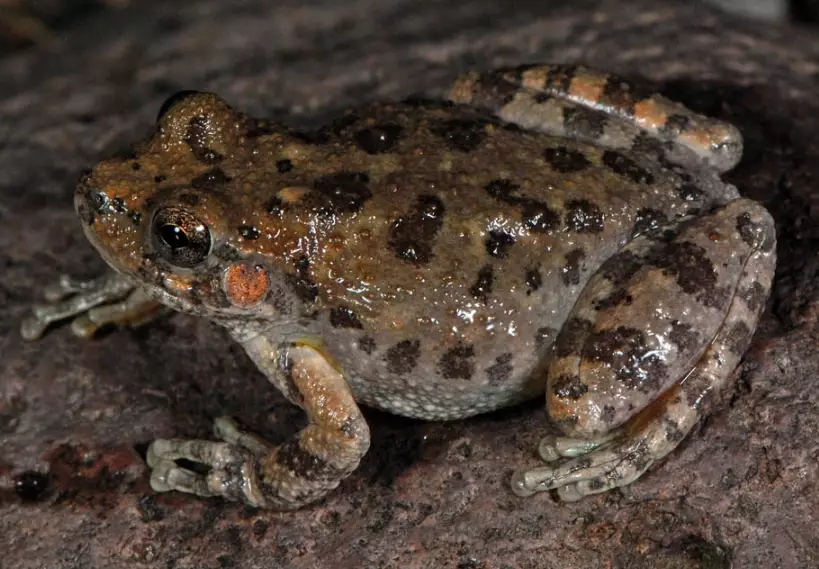
One of their coolest behaviors is metachrosis—the ability to change color, albeit slowly (over hours or days). They can darken to absorb more heat on a cool day or lighten to reflect it on a scorcher. It's not as dramatic as a chameleon, but it's a neat trick for regulating body temperature when you're an ectotherm living on sun-baked rocks.
Reproduction is a race against time and evaporation. When seasonal rains arrive and fill their potholes or tinajas, the clock starts ticking.
The whole process is a high-stakes gamble. If the rains don't come, or if they're too light, there's no breeding that year. If the pool dries up too fast, the entire cohort of tadpoles is lost. It's a boom-or-bust life history tied completely to the whims of desert weather.
This is a big question people have. The short, and perhaps unpopular, answer is: it's not an ideal pet for most people, and there are serious ethical and legal considerations.
First, legality. In most states within its native range, collecting canyon tree frogs from the wild requires a permit, if it's allowed at all. They are protected in many areas due to habitat sensitivity. Always, always check your state's wildlife regulations (like those from the California Department of Fish and Wildlife or Arizona Game and Fish Department) before even considering it. The pet trade sometimes has captive-bred individuals, but they are rare.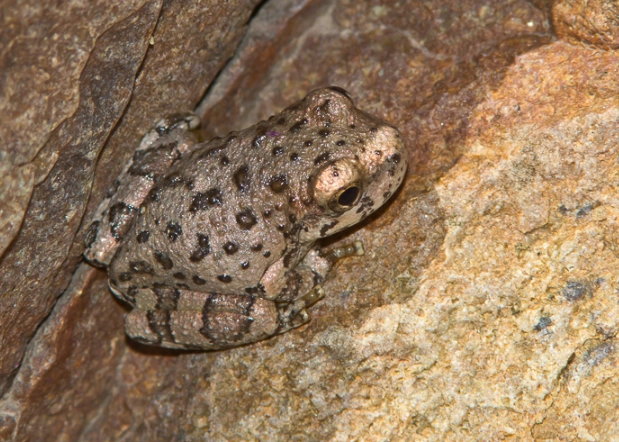
My personal take? I think wild populations are under enough pressure. The best way to appreciate these frogs is to observe them in their natural habitat, not in a tank. Their specialized needs are hard to replicate, and watching them in a cage feels like missing the point of what makes them special—their hard-won existence in a wild landscape.
That said, if you are experienced with amphibians and are committed to providing for a captive one (legally obtained), here's what canyon tree frog care entails:
You're not building a swamp; you're building a miniature canyon. A tall terrarium (at least 20 gallons for a pair) is better than a long one, as they like to climb.
| Enclosure Component | Specifics & Why It Matters |
|---|---|
| Substrate | A mix of coconut fiber, sand, and small smooth river rocks. It should hold some moisture but not be soggy. Avoid sharp gravel. |
| Landscape | This is critical. Lots of vertical and horizontal rocks (slate, sandstone), securely stacked to create deep, stable crevices and caves. They need these for hiding and thermoregulation. Cork bark rounds also work well. |
| Water Feature | A shallow, easy-to-clean water dish large enough for soaking. Change water daily with dechlorinated water. A small, gentle filter or air stone can help keep it fresh. |
| Humidity & Ventilation | A tricky balance. You need high humidity (60-80%) in the hideaways, but the tank shouldn't be stagnant. Mist the rock crevices daily, but let the top of the tank be drier. Good cross-ventilation is key. |
| Temperature | A gradient is vital. A warm side of 75-80°F (24-27°C) and a cool side down to 65-70°F (18-21°C). Use an under-tank heater on one side, never a heat lamp directly overhead, which can desiccate them. The rock hide on the warm side will create a warm, humid microclimate. |
| Lighting | Low-level UVB lighting is beneficial for calcium metabolism and simulating a natural day/night cycle. Use a low-output (5.0) bulb for 10-12 hours a day. |
Feed a variety of gut-loaded insects: crickets, dubia roaches, small mealworms, and flightless fruit flies for younger frogs. Dust food with a calcium + D3 supplement a couple times a week and a multivitamin once a week.
Watch for signs of stress or illness: refusing food, excessive hiding during active hours, bloating, or skin lesions. Finding a vet who specializes in exotic amphibians is a must before you get one.
The reality is, creating a stable, healthy environment for a canyon tree frog is advanced herpetoculture. A beginner would be much better off with a more forgiving species like a White's tree frog.
Currently, the canyon tree frog is listed as "Least Concern" on the IUCN Red List of Threatened Species. Their population is considered stable, and they have a relatively wide distribution. You can see their official assessment on the IUCN website.
But—and this is a big but—"Least Concern" doesn't mean "no concern." Their future is tightly linked to the health of their very specific habitat, which faces real threats.
So, while they're not on the brink, they are a sentinel species. Their presence indicates a healthy, functioning canyon ecosystem with intact water sources. Their decline would be a warning sign of bigger problems.
You don't need to own one to be involved. Here’s how you can appreciate and help conserve canyon tree frogs:
In the end, they remind us that life is stubborn, clever, and full of surprises.
Let's tackle some of the most common things people want to know about the canyon tree frog.
As adults, they are carnivorous, eating mostly insects and other small arthropods like spiders, moths, and beetles. They are opportunistic sit-and-wait predators.
In the wild, their lifespan is likely 3-6 years, though precise data is hard to come by. In captivity, with optimal care, they might live slightly longer, but their specialized needs make long-term captive success a significant challenge.
No, they are not poisonous to humans or pets. They do not produce significant skin toxins like some other frogs (e.g., poison dart frogs). However, it's still good practice to wash your hands after handling any amphibian, and you should avoid handling wild ones to protect them.
It is generally not recommended. They are best kept in a species-specific setup. Mixing species can lead to stress, competition for food and hiding spots, and the potential spread of disease.
Great question! It's a member of the tree frog family (Hylidae), defined more by physical characteristics—like those adhesive toe pads and certain skeletal features—than by strict habitat preference. It has evolved to use vertical rock faces the way its relatives use trees.
Aside from going into their habitat, the U.S. Geological Survey's Frog Call Lookup site has authentic recordings. It's a fantastic resource for comparing frog calls from across the country.
Next time you're in the slickrock country of the Southwest, slow down near a water source as night falls. Listen. That odd quacking isn't a bird out of place. It's the sound of a true desert native, the canyon tree frog, holding its own in a world of rock and sky.