
Travel Tips
Lorem ipsum dolor sit amet, consectetur adipiscing elit.
Let's be honest, the first time you see an Oriental salamander, it's hard not to be captivated. That sleek, dark body contrasted with a fiery orange or red belly – it looks like a tiny, living ember. I remember seeing one at a reputable breeder's years ago and thinking, "That's it. I need to know more about this creature." But here's the thing everyone glosses over in the excitement: these aren't just "cool pets." They're specific, sensitive amphibians with needs that are often misunderstood. Calling them "easy" does them a disservice. If you're searching for info on the Oriental salamander, you've probably hit a wall of vague care sheets or overly scientific jargon. Let's fix that.
This guide isn't about selling you on the idea. It's about giving you the complete, unvarnished picture. We'll talk about what makes them tick, how to set up a home they can truly thrive in (not just survive), and the realities of their conservation status. Because knowing that last part is just as important as knowing what to feed them.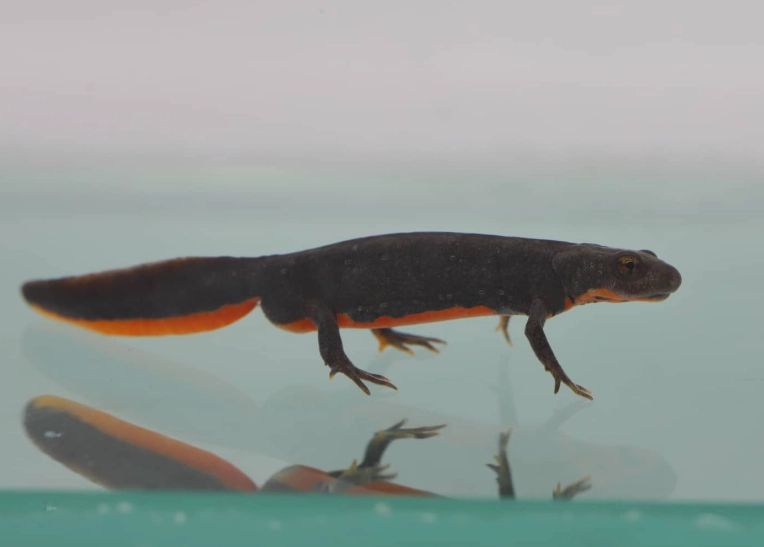
Before we dive into tanks and water parameters, let's get to know the animal itself. Calling it a salamander is correct, but it's more specifically a newt. All newts are salamanders, but not all salamanders are newts. Confused yet? Don't worry. The key takeaway is that the Oriental salamander we're discussing is primarily aquatic as an adult. You won't find it hiding under logs in a forest; you'll find it in cool, slow-moving or still bodies of fresh water.
Their look is iconic. A dorsal (top) side that's dark brown or black, acting as perfect camouflage from birds looking down into a pond. Then, they have the audacity to flip over and show a brilliantly patterned belly of oranges, reds, and sometimes blacks – a classic warning sign in nature saying, "I'm toxic, don't eat me." This isn't a bluff. Their skin secretes toxins (tetrodotoxin, the same found in pufferfish, but in much smaller amounts) as a defense mechanism. It's harmless to you through touch, but it's a serious reason to never house them with animals that might try to take a bite.
They're small, usually maxing out at 3 to 4 inches (7-10 cm) from nose to tail tip. That size is part of their appeal, but it also means their environment needs to be just right. Small volumes of water can go bad quickly.
This is the single most important piece of information for keeping them healthy. If you mimic their natural home, you're 90% of the way there. The Oriental salamander (Cynops orientalis) is native to eastern China, in provinces like Zhejiang, Jiangsu, and Anhui. We're talking about cool, permanent ponds, rice paddies, ditches, and slow streams in mountainous or hilly regions. The water is clean, often shaded by vegetation, and the climate is temperate.
What does that mean for your tank?
I made the temperature mistake early on. My first tank was in a room that got afternoon sun, and the water crept up to 74°F. The salamander became lethargic, stopped eating. It was a scary lesson. A simple fan blowing across the water surface brought the temp down and he perked right up. Never underestimate their need for cool water.
This is where we get practical. You can't just plop them in a fish bowl. A proper setup is a non-negotiable investment for their wellbeing.
Bigger is almost always better. It gives you more stable water parameters. For a single Oriental salamander, a standard 10-gallon aquarium is the absolute minimum I'd recommend. For a pair or a small group, aim for 20 gallons or more. Remember, floor space (length and width) is more valuable to them than height. A long, low tank is ideal.
A secure, well-ventilated lid is mandatory. They are not escape artists like some frogs, but they can and will climb out if given the opportunity, especially if water conditions are poor.
Unlike some newts that have a terrestrial (land-dwelling) phase, adult Oriental salamanders are fully aquatic. You do not need to build a paludarium with a land section. Some individuals might occasionally rest on a broad leaf near the surface, but they don't need dry land. Focusing on a fully aquatic setup simplifies things.
This deserves its own section. The water is their world.
This is the fun part. The goal is to create a lush, sheltered environment.
| Decoration Type | Good Choices | Choices to Avoid | Why It Matters |
|---|---|---|---|
| Plants | Java fern, Anubias, Java moss, Hornwort, Elodea. (These are all low-light, hardy plants). | Sharp-leaved plants, plants requiring high heat/light. | Live plants help absorb nitrates, provide cover, and mimic their natural habitat. They also look fantastic. |
| Hiding Spots | PVC pipes (hidden by plants), smooth river rocks stacked into caves, driftwood, ceramic caves made for aquariums. | Decor with sharp edges, painted/resin decor that might leach chemicals. | Security reduces stress. A stressed salamander hides all the time and may refuse to eat. |
| Lighting | Low-output LED lights for viewing and plant growth. On a timer for 8-10 hours a day. | Intense, hot aquarium lights meant for coral or high-tech planted tanks. | They don't need special lighting, but plants do. Avoid heating the water. A natural day/night cycle is beneficial. |
You don't need to spend a fortune. Some of the best tanks I've seen use simple sponge filters, sand, and a jungle of easy-to-grow plants. It's about functionality, not flash.
In the wild, these guys are opportunistic predators of small, moving things. Your job is to replicate that variety. This isn't a "feed them goldfish flakes" situation.
Here’s a breakdown of staple foods and occasional treats:
What NOT to feed: Feeder goldfish or minnows. They are fatty, can carry diseases, and may injure your salamander. "Red wriggler" type earthworms can be too large and secrete a distasteful slime. Small, chopped nightcrawlers are okay for larger individuals.
Feed adults 2-3 times a week. Juveniles need daily feeding. Offer only as much as they will consume in 15-20 minutes, and remove any uneaten food to avoid fouling the water. I use a long pair of aquarium tweezers to wiggle food in front of them. It's interactive and lets me monitor how much each one eats.
Oriental salamanders are peaceful, but they are not "social" in the way fish can be. They largely ignore each other unless it's breeding season. You can keep them singly, in pairs, or in small groups, provided the tank is spacious enough with plenty of hiding spots to prevent any territorial squabbles (which are rare).
Their behavior is mostly calm and deliberate. You'll see them walking along the bottom, resting on plants, or occasionally swimming in short bursts. They are most active during dawn and dusk. Don't expect a constant show – a healthy Oriental salamander is often a still, observant one.
If you have a well-established, mature pair in optimal conditions, breeding can happen spontaneously. It's a fascinating process. The male will perform a courtship dance, vibrating his tail in front of the female. If successful, he deposits a spermatophore (a packet of sperm) which the female picks up.
She will later lay individual eggs, carefully folding them into the leaves of plants. This is where having broad-leaved plants like Java fern really pays off. The eggs are small and jelly-like.
Important: If you want the eggs to hatch, you must remove the adults or the eggs to a separate rearing tank. Adults, and even the parents, will readily eat the eggs and larvae. Raising the tiny, aquatic larvae requires microscopic food like infusoria initially, then baby brine shrimp. It's a challenging but rewarding project for an experienced keeper.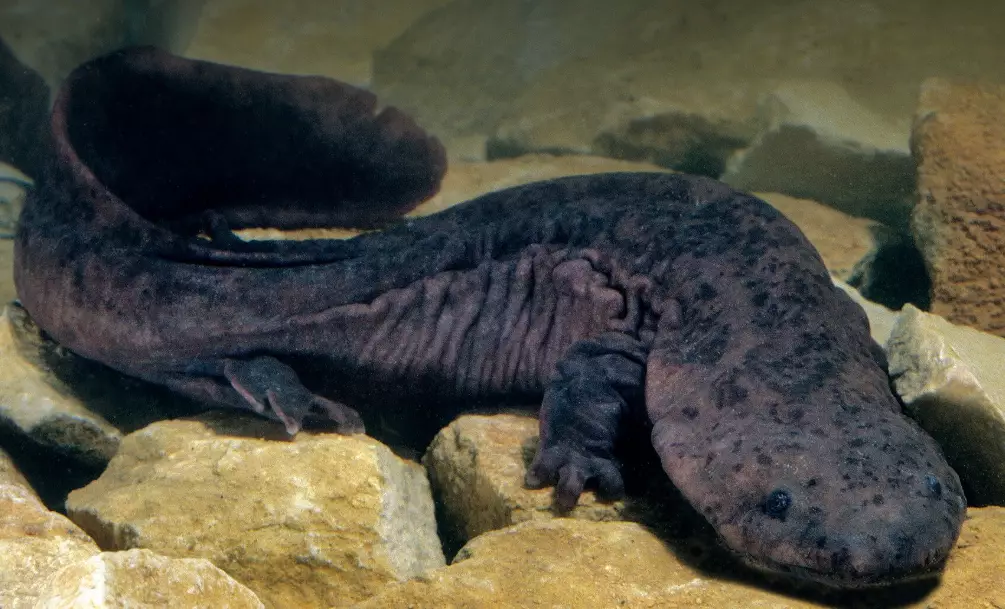
A well-cared-for Oriental salamander can live 10-15 years, sometimes longer. Their health problems almost always stem from subpar water conditions or diet.
There are very few veterinarians who specialize in amphibians. Your best tool is prevention through perfect husbandry.
This is the part most care guides ignore, and it's vital. What is the status of the Oriental salamander in the wild?
According to the International Union for Conservation of Nature (IUCN) Red List, Cynops orientalis is currently listed as "Least Concern." However, "Least Concern" does not mean "no concern." Their populations are threatened by habitat loss due to urbanization, agriculture, and pollution in their native China.
The AmphibiaWeb database, a leading scientific resource, provides detailed information on their taxonomy and ecology, highlighting the pressures amphibians face globally.
What does this mean for you as a potential keeper?
Keeping an Oriental salamander can foster a deep appreciation for these animals and the challenges they face. Let that appreciation translate into responsible action.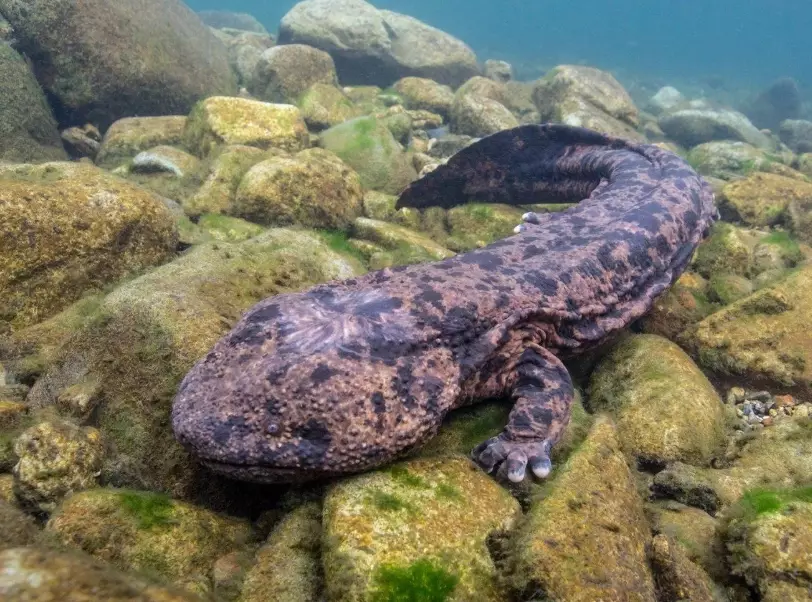
Look, they are incredible animals. Watching an Oriental salamander hunt a bloodworm with a quick snap of its head, or seeing it rest peacefully among green plants, is genuinely rewarding. They are a low-maintenance pet in terms of daily interaction, but a high-commitment pet in terms of providing the specific, stable environment they require.
They are not for you if you want a pet to handle, or if you can't commit to weekly tank maintenance and monitoring water temperature year-round. They are perfect for you if you enjoy creating and maintaining a beautiful, cool aquatic ecosystem and observing a fascinating, ancient type of animal.
Do your research – which you're doing right now. Source your animal ethically from a breeder. Set up the tank completely and cycle it before you bring one home. Get the temperature right. If you can do those things, you'll be providing a great home for one of nature's more quietly stunning creations.
And maybe, just maybe, you'll develop the same deep respect for the Oriental salamander that so many dedicated keepers have. It starts with getting the basics right.