
Travel Tips
Lorem ipsum dolor sit amet, consectetur adipiscing elit.
You're sitting on a lanai in Maui, sipping your coffee, and a flash of electric green darts across the railing. It stops, turns its head, and you're locked in a stare with one of Hawaii's most charismatic little residents—a day gecko. That moment, that burst of color against the tropical backdrop, is what draws so many people to ask about them. But what's the real story behind these lizards? Are they native? Can you keep one as a pet? I've spent years watching them, reading the research (and the conflicting info online), and talking to locals. Let's cut through the noise and get into the gritty, fascinating, and sometimes surprising details of day geckos in Hawaii.
First thing you need to know: none of the day geckos you see in Hawaii are originally from here. That's a big one. They're all transplants, brought over intentionally or by accident. But they've made themselves so at home that for many visitors and residents, they're as much a part of the Hawaiian landscape as plumeria flowers. Their story is a classic Hawaiian tale of introduction, adaptation, and unintended consequences.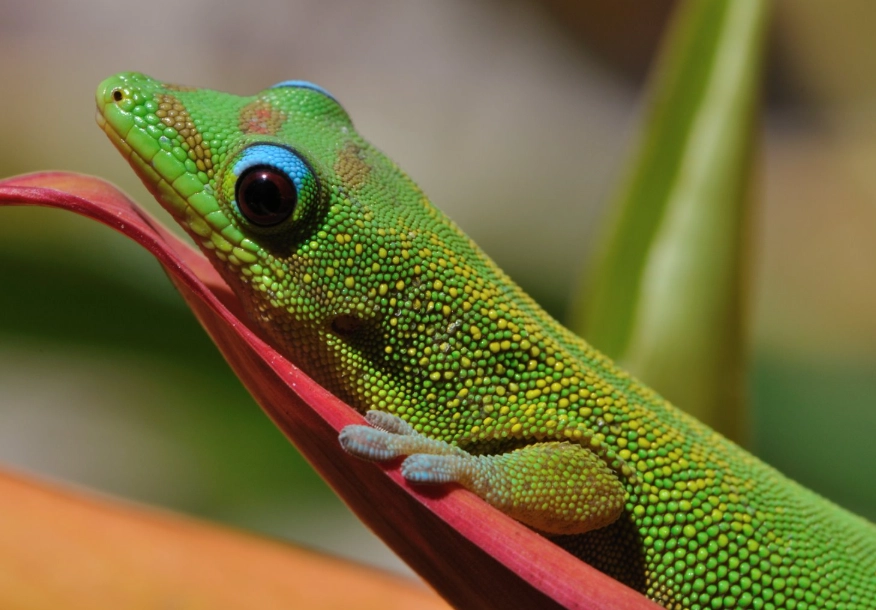
If you shout "Day gecko Hawaii!" most people picture one specific guy. But there's a small crew. Knowing who's who helps make sense of what you're seeing.
This is the one. The poster child. Phelsuma laticauda, the gold dust day gecko. If you've seen a photo, it's likely this species. Its body is a brilliant, almost neon green. Look closer, and you'll see three rusty-red stripes starting at its snout and running down its back. The "gold dust" part? That's a sprinkling of tiny, golden speckles on its neck and shoulders—best seen in good light. They're smaller than many think, usually just 4 to 6 inches from nose to tail tip.
I find them everywhere in the main islands. On tree trunks, house walls, window screens. They love buildings because they offer great sunbathing spots and often have insects attracted to lights. They arrived from Madagascar via the pet trade and were first recorded in the 1970s. Now, they're firmly established. Watching a gold dust day gecko in Hawaii hunt is a lesson in patience and lightning speed. They'll sit motionless for ages, then *zip*—a fly or moth is gone.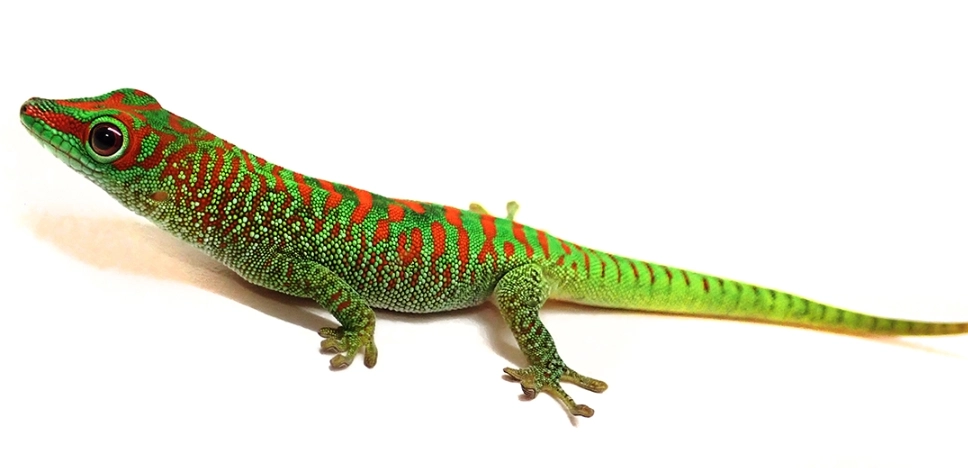
The gold dust gets all the glory, but a couple of other Phelsuma species have footholds.
The giant day gecko (Phelsuma grandis) is, as the name says, bigger—up to a foot long. It's a more solid, robust green, often with a red stripe from the eye to the shoulder, but lacks the fine gold dusting. Its populations are more localized, like in certain areas of Oahu. Then there's the orange-spotted day gecko (Phelsuma guimbeaui), which is rarer in Hawaii. It has a more subdued green base color with distinctive orange bars or spots along its sides.
Why does this matter? If you're trying to figure out what you saw, or if you're a budding herpetologist, these differences are key. For most casual observers, the gold dust is the star of the Day gecko Hawaii show.
I get this question a lot. Someone visits, falls in love with these jewel-like lizards, and wonders if they can take one home (metaphorically or literally). The reality is more complicated than a simple yes or no.
First, the legal part. This is crucial. In Hawaii, all geckos are protected by state law. You cannot just go out into your backyard, catch a day gecko, and keep it as a pet. It's illegal. The state's Department of Agriculture is very strict about this to prevent further ecological disruption and the spread of species between islands. You can check their official stance on the Hawaii Department of Agriculture website for the most current regulations.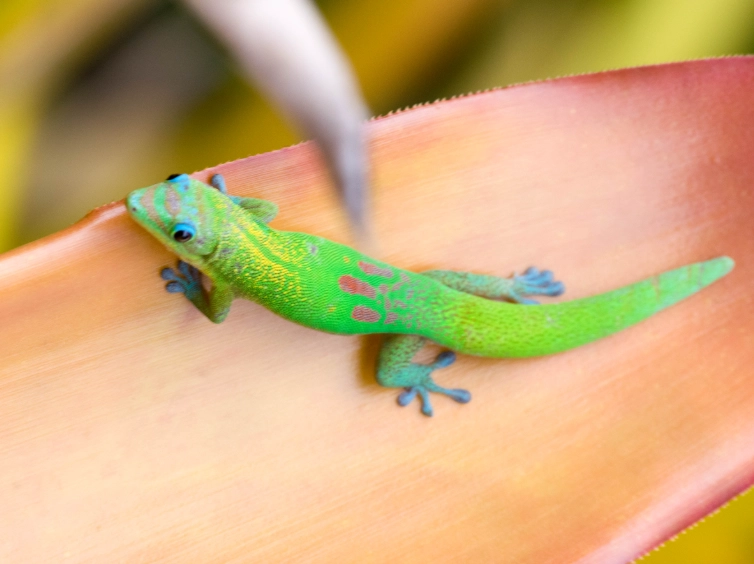
Now, let's say you're looking at captive-bred animals from a reputable breeder on the mainland. That's a different path. Caring for a day gecko is rewarding but not what I'd call beginner-level easy. They have specific needs you can't ignore.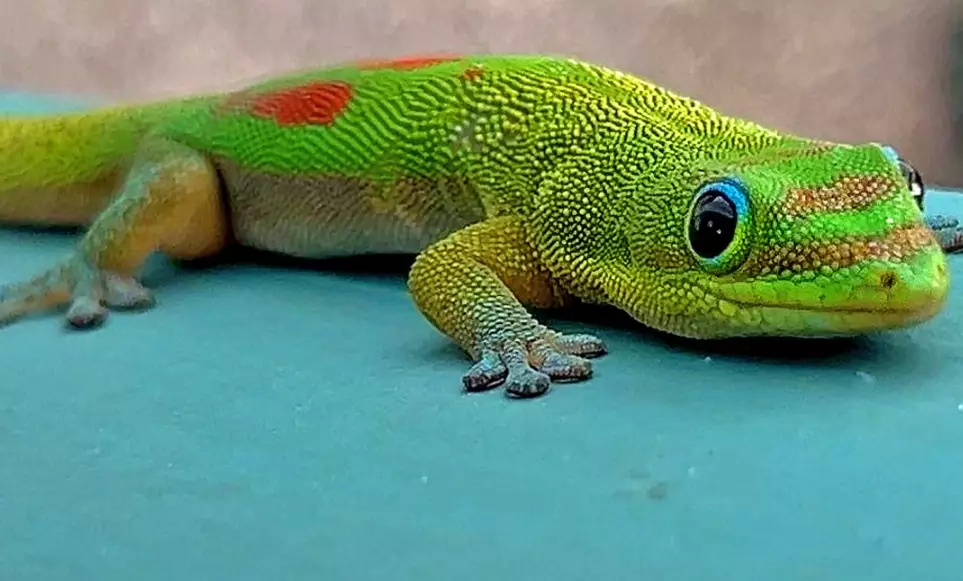
Forget the tiny, barren cages you sometimes see. A single gold dust day gecko needs a vertically oriented terrarium—they're climbers, not floor dwellers. A minimum of 18" x 18" x 24" is a good starting point. They need it warm (78-85°F during the day with a basking spot up to 90°F) and humid (60-80%). That means misting multiple times a day and investing in good heating and lighting equipment, including UVB light, which is non-negotiable for their health.
Their diet is where they're fun. They're insectivores with a sweet tooth. Staple food is gut-loaded crickets, roaches, and mealworms. But the treat that shows their unique behavior is a lickable fruit mix. You'll offer a commercial "gecko diet" or a homemade blend of fruits like mango or papaya. Watching them lick it up with their tiny tongues is half the joy. I've found they can be picky—some go crazy for apricot mix, others turn their noses up at it.
Here’s a quick breakdown of a balanced diet, which is a common point of confusion:
| Food Type | Examples | Frequency | Important Notes |
|---|---|---|---|
| Live Insects (Staple) | Crickets, Dubia roaches, Black soldier fly larvae | Daily, as many as eaten in 15 mins | "Gut-load" insects with veggies & dust with calcium/D3 powder. |
| Commercial Diet (Treat/Supplement) | Repashy Crested Gecko Diet, Pangea Fruit Mix | 2-3 times a week | Offers balanced vitamins; mix with water to a ketchup-like consistency. |
| Fresh Fruit (Occasional Treat) | Mashed banana, papaya, mango | Once a week or less | Very sugary; use sparingly to avoid obesity. |
Personality-wise, they're skittish. They don't "cuddle." With slow, patient handling, some become tolerant, but they are primarily display animals. A sudden move and they can shed their tail (it grows back, but it's stressful for them). Their lifespan in good care can be 10+ years. That's a decade-long commitment to maintaining that tropical environment in your home.
It's a big responsibility. Honestly, sometimes I think people enjoy watching them in their naturalized Hawaiian habitat more than dealing with the daily care.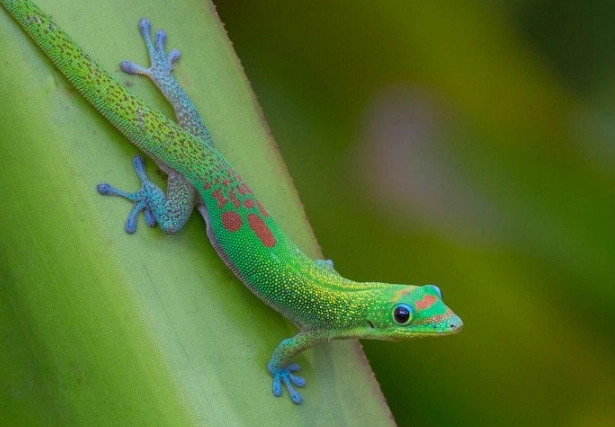
This is the messy part. Are day geckos in Hawaii good or bad? The answer is... yes. It's complicated.
On one hand, they are by definition invasive species. They didn't evolve in Hawaii's delicate ecosystems. They compete with native insects and potentially with the few native gecko species (all nocturnal). There's research suggesting they might eat the eggs of native tree snails, which are critically endangered. That's a serious mark against them. The Hawaii Biodiversity and Mapping Program tracks the distribution of such introduced species, and their data shows how widespread day geckos have become.
On the other hand, they've filled a niche. They pollinate! This is the coolest thing about them. Many Hawaiian native pollinators are extinct or declining. Day geckos visit flowers for nectar, getting pollen dusted on their heads and carrying it to the next flower. Plants like the native ʻōhiʻa lehua and non-native scarlet bottlebrush are pollinated by them. They're providing an ecosystem service that wasn't fully intended but is now happening.
They also control insect populations. Mosquitoes, flies, moths—they eat them. For residents, this is a tangible benefit. The consensus among many ecologists I've read is that they are now "naturalized." Eradicating them is impossible and likely impractical. The focus has shifted to preventing them from spreading to islands where they aren't present (like Kauai, which has so far remained largely free of them) and protecting the most vulnerable native species from their influence.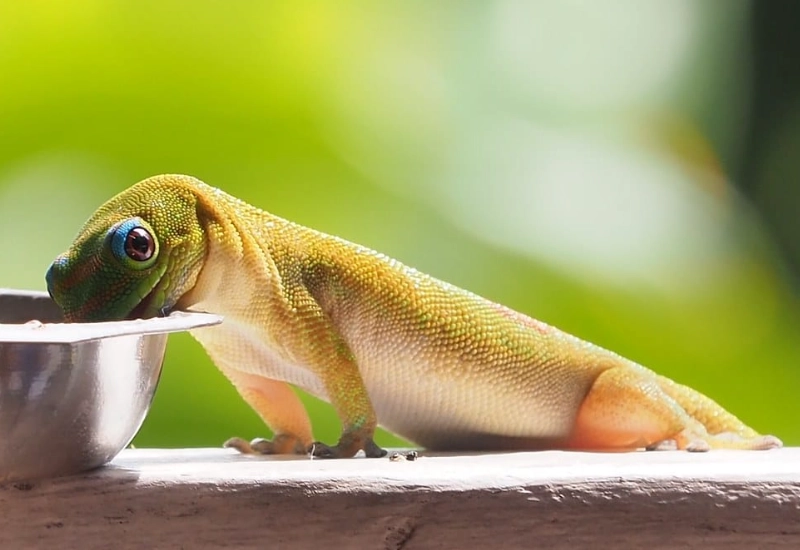
So, what's the final take on the day gecko Hawaii phenomenon? They're beautiful, fascinating animals with a complex legacy. They don't belong here from a pure ecological history standpoint, but they're here now, weaving themselves into the modern Hawaiian experience. For visitors, they're a delightful wildlife encounter. For aspiring reptile keepers, they're a captivating but demanding pet that must be sourced ethically and legally.
The best approach, in my opinion, is one of informed appreciation. Understand that their bright green beauty comes with an ecological backstory that's not always pretty. If you choose to care for one, do it right—their needs are specific and non-negotiable. A great resource for that is the ReptiFiles care guides, which are well-researched and prioritize animal welfare.
Next time you see one of those green flashes in Hawaii, you'll know more about the little life zipping past. You'll see an immigrant survivor, an accidental pollinator, a skilled hunter, and a tiny, living jewel. And that's a much richer story than just "pretty lizard."
They're a reminder that in Hawaii, even the simplest things have deep, interconnected stories.