
Travel Tips
Lorem ipsum dolor sit amet, consectetur adipiscing elit.
You've seen them. Those stunning, almost neon-green lizards clinging to glass in nature documentaries or, let's be honest, probably on Instagram. They look like living jewels. The idea of having that vibrant splash of color moving around in a corner of your room is incredibly tempting. I get it. I was there too, years ago, staring at a photo of a giant day gecko and thinking, "I need that in my life."
But here's the thing a lot of care sheets and quick videos gloss over: a day gecko pet is not a "beginner" reptile in the traditional sense. They're not a bearded dragon you can chill with on the couch. They're a specific kind of awesome that comes with specific rules. This guide isn't about selling you on one. It's about giving you the full, unfiltered picture—the good, the bad, the sticky, and the surprisingly expensive—so you can decide if a day gecko is truly the right pet for you.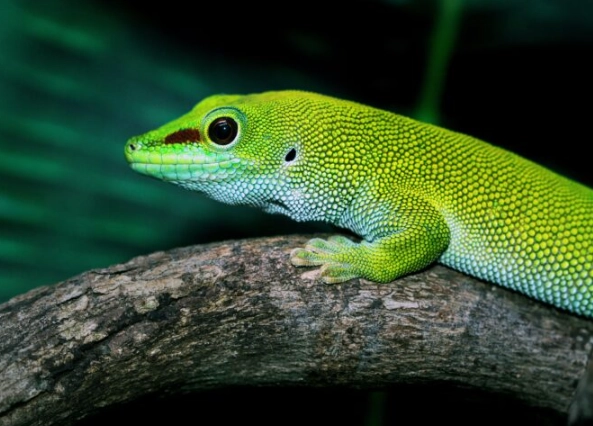
Let's start with the obvious appeal. Day geckos are active during the day (hence the name), which means you actually get to see them do stuff. No waking up at 2 AM with a flashlight to catch a glimpse. They're diurnal hunters, pollinators in the wild, and just fascinating to watch go about their business. Their colors are unreal, from the electric green of the Phelsuma grandis to the stunning red spots of the Phelsuma klemmeri. They don't have the classic gecko eyelids, so their eyes are these big, perpetually curious-looking orbs.
The Big Draw: Visual spectacle. A well-planted day gecko enclosure is a living piece of art. You're not just keeping a pet; you're curating a tiny, bioactive slice of Madagascar or a tropical island.
Now, the other side of the coin.
The Reality Check: They are fast, fragile, and generally not for handling. Their skin is delicate and can tear easily if they're grabbed or struggle. More importantly, they get stressed out by it. A stressed day gecko might "autotomize"—drop its tail as a defense mechanism. While it can regrow, it's never quite as pretty. So if you're dreaming of a lizard you can hold and cuddle, look elsewhere. A day gecko pet is primarily a "look, don't touch" experience.
I made that mistake early on. I thought with enough patience, my gecko would become tame. It didn't. It just became really good at avoiding my hand. That was a lesson in respecting the animal for what it is, not what I wanted it to be.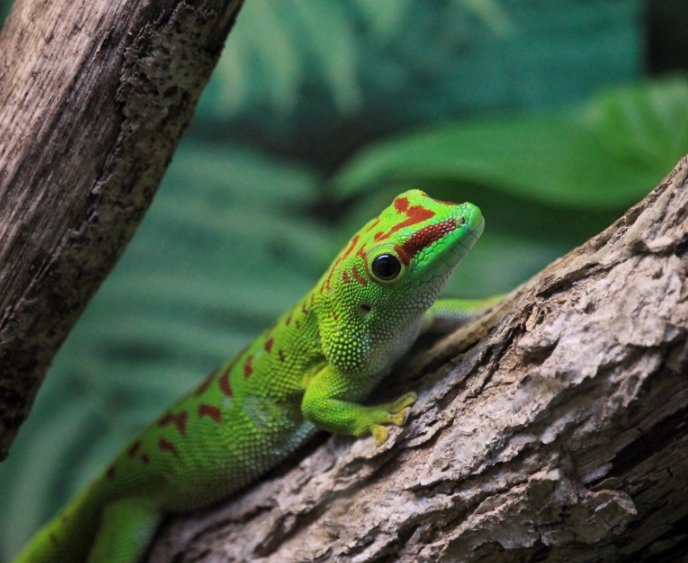
Not all day geckos are the same. Size, temperament, and care difficulty vary. Here’s a breakdown of the ones you're most likely to find.
| Species (Common Name) | Adult Size | Temperament & Notes | Best For... |
|---|---|---|---|
| Giant Day Gecko (Phelsuma grandis) | 10-12 inches | The classic. Bold colors, bold attitude. Can be territorial. Fast and large. | Experienced keepers who want a showstopper. |
| Gold Dust Day Gecko (Phelsuma laticauda) | 4-5 inches | Smaller, with beautiful gold speckles. Very common in the pet trade. Still fast and flighty. | Intermediate keepers; a more manageable size. |
| Standing's Day Gecko (Phelsuma standingi) | 9-10 inches | Often considered slightly more robust and less skittish than the Giant. Beautiful patterning. | Those who want a large gecko with a potentially calmer demeanor. |
| Neon Day Gecko (Phelsuma klemmeri) | 3-4 inches | Tiny, stunning blue and yellow. More delicate and can be shy. Requires very precise conditions. | Advanced hobbyists focused on a micro-paludarium setup. |
| Lined Day Gecko (Phelsuma lineata) | 5-6 inches | Active and attractive. A good "middle-ground" species in terms of size and care. | Intermediate keepers looking for an active display animal. |
My first was a Gold Dust. I figured, "smaller must be easier." In some ways, yes. But their speed? Unbelievable. A blink-and-you'll-miss-it dash across the terrarium. You need to be ultra-secure with their enclosure because an escape is very hard to reverse.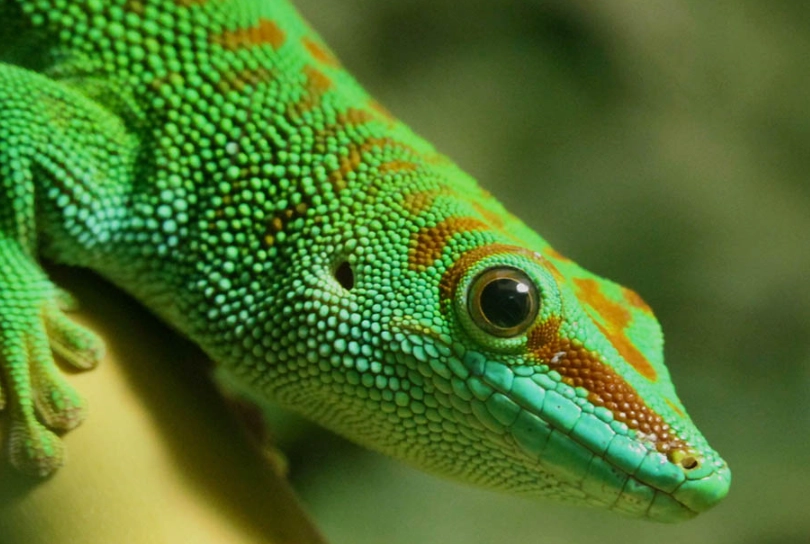
This is where you can't cut corners. A proper enclosure isn't a tank; it's a biome. Getting this right is 90% of successfully keeping a healthy day gecko pet.
They are arboreal. They climb. A 20-gallon long tank is useless. You need height. For a single Gold Dust or Lined, an 18"x18"x24" tall terrarium is the absolute minimum. For a Giant or Standing's, think 24"x18"x36" or larger. Front-opening doors are a godsend for maintenance and cause less disturbance than reaching in from above.
Screen tops are okay, but they let out humidity fast. Many keepers use modified glass terrariums or high-quality PVC cages designed for reptiles that hold heat and humidity better.
This is the technical part, but it's simple once you get it.
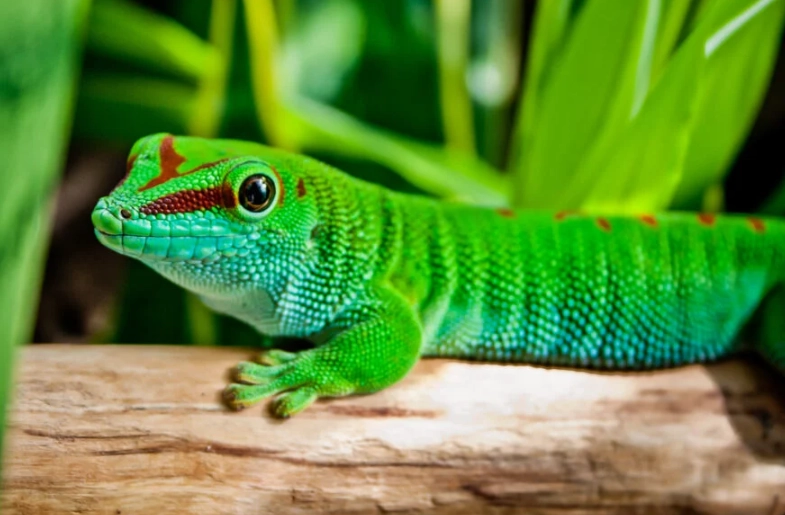
Pro Tip: Don't just spray the glass. Spray the leaves and decor. This creates water droplets for them to drink from, as many day geckos won't recognize a standing water bowl. They lick moisture off surfaces.
Bare tank = stressed gecko. They need clutter, hiding spots, and climbing routes.
You know you've got it right when your day gecko pet uses every level of the enclosure.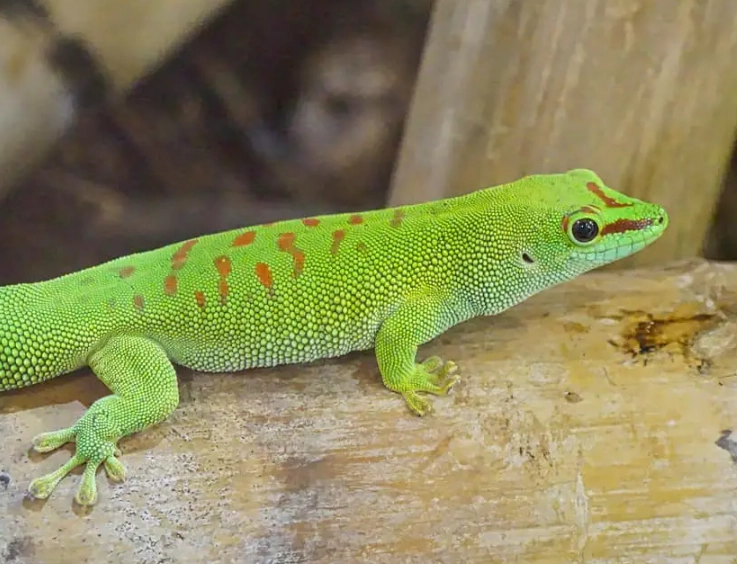
This is the fun part. They're insectivores with a sweet tooth.
Staple Diet: Gut-loaded insects. Crickets, dubia roaches (if legal in your area), and black soldier fly larvae are excellent staples. "Gut-loading" means feeding the insects nutritious foods (like carrots, sweet potato, commercial gut-load) 24-48 hours before feeding them to your gecko. You are what you eat, and so is your gecko.
Size Matters: Feed insects no larger than the space between the gecko's eyes.
The Special Treat: Most day geckos go crazy for a commercial "crested gecko diet" (CGD) like Repashy or Pangea. This is a powdered mix you make into a paste. It's nutritionally complete and mimics the fruit and nectar they'd eat in the wild. Offer a small bottle cap of this 1-2 times a week. Watching them lick it up is a highlight.
Supplementation: This is non-negotiable. Dust insects with a calcium supplement (without D3) at almost every feeding. Once or twice a week, use a calcium powder with D3 or a multivitamin. The schedule depends on your UVB setup. With proper, strong UVB, they synthesize their own D3, so you can lean more on calcium without D3. If in doubt, a light dusting with a combo powder a couple times a week is safe. I keep a little journal to track this—it helps.
A healthy day gecko is alert, has bright eyes, a plump tail (their fat reserve), and a good appetite. Here’s what to watch for:
Find a vet before you have an emergency.
Seriously. Not all vets see exotics. Find an ARAV (Association of Reptilian and Amphibian Veterinarians) certified vet near you. Having that contact info saved is part of being a responsible owner. You can search the ARAV website for a directory. It's a crucial resource.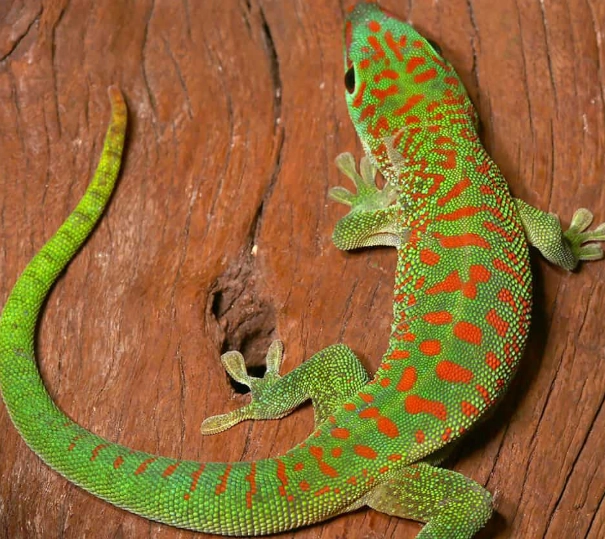
You might get a pair, or you might just have one. Males are territorial and will fight if housed together. Male-female pairs will likely breed if conditions are right, and you'll need to be prepared for eggs.
Females will lay eggs, even without a male (they'll be infertile). They often stick them to a surface—inside a bamboo tube, on a cork flat. If you want to try incubation, you need an incubator set to about 78-82°F. The eggs are soft-shelled initially and harden. Incubation can take 45-90 days depending on species and temperature.
Their behavior is fascinating. Males do push-ups and head-bobs to display. They communicate with little chirps and clicks. A truly content day gecko pet will explore, hunt, bask, and lick its CGD with gusto.
Let's tackle the stuff people really search for.
Ask yourself these questions:
If you answered yes, then the world of day geckos is an incredibly rewarding one. There's a unique pride in creating a miniature ecosystem that not only survives but thrives, with a dazzling gecko as its centerpiece.
It's more work than a goldfish, more delicate than a leopard gecko, but for the right person, there's nothing quite like it. That vibrant green dash of life becomes the best part of your room. Just go in with your eyes open, respect their nature, and you'll have a fascinating companion for years to come.
Do your homework. Double-check everything I've said here with other trusted sources like the Animal Diversity Web from the University of Michigan for species-specific biological data. The more you know before you bring one home, the better your—and your gecko's—experience will be.