
Travel Tips
Lorem ipsum dolor sit amet, consectetur adipiscing elit.
So you're curious about day gecko size. Maybe you saw a stunning photo of a bright green giant day gecko and wondered if you could fit one in that empty terrarium. Or perhaps you're trying to figure out why your neon day gecko seems smaller than the ones you see online. I get it. When I got my first pair of Madagascar giant day geckos, I was obsessed with measuring them every other week, convinced they weren't growing fast enough.
Turns out, I was just impatient. But it taught me a lot about what "size" really means for these lizards. It's not just a number. The size of a day gecko tells you about its health, its age, its species, and even the quality of care it's receiving. And believe me, there's a massive difference between the smallest and largest members of the Phelsuma genus.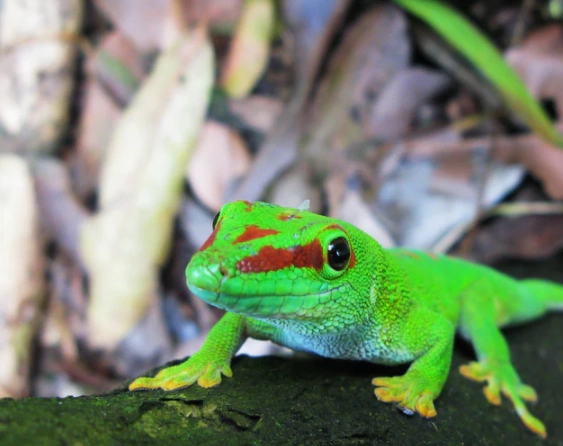
Most people think "day gecko" and picture one animal. Wrong. There are over 70 described species and subspecies of day geckos. Saying you want to know about day gecko size is like asking how big a dog is. Are we talking about a Chihuahua or a Great Dane? The range is staggering.
The Core Concept: When discussing reptile size, we almost always refer to Snout-to-Vent Length (SVL). This is the distance from the tip of the nose to the cloaca (the vent). It's the standard because tails can break and regrow, making total length unreliable. So, a "6-inch gecko" usually means 6 inches SVL. The tail often adds another 50-100% to that length. Keep this in mind for all our size talk.
This is where it gets fun. To truly understand day gecko dimensions, you need to see them side-by-side. I've put together this chart based on data from reputable sources like the Reptile Database and observations from long-term breeders. It's the quickest way to grasp the diversity.
| Common Name | Species Name | Average Adult SVL | Average Total Length | Size Category |
|---|---|---|---|---|
| Gold Dust Day Gecko | Phelsuma laticauda | 4 - 5 inches (10 - 13 cm) | 8 - 10 inches (20 - 25 cm) | Small |
| Madagascar Giant Day Gecko | Phelsuma grandis | 9 - 12 inches (23 - 30 cm) | 15 - 24+ inches (38 - 60+ cm) | Giant |
| Standing's Day Gecko | Phelsuma standingi | 5.5 - 6.5 inches (14 - 17 cm) | 11 - 13 inches (28 - 33 cm) | Medium |
| Peacock Day Gecko | Phelsuma quadriocellata | 3.5 - 4.5 inches (9 - 11.5 cm) | 7 - 9 inches (18 - 23 cm) | Small / Dwarf |
| Koch's Giant Day Gecko | Phelsuma kochi | 5 - 6 inches (13 - 15 cm) | 10 - 12 inches (25 - 30 cm) | Medium |
| Mauritius Lowland Forest Day Gecko | Phelsuma guimbeaui | 4.5 - 5.5 inches (11.5 - 14 cm) | 9 - 11 inches (23 - 28 cm) | Small |
Looking at that table, the variation in day gecko size is obvious. A giant day gecko can have a body three times longer than a peacock day gecko. That's a huge difference in the amount of space, food, and overall presence in your home.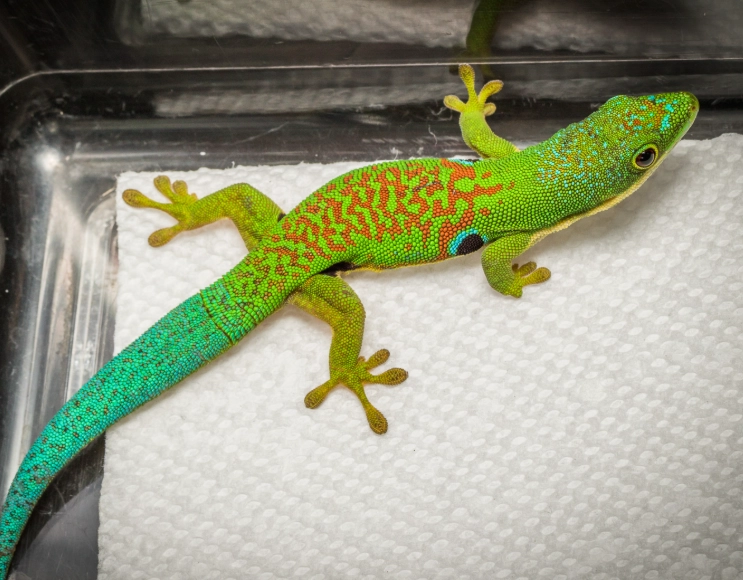
I remember the first time I held an adult Phelsuma grandis. Its feet were so much larger and stickier, its head more substantial. It just felt like a more "substantial" animal compared to the smaller species I was used to. The smaller ones, like the gold dust, are incredibly quick and light. They feel like living jewels. The giants feel more like miniature dragons.
You can't just look at a baby gecko and predict its final day gecko size based on species alone. Several factors play tug-of-war with their growth potential.
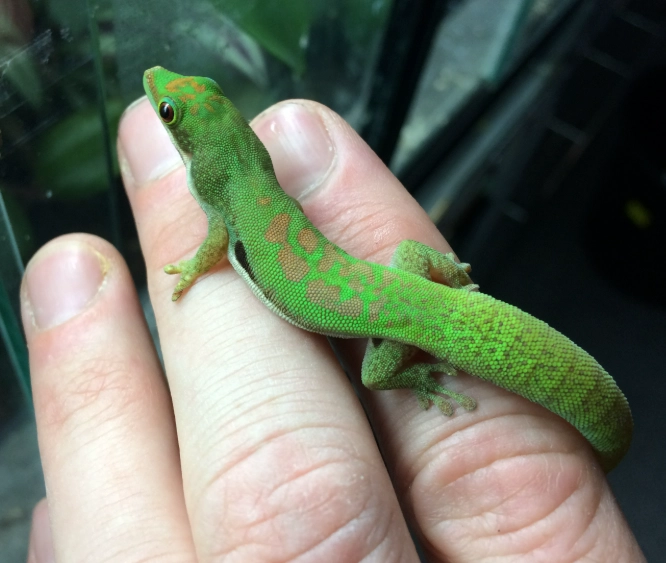
A Personal Mistake: I once had a beautiful neon day gecko that plateaued in size. I was feeding it, temps were good... but it just stayed small. A more experienced keeper asked about my UVB light. It was an old bulb, well past its 6-month replacement date. I swapped it for a new one, and within two months, I saw a noticeable growth spurt. UVB is crucial for calcium metabolism and overall health. Don't cheap out on lighting.
Alright, theory is good, but how do you get the numbers? Measuring a fast, fragile lizard that doesn't want to be held is an art form. Forget trying to use a floppy tape measure.
The Best Method (The Photographic Ruler Trick):
This method is stress-free for the gecko and gives you an accurate, permanent record. I have a folder on my phone with monthly photos of my geckos next to the same ruler. It's the best way to track growth over time.
Pro Tip: Weigh your gecko monthly too. Use a digital kitchen scale in grams. Weight is a more sensitive indicator of health than length. A growing gecko should slowly gain weight. A sudden drop is a red flag.
This is a super common question. How fast should they grow? It's not linear. They have rapid growth spurts as juveniles, then it slows way down as they approach adulthood.
A baby giant day gecko might hatch at around 2.5-3 inches SVL. In its first year, with excellent care, it could reach 7-8 inches SVL. That's huge growth! The second year, it might only add another 2-3 inches, finally maturing around 10-12 inches SVL at 18-24 months old.
Smaller species mature faster. A gold dust day gecko can be sexually mature at 9-12 months old, reaching its full adult size of about 5 inches SVL by then.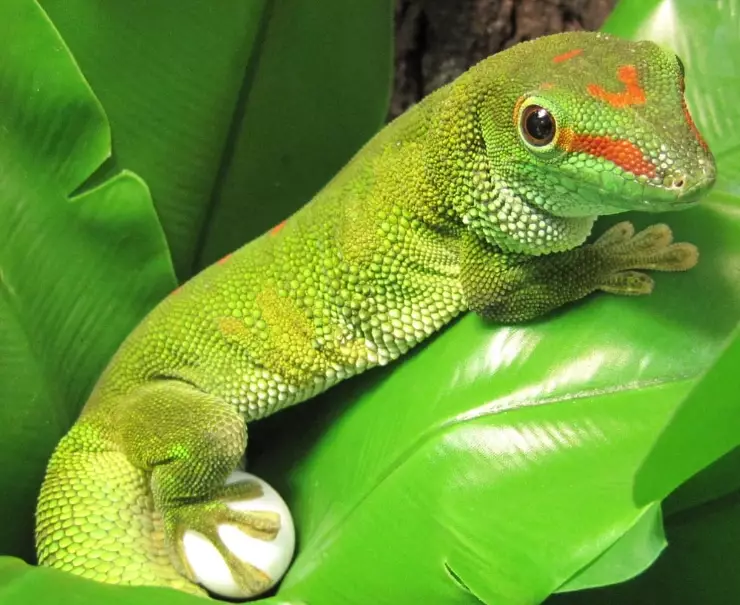
If your gecko's growth seems to completely stop for several months, and it's not near the expected adult size for its species, it's time to review the four factors above: genetics, nutrition, environment, and health.
The Madagascar giant day gecko (Phelsuma grandis) holds the title. While some older records mention even larger extinct species, among living day geckos, P. grandis is the king of size. Males are typically larger than females. The IUCN Red List notes its substantial size as a distinguishing characteristic. I've seen claims of 14-inch SVL animals, but 10-12 inches is the reliable, typical max for well-kept specimens.
Not necessarily. While stunted growth is a bad sign, obesity is a massive problem in captive reptiles, including day geckos. A gecko that is overly fat, with bulging sides and fat rolls near its limbs, is unhealthy regardless of its length. Aim for a sleek, robust body shape. You should be able to see the outline of the hip bones slightly, but the ribs shouldn't be visible. It's a balance.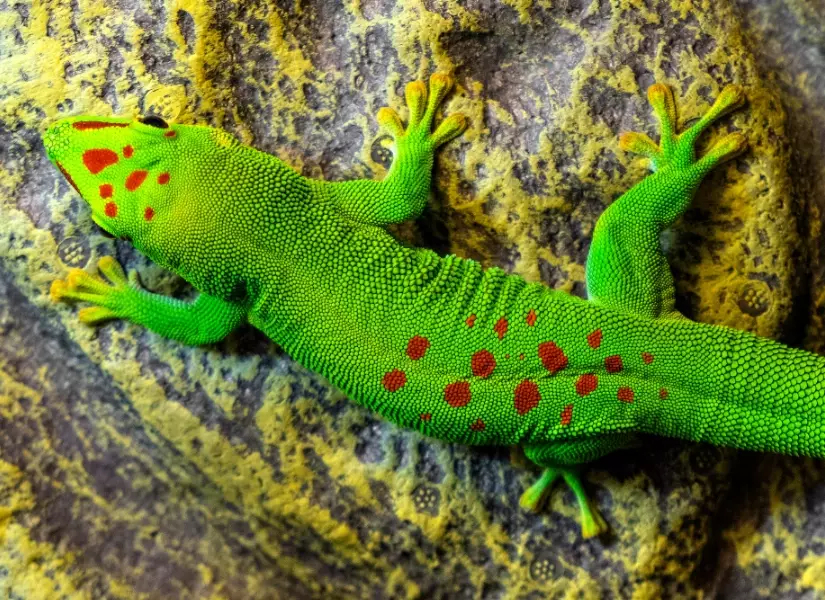
First, confirm the species. A neon day gecko will always be smaller than a giant of the same age. If the species is confirmed, then consider the factors we discussed. Is it eating aggressively? Is it active? Are its feces normal? If all seems well otherwise, it might just be a smaller individual genetically. If it's lethargic, refusing food, or has runny stools, a vet visit is in order.
The old wives' tale that a fish or reptile will "grow to the size of its tank" is biologically false and harmful. However, a severely cramped, stressful environment can inhibit growth hormone production and lead to a stunted animal. It's not that the enclosure physically limits them like a mold; it's that chronic stress from lack of space harms their overall physiology. Always provide an enclosure that meets or exceeds the minimum recommended size for the adult day gecko size of your species.
It's useful to have a frame of reference. Let's do a quick comparison.
The main difference isn't always sheer body length—it's the tail and the overall "aerial" build. Day geckos have long, muscular tails and a more slender, agile build built for climbing vertical surfaces, which the Smithsonian's National Zoo highlights in their reptile adaptations resources. A giant day gecko, with its full tail, can look much longer and more impressive than a leopard gecko of similar SVL.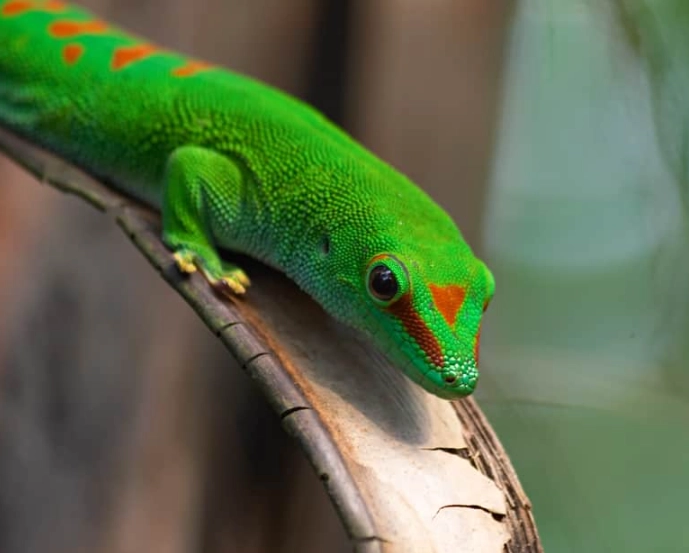
When I started, I was fixated on the numbers. I wanted my giant day gecko to be the biggest. But over time, I realized that a healthy, active, and vibrant gecko is the real goal. Size is one important metric in that equation, but not the only one.
Use the expected day gecko size for your species as a guide. It tells you how big an enclosure to buy, what size feeders to order, and what to expect as your pet matures. Track growth as a health check, not a competition. If your gecko is within the normal range, eating well, shedding cleanly, and behaving normally, you're doing it right—even if it's not a record-breaker.
The fascinating world of Phelsuma offers a size for every keeper, from the tiny, intricate dwarf species to the impressive, commanding giants. Understanding these differences is what makes keeping them so rewarding. Now you have the facts. Go enjoy your gecko.