
Travel Tips
Lorem ipsum dolor sit amet, consectetur adipiscing elit.
Let's talk about the Grandpa Tree Frog. You've probably seen pictures of them—those delightfully chubby, bright-eyed frogs with a permanent look of mild surprise (or maybe contentment). They're the ones that look like they've just heard a really good, but confusing, joke. Officially, they're called White's Tree Frogs, or Litoria caerulea. But the nicknames are way more fun: Dumpy Frog, Smiling Frog, and of course, the Grandpa Tree Frog. That last one really sticks, doesn't it? It perfectly captures their wise, relaxed, and slightly jowly demeanor.
I remember the first time I saw one at a local reptile expo. It was just sitting there on a branch in its enclosure, hands folded over its belly, watching the world go by. It didn't look like a frantic pet; it looked like a tiny, green philosopher. I was sold. But before you run out and get one because they're adorable (they are), there's a lot to know. These are living creatures with specific needs, not just decorative items. This guide is everything I wish I'd known back then, plus a bunch of stuff I've learned the hard way over the years.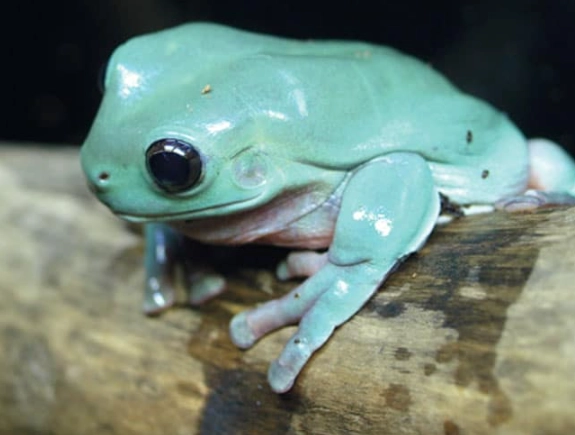
The Gist: The Grandpa Tree Frog is a large, hardy, and relatively long-lived tree frog native to Australia and New Guinea. They're popular pets because of their docile nature, simple dietary needs, and that unforgettable face. With proper care, they can be your lumpy, green companion for 15-20 years. That's a long commitment!
Let's clear up the name first. "Grandpa Tree Frog" isn't a scientific term. It's a common name that pet keepers and enthusiasts use for the White's Tree Frog. The name comes from the loose, fatty skin around their head and body, which can wrinkle and fold, giving them an elderly, saggy appearance. When they're sitting still, all squished up, they really do look like a miniature, amphibious grandfather napping in his chair.
They're native to the forests and woodlands of northern and eastern Australia, and also parts of New Guinea. In the wild, they're adaptable, living in forests but also showing up in bathrooms and water tanks in suburban areas. They're a robust species, which is part of why they do so well in captivity compared to more delicate frogs.
Their scientific name, Litoria caerulea, hints at their color. "Caerulea" means blue, and while adults are usually a lovely apple or emerald green, they can sometimes have a bluish tint, and juveniles often show more pronounced blue markings. They have large, sticky toe pads for climbing, horizontal pupils, and that classic, wide mouth that seems to curl into a smile.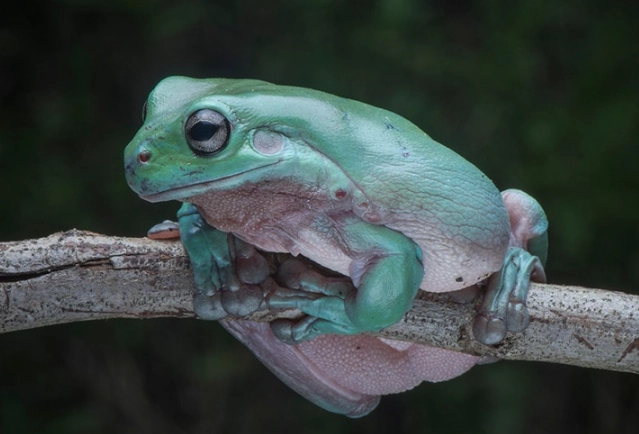
This is where most first-timers make mistakes, myself included. You can't just plop a frog in a empty fish tank with a bowl of water. They need an environment that mimics their natural home—a vertical space to climb, humidity to breathe through their skin, and temperature gradients to regulate their body heat.
A single adult Grandpa Tree Frog needs at least a 20-gallon tall aquarium, not a long one. They are arboreal, meaning they live in trees. Floor space is less important than height. For a pair, I'd go with a 30-gallon tall or larger. More space is almost always better, as it allows for better temperature and humidity gradients. A screen top is essential for ventilation but also to prevent a master escape artist from getting out. They are surprisingly strong and can push on lids.
Glass is the standard, and it works fine. Some people use front-opening PVC or acrylic enclosures which are great for maintaining heat and humidity. My first tank was a hand-me-down glass aquarium, and it did the job, but the constant top-opening for feeding and misting sometimes stressed the frogs out. Something to consider.
The floor of the tank needs to hold moisture and be safe if accidentally ingested. Avoid gravel, small bark chips, or anything they could swallow while lunging at food.
| Substrate Type | Pros | Cons | My Take |
|---|---|---|---|
| Coconut Fiber (Eco Earth) | Holds humidity well, natural look, diggable. | Can be messy, may stick to frogs. | My go-to choice. It looks great and works. |
| Organic Potting Soil (no additives) | Very natural, supports live plants. | Can get muddy if too wet, may harbor mites. | Excellent for bioactive setups with cleanup crews. |
| Moist Paper Towel | Extremely safe, easy to clean, cheap. | Looks terrible, doesn't hold humidity long. | Perfect for quarantine tanks or sick frogs. |
| Reptile Carpet | Reusable, easy to clean. | Can trap bacteria, toes can get caught. | I'm not a fan. It's a hassle to clean properly. |
Grandpa Tree Frogs are ectotherms. They rely on their environment for warmth. The ideal temperature gradient is crucial.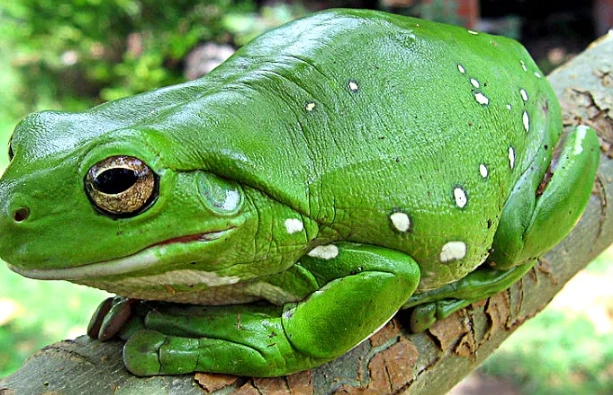
Use an under-tank heater on the side of the tank (never the bottom, they burrow to cool down) or a low-wattage ceramic heat emitter or incandescent bulb in a dome lamp on the screen top. Always use a thermostat! This little device plugs between your heater and the wall and turns it on/off to prevent cooking your frog. It's non-negotiable.
Lighting is more for you and the plants than the frog. They don't require special UVB lighting like reptiles do to synthesize vitamin D3, as they get it from their diet. However, a low-level UVB light (like a 5.0 or 2.0 bulb) for 10-12 hours a day is increasingly recommended by advanced keepers and some vets for potential long-term health benefits. It certainly won't hurt. A simple LED plant light on a timer works wonders if you have live plants and establishes a good day/night cycle.
Watch Out: Heat rocks are an absolute no-go for tree frogs. They can cause severe thermal burns as frogs don't feel the heat building up on their ventral skin. Just don't buy one.
This is the other critical factor. Their skin must stay moist for respiration. Aim for 50-70% humidity. You'll need a hygrometer (humidity gauge) to monitor it.
To raise humidity, mist the tank 1-2 times daily with dechlorinated water. A hand sprayer works, but an automatic misting system is a luxury that makes life easier, especially if you travel. A large, shallow water bowl is mandatory. It should be big enough for the frog to sit in if it wants (many do), but not so deep it could drown. Change this water daily without fail. They often poop in it.
Good ventilation from the screen top prevents the air from becoming stagnant and moldy. It's a balance: moist but not swampy.
Grandpa Tree Frogs are opportunistic insectivores. In plain English, they eat bugs. Their diet in captivity needs to be varied and nutritious. You can't just feed them crickets from the pet store every single day and expect them to thrive.
How much and how often? Juveniles should be fed daily, as many appropriately-sized insects as they will eat in 15-20 minutes. Adults (over a year old) do well being fed every other day or 3-4 times a week. An adult Grandpa Tree Frog might eat 3-6 large crickets or the equivalent per feeding. Watch their body condition—if they start looking like a little green potato, cut back. If their hip bones start to show, feed more.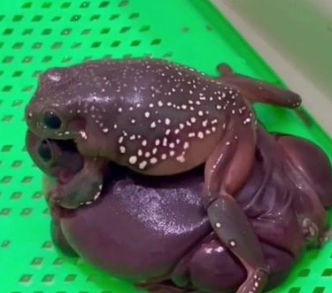
Think of their diet like this: staples are the everyday food, and treats are for variety and enrichment.
Staple Feeders (80% of the diet):
Treat Feeders (20% of the diet):
I try to rotate between Dubias, crickets, and BSFL as my main rotation, throwing in a hornworm or silkworm every couple of weeks. It keeps things interesting for me and them.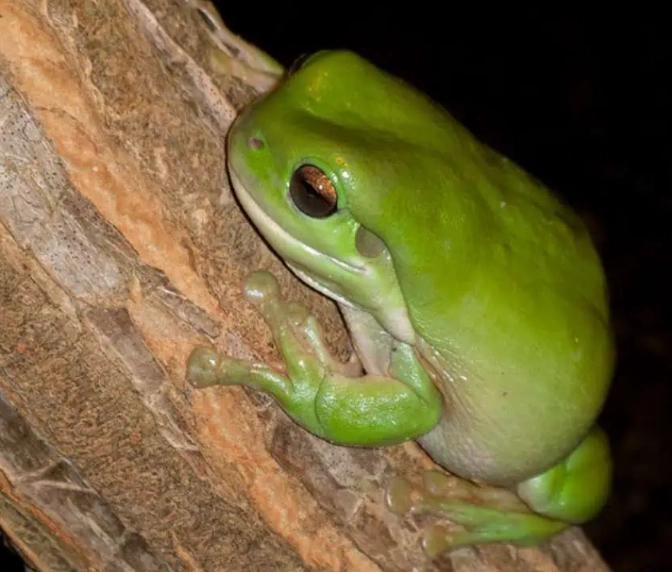
This is the most important part of feeding that beginners miss. You are what you eat, and your frog is what its food eats.
I use a small plastic deli cup, drop in the bugs, add a pinch of powder, and gently shake them like I'm breading chicken tenders. Then I offer them with long feeding tweezers or just let them loose in the tank for the hunt.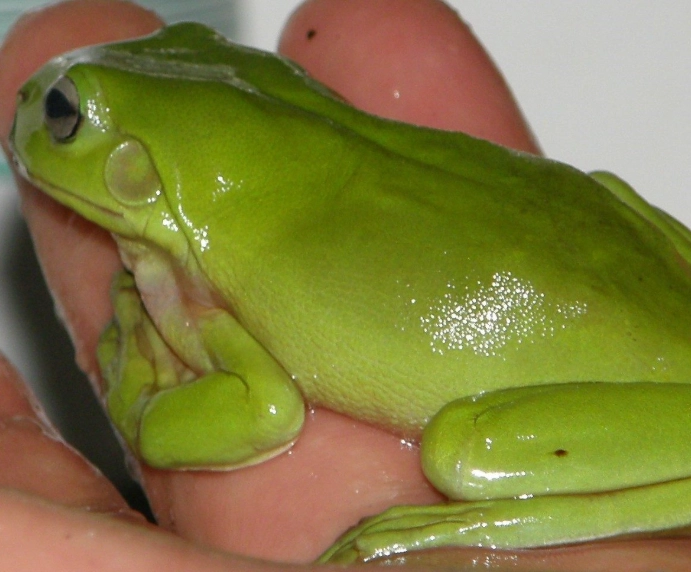
A healthy Grandpa Tree Frog is alert, has clear eyes (unless it's shedding), eats readily, and has a plump but not bloated body. Their skin should be smooth and moist, not dry or constantly sloughing. Here are the big problems to catch early.
1. Metabolic Bone Disease (MBD): Caused by insufficient calcium, vitamin D3, or improper UVB. Symptoms include lethargy, tremors, a soft or rubbery jaw (the lower jaw may droop), and difficulty climbing. In advanced stages, the bones deform, leading to a twisted spine or limbs. Prevention is key: proper dusting and gut-loading. If you suspect MBD, a vet visit is urgent.
2. Red-Leg Syndrome: A serious bacterial infection often linked to dirty conditions or injury. Symptoms include redness or hemorrhaging on the belly and thighs, lethargy, and skin lesions. It requires immediate antibiotic treatment from an exotic vet.
3. Chytridiomycosis: A deadly fungal disease that has devastated wild amphibian populations. It causes excessive skin shedding, lethargy, and loss of appetite. It is highly contagious. This is why you should never capture wild amphibians as pets and should quarantine any new animal for at least 30-90 days. Reputable sources like the AmphibiaWeb project have information on this global threat. Always buy captive-bred frogs from reputable breeders.
4. Impaction: Caused by swallowing indigestible substrate (like gravel) or overly large prey. The frog becomes bloated, stops eating, and may not pass feces. Ensuring proper substrate and prey size prevents this.
5. Obesity: Yes, even frogs can get too fat. Overfeeding, especially with fatty insects like waxworms, leads to a blob of a frog that can have trouble moving and develop internal health issues. A healthy adult should have a slightly rounded body, but you should still be able to see a distinction between the head and the body.
Finding a good vet before you have an emergency is crucial. Look for an "exotics" vet with experience in amphibians, not just cats and dogs.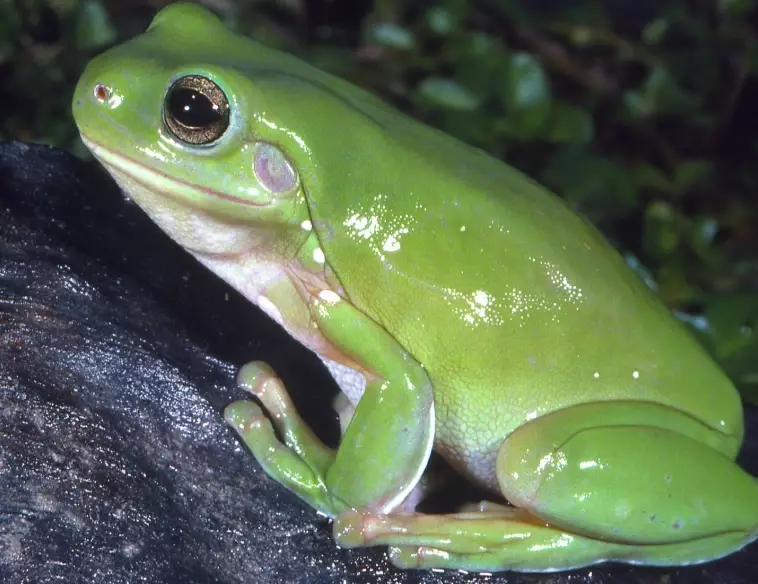
This is a big question. Grandpa Tree Frogs are one of the few frog species tolerant of occasional, careful handling. Their calm nature is a big selling point. But they are not toys. Handling should be minimal, brief, and always for a good reason (tank cleaning, health checks).
Their skin is permeable. Oils, salts, lotions, and soap residues on your hands can be absorbed and harm them. Always wash and thoroughly rinse your hands with warm water (no soap!) before and after handling. Handle them over a soft surface in case they jump, and support their whole body. Never squeeze them.
In terms of behavior, they are mostly nocturnal. You'll see them most active at dusk and dawn. During the day, they often find a snug hiding spot and sleep. They can change color slightly, from a bright green to a darker olive or brown, based on mood, temperature, or humidity. And yes, they croak. Males call to attract females, especially after a rain simulation (misting). It's not a loud "ribbit," but more of a deep, rolling "crawk-crawk-crawk" or, in my frog's case, a grumble.
Do they recognize you? Probably not in a dog-like sense. But they can become accustomed to your presence and may even learn to associate you with food, moving towards the front of the tank when you approach.
I get asked these all the time, so let's just tackle them head-on.
Yes, they are often considered one of the best beginner tree frogs. They are hardy, have simple dietary needs (insects), and are tolerant of minor husbandry fluctuations that might kill more delicate species. However, "beginner" doesn't mean "no care required." You still must commit to a 15+ year lifespan and providing the correct environment. Do your homework first.
Yes, they can be kept in pairs or small groups, provided the tank is large enough to give each frog space. A good rule is 10 extra gallons per additional frog. Only house frogs of similar size together to prevent accidental cannibalism (it's rare, but a large frog might try to eat a much smaller tankmate). Multiple males may call and compete, but rarely fight seriously.
It's tricky when they're young. As adults, males develop a dark "nuptial pad" (a roughened patch of skin) on the inside of their thumb during breeding season. They are also usually slightly smaller and slimmer than females, and have a looser, darker throat (vocal sac). Females tend to be larger and more robust.
Color change is normal. It can be due to temperature (darker to absorb more heat), humidity, stress, or simply their individual pattern. As long as the skin itself looks healthy—not dry, sloughing, or spotted with lesions—a color change is usually nothing to worry about.
That's an advanced topic beyond a basic care guide. It involves simulating a rainy season with increased misting and rainfall, lowering then raising temperatures, and having a suitable water feature for egg deposition. If you're interested, detailed resources are available from advanced hobbyist forums and breeders. The Frog Forum is a great place to start researching from experienced keepers.
Always seek a captive-bred frog from a reputable breeder. This ensures a healthier animal that isn't stressed from wild capture and doesn't contribute to ecological damage or carry wild diseases. You can find breeders at reptile expos, through online reptile/amphibian classifieds (do your vetting), or sometimes at specialty pet stores. Avoid big chain pet stores that may source from mass breeders with questionable health standards.
At the end of the day, keeping a Grandpa Tree Frog is a wonderfully rewarding hobby. You're caring for a small piece of the rainforest. It's not always glamorous—you'll be cleaning up bug parts and frog poop—but there's something incredibly peaceful about watching your little green philosopher just be. They teach patience. Just make sure you're ready for the commitment. Get the setup right first, then find your frog. Do it in that order. Your future lumpy friend will thank you for it.